A gift designed for another world
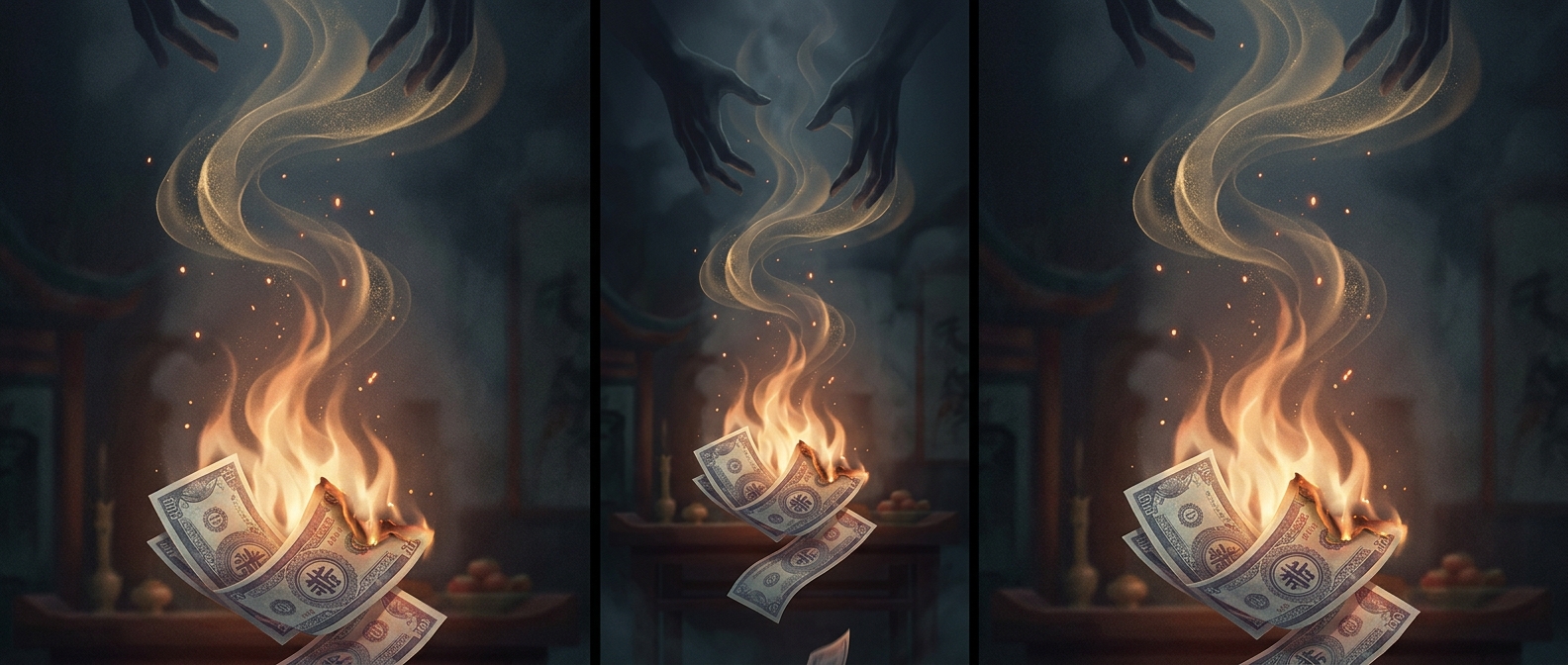
In Chinese folk religious traditions, paper money burned for the dead is often called spirit money or joss paper. It is not meant to circulate among the living. The ritual treats the paper as a stand-in for wealth that can reach a deceased relative through the act of burning.
That makes the fire part of the offering, not simply a way to discard an object. Families may burn the paper at a funeral, during a memorial observance, or at a time set aside to honor ancestors. The gesture expresses an ongoing duty of care: relatives continue providing for the dead, even though they can no longer share an ordinary meal or gift.
Why print enormous denominations?
The bills can resemble currency, but their extravagant values belong to the ritual’s imagined economy, not the one used in shops. Large numbers make abundance visible: the family is sending a substantial gift rather than trying to reproduce a realistic payment. The paper may also be bundled or combined with other symbolic goods, extending the idea of provision beyond money.
The ritual’s logic is therefore a kind of symbolic transfer. What is destroyed as paper in this world is understood as an offering in the relationship between the living and the dead. Its meaning lies less in the bill’s face value than in the family’s act of remembering and caring for someone who has died.