From carved letters to a modern oracle
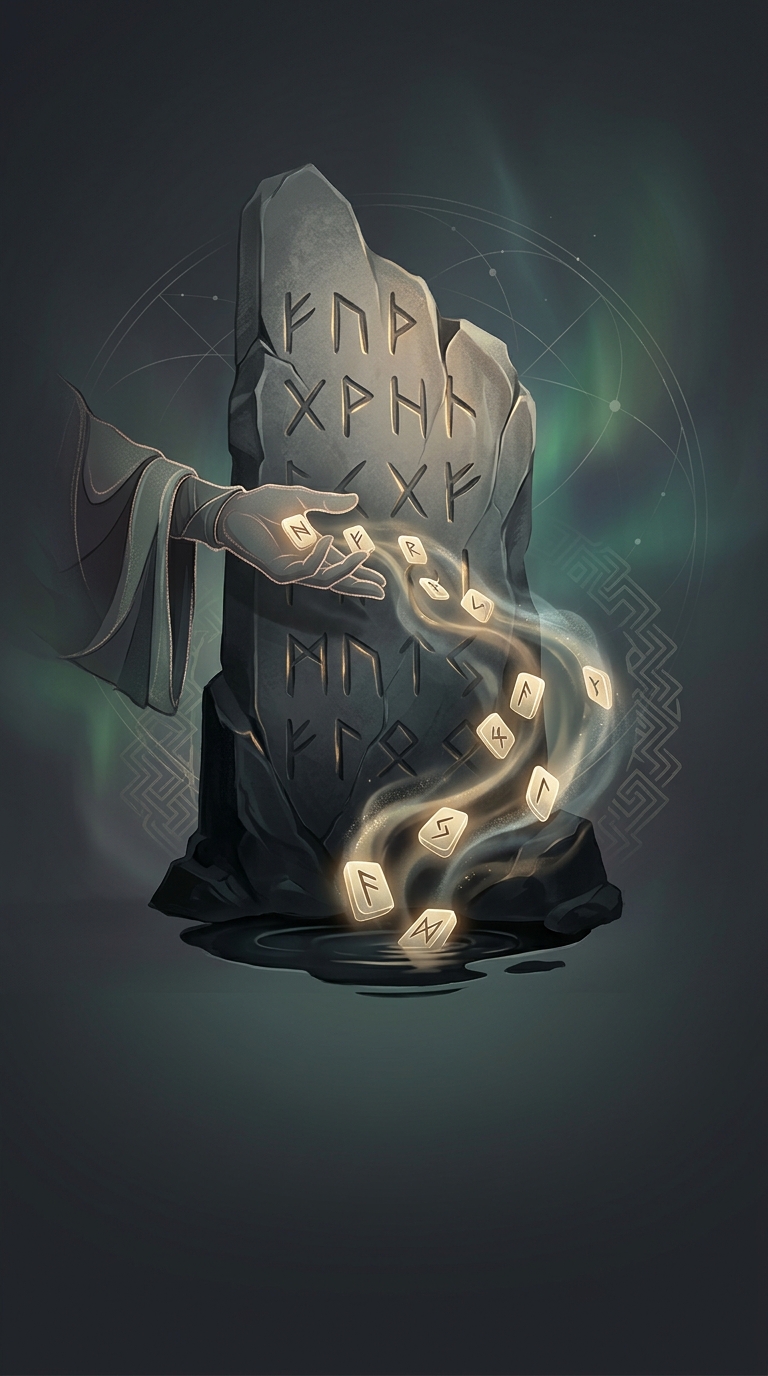
Runes began as writing, not as a standardized fortune-telling deck. Germanic communities used several related alphabets, collectively called runic scripts, from the first centuries CE onward. Their angular strokes suited carving into wood, bone, metal, and stone, where straight cuts were easier to make than flowing curves. Inscriptions could mark a person’s name or ownership, commemorate the dead, or record a short message; some also appear to have had ritual uses.
That range matters: there was no single ancient handbook assigning each rune one universal prediction. The meanings used in modern readings are assembled from letter names, surviving inscriptions, later traditions, and contemporary interpretation.
How the modern reading system took shape
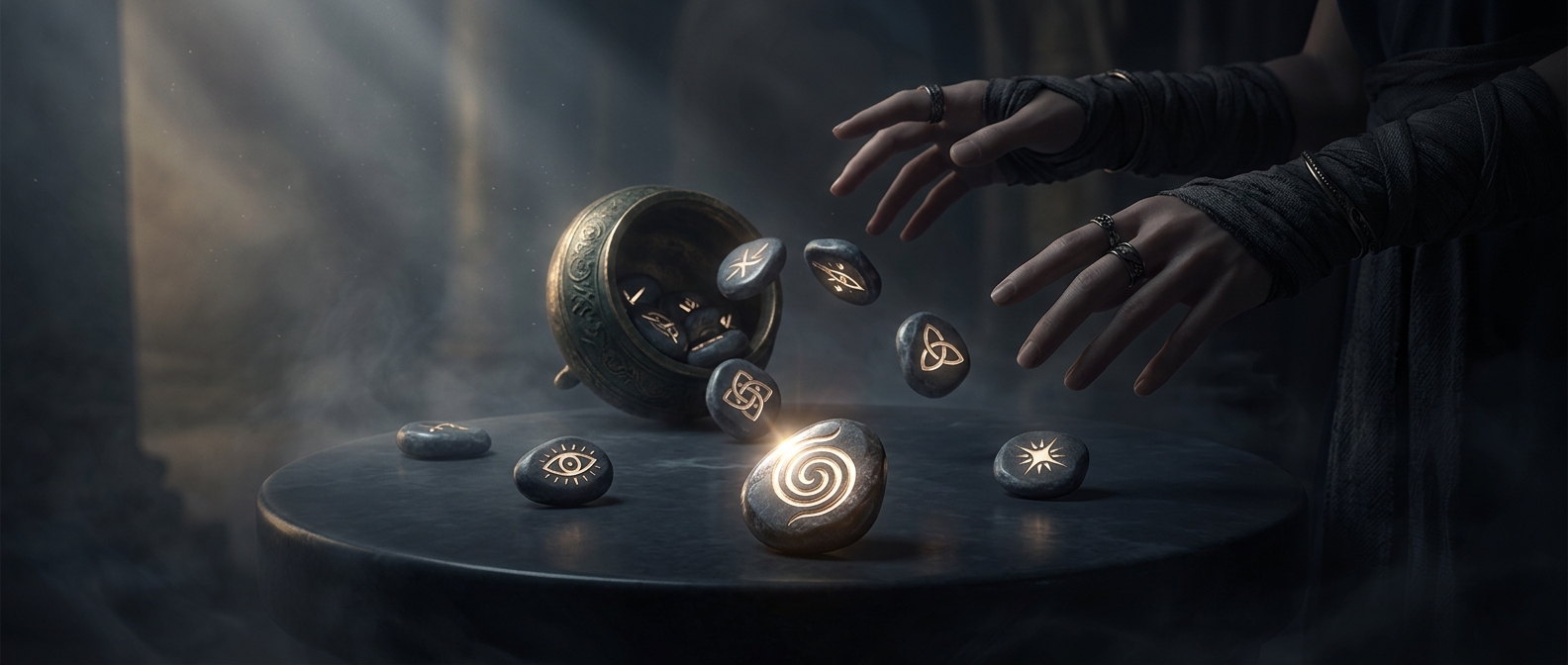
A modern rune reading typically uses small marked pieces—often stones or tiles—drawn from a bag and interpreted according to the symbols selected and their positions in a spread. The format turns an old writing system into a tool for reflection or divination. It is a modern interpretive practice, not a complete method demonstrably handed down unchanged from antiquity.
A major popularizer was American author Ralph Blum, whose 1980s book presented runes as a divination system for contemporary readers. Blum described the idea as coming to him while he was in a garden. His work helped establish a familiar package of rune meanings and reading procedures, though other practitioners have adapted or rejected parts of it.
The contrast is striking: a symbol once cut into a hard surface to identify, remember, or communicate could later be drawn at random and treated as a prompt for interpreting a question. The letters stayed recognizable; the purpose attached to them changed.