A pond turns lost balls into inventory
A golf ball at the bottom of a course pond is not automatically worthless. If it has not been badly scuffed, cracked, or soaked through damage to its outer layer, it may still be playable. That gap between “lost” and “ruined” creates a small resale market.
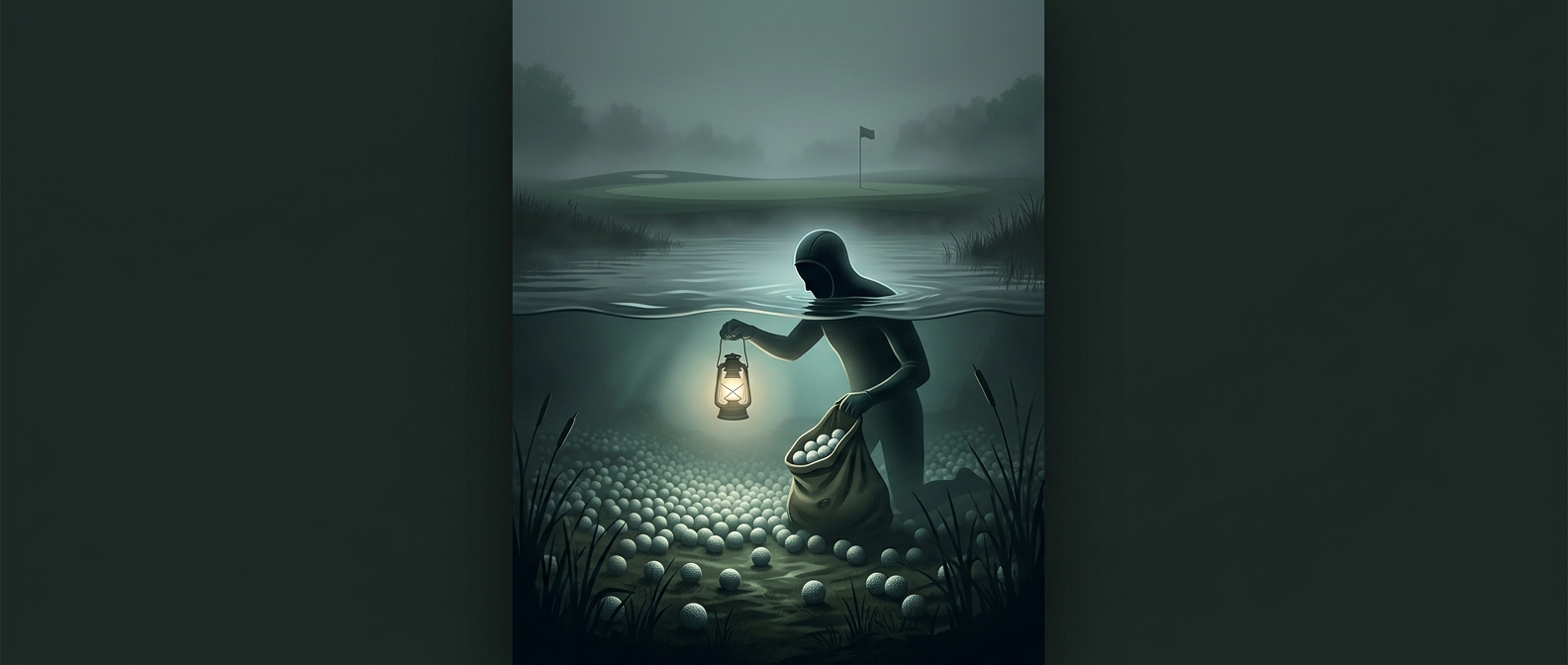
Divers gather balls from water hazards, where they can accumulate out of sight. The recovered balls are cleaned and sorted by condition. Better-looking examples can be sold as used balls; more marked-up ones may fetch less or be unsuitable for resale. The sorting matters because golfers pay less for a ball with an uncertain history than for a new one, but some are willing to trade cosmetic wear for a lower price.
The course and the diver share the incentive
Retrieval takes specialized labor: someone must search underwater, collect the balls, and bring them back up. A diver or recovery business can earn money by selling the usable ones, while a course may benefit from having its ponds cleared and its hazards kept manageable. The arrangement turns debris that would otherwise sit underwater into something with resale value.
But the product’s appeal also helps keep the cycle going. A golfer buys an inexpensive recovered ball, loses it in another pond, and makes it available for collection again. The same low price that makes a found ball attractive also makes replacing it feel relatively painless. A pond can therefore function less like a final resting place for golf balls than a temporary stop in a surprisingly durable secondhand market.