Why a fixed gear keeps your feet moving
On a typical bicycle, a freewheel lets the rear wheel turn while the pedals remain still. That small clutch-like mechanism is what makes coasting possible. A fixed-gear bike has no freewheel: the chain connects the crank directly to the rear cog, so wheel rotation turns the pedals, too.
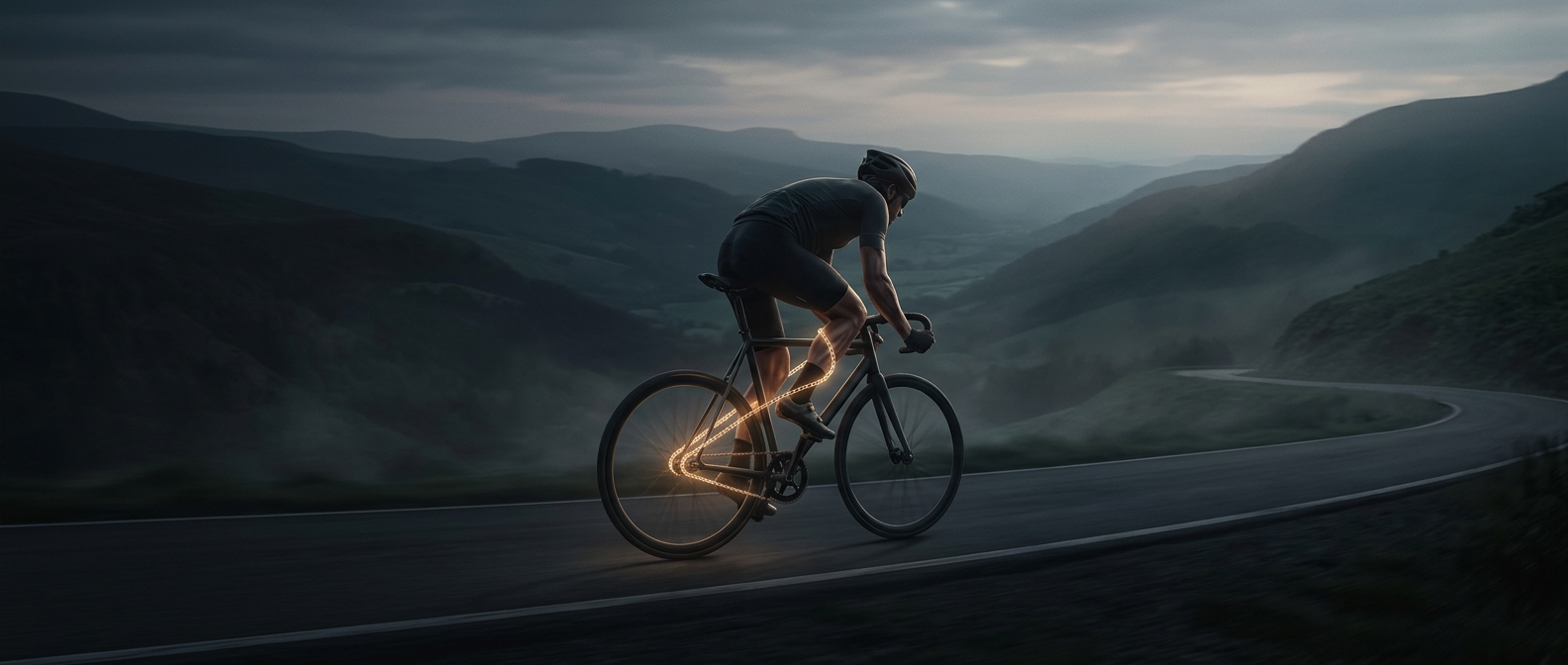
The connection works both ways. Pressing the pedals drives the wheel; when the bike is moving, the turning wheel drives the pedals and your legs. To slow down, a rider can resist the pedals with their legs, which pushes back against the rear wheel. A fixed gear may also have a hand-operated brake; “fixed gear” describes the drivetrain, not the absence of brakes.
The tradeoff is direct control
That rigid link gives the rider continuous feedback from the rear wheel and allows speed to be managed partly through pedaling. But it also demands attention: feet need to stay on the pedals, and the rider must keep them moving whenever the bike rolls. At a stop, the pedals stop, too.
The key consequence is simple: on a fixed gear, the bicycle cannot roll ahead while the rider’s legs rest. The wheel and pedals are one moving system, so even downhill, coasting means letting the bike keep turning your legs.