A child’s fears became the house’s rules
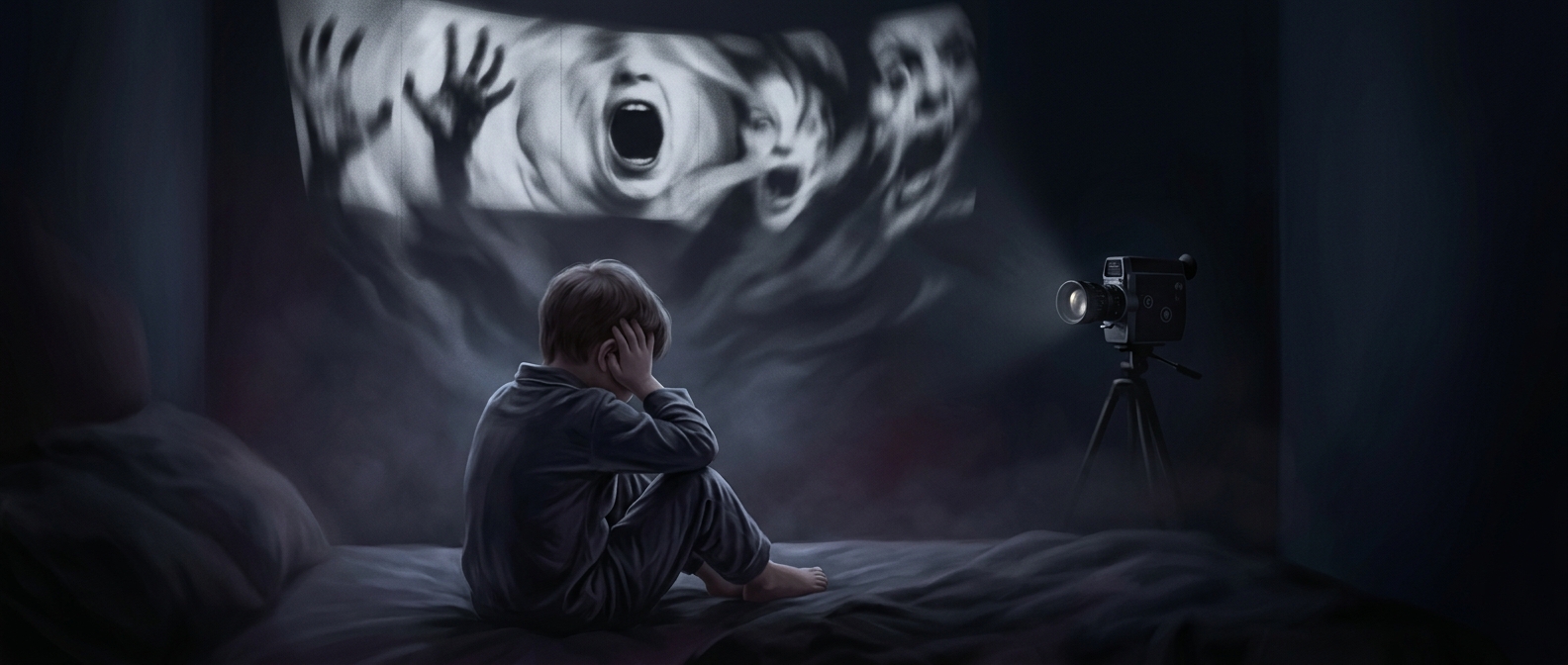
For House (Hausu), director Nobuhiko Obayashi drew on fears suggested by his preteen daughter. The ideas were strikingly concrete: a piano that turns murderous, a severed head that flies, and a cat with an evil presence. Rather than smooth those images into ordinary, realistic scares, the film treats them as clues to the kind of world its characters have entered.
That choice gives the horror its peculiar logic. In a conventional haunted-house story, danger may build through shadows, secrets, and a threat that gradually reveals itself. In House, the threat can arrive as a startling visual gag or an impossible attack. The house seems to change the rules from one moment to the next, making its rooms feel less like a setting than an active, unpredictable force.
From nightmare images to screen spectacle
The daughter’s suggestions offered more than a list of frightening objects. Each one suggested a different way a familiar thing could become unsafe: a musical instrument, a disembodied head, a pet. On screen, those ideas lend themselves to sudden transformations and effects that are strange enough to be funny as well as frightening. The film’s exaggerated style makes that mixture part of the experience, rather than a break from it.
The result is a horror film whose imagination feels deliberately untamed. Its central trick is to make a home—the place usually associated with shelter—behave like a nightmare that can turn anything in the room against you.