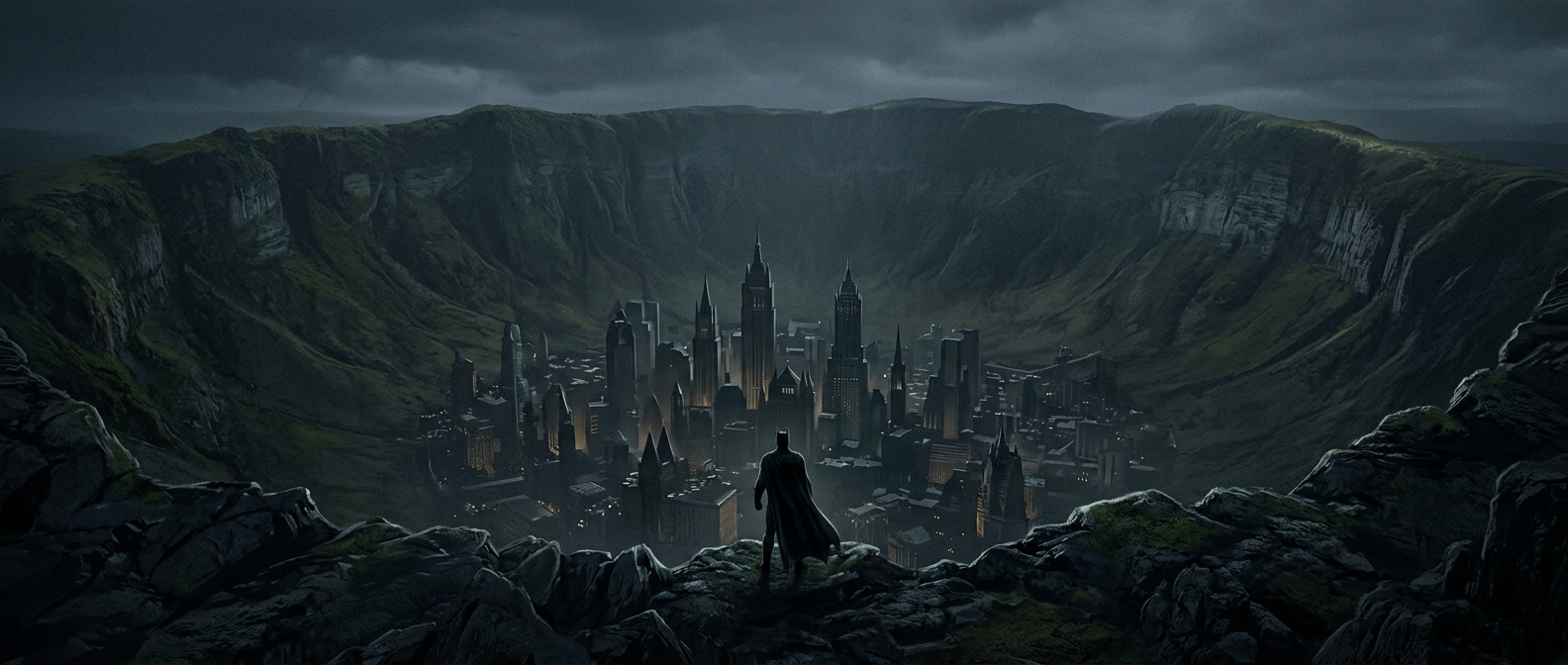
A fictional city with real-world neighbors
Gotham is often read as a darkened version of New York: dense streets, towering buildings, and problems too large for ordinary institutions to contain. Placing it in southern New Jersey makes that resemblance geographical as well as atmospheric. Gotham can feel like a separate metropolis while still belonging to the familiar northeastern corridor, rather than floating in an unspecified comic-book landscape.
That distinction matters in a shared fictional world. A location on a map gives writers a rough frame for travel, neighboring cities, and regional events—even when individual stories reshape the details to suit the plot. Gotham’s position also leaves room for it to stand apart from New York itself: it can borrow the scale and urban mood without being bound to the real city’s exact streets or history.
Why the map does not settle every story
A canonical atlas is a reference point, not a promise that every comic, film, or television version will follow one consistent map. Gotham’s precise surroundings can shift across adaptations, but the New Jersey placement gives the city a useful anchor: close enough to evoke a real northeastern setting, yet fictional enough for Batman’s world to make its own rules.