The title’s direction depends on the book’s market
On a typical U.S. book spine, the title reads from the top of the book toward the bottom. In much of Europe, it reads from bottom to top. “Bottom to top” means the letters become upright when you tilt your head to the right while looking at a normally shelved book; the U.S. convention calls for the opposite tilt.
This is a choice in the cover’s layout, not a feature of the book’s binding. The words are printed along the narrow strip that faces outward on a shelf, and the publisher decides which way to turn them. The convention can therefore travel with the edition: an imported book may keep the spine direction familiar to its original market even when shelved elsewhere.
A small mismatch with a real browsing effect
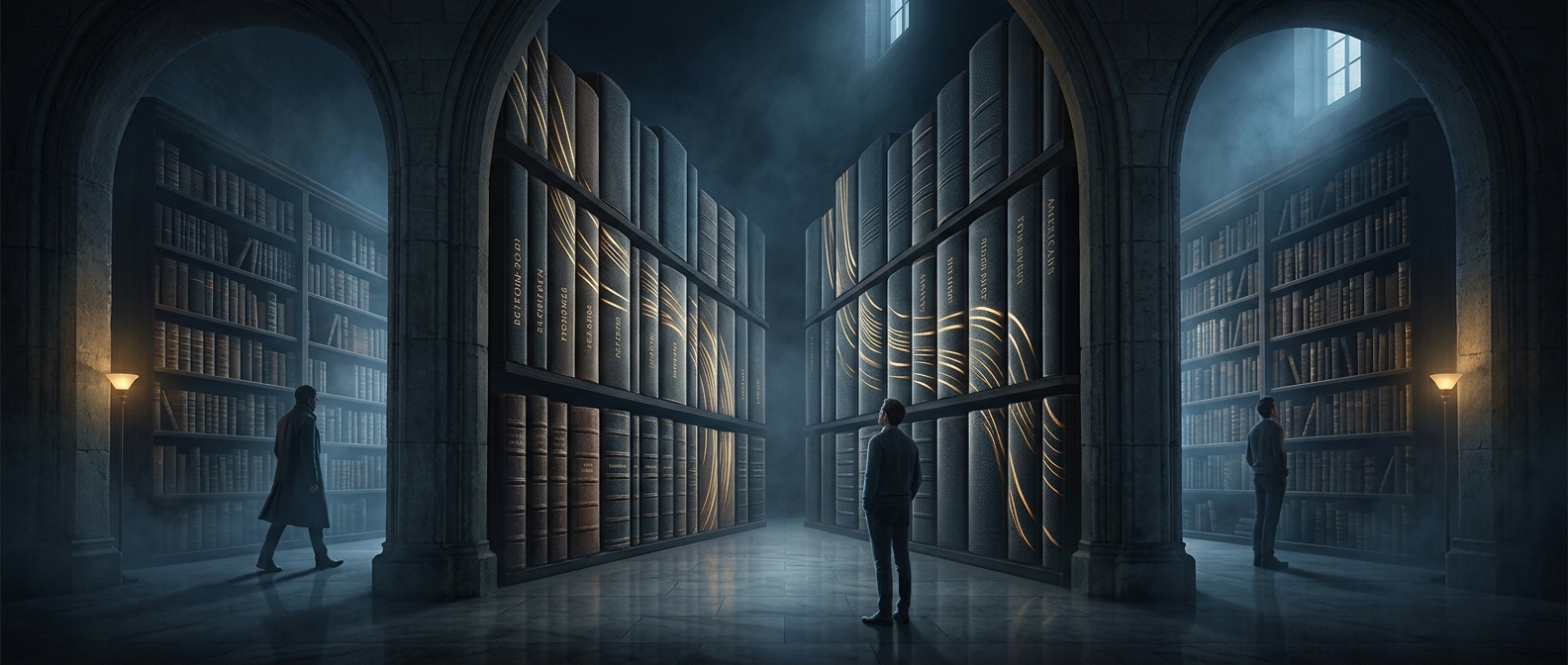
A spine is meant to make a book identifiable without pulling it from the shelf. When neighboring books follow different conventions, a reader scanning their titles has to switch the direction of their gaze—or tilt their head the other way. The words remain perfectly legible; the interruption is in the reading habit.
These are common conventions, not an absolute border between every U.S. and European edition. The next time a shelf feels awkward to scan, the cause may be as simple as two publishing markets having taught readers to turn their heads in opposite directions.