How a shopping trip turns into browsing
The Gruen effect describes a shift from entering a store or mall with a specific task to wandering, noticing more merchandise, and making purchases that were not on the original list. The design goal associated with the effect is to encourage that shift—and, ultimately, increase spending.
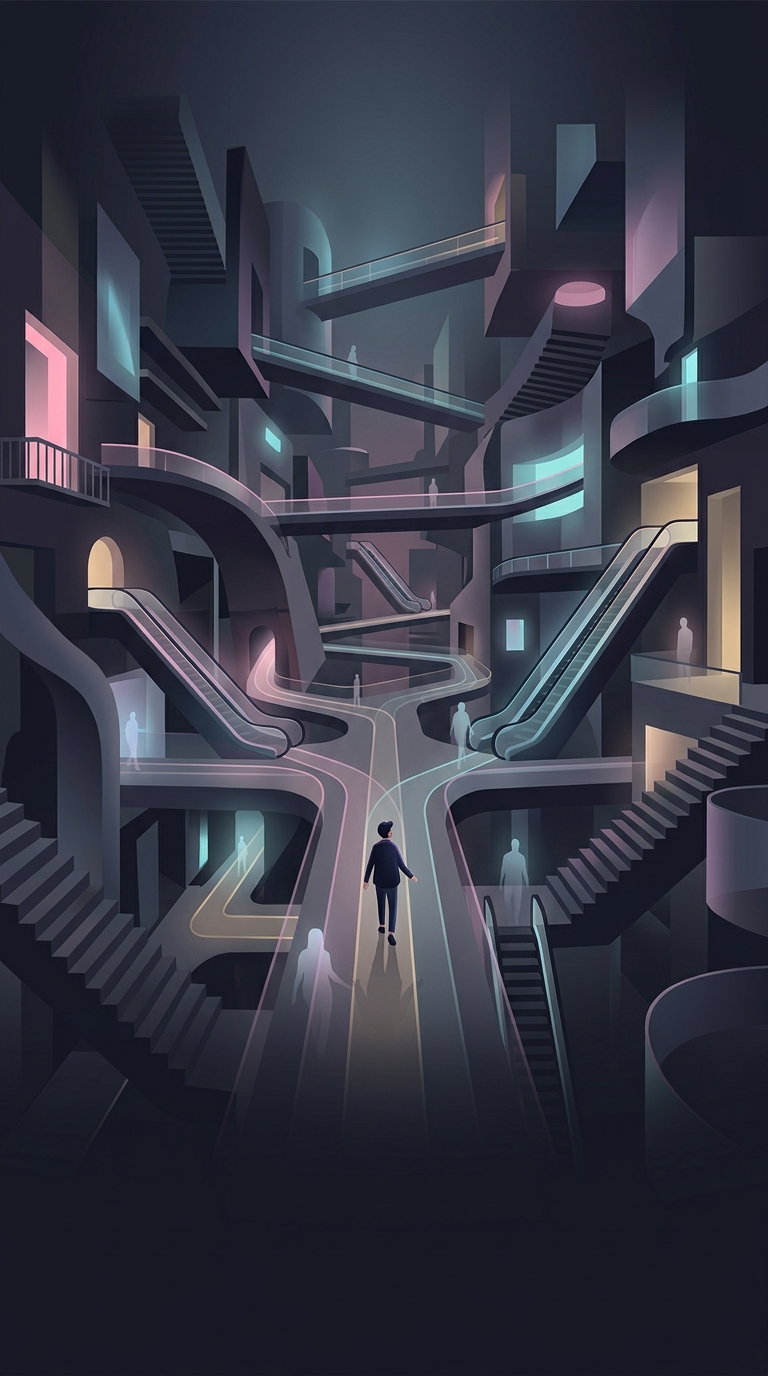
A shopper who can quickly locate an entrance, a desired store, and the way out has a clear route and a limited set of decisions. A more complex environment invites detours. Storefronts, displays, signs, and other attractions compete for attention; one unplanned stop can expose a shopper to another. The effect is not simply confusion: it is the way distraction and leisurely exploration can loosen a person’s focus on the original errand.
The idea and its uneasy legacy
The term is named for Victor Gruen, an architect associated with the development of the modern shopping mall. Gruen envisioned malls as more than rows of shops: they could also serve as places to gather and spend time. The commercial value of keeping visitors inside, however, made that welcoming, walkable environment useful to retailers as well.
That distinction matters. A maze-like layout is not proof that every mall was deliberately engineered to disorient people. The Gruen effect names a design outcome and a commercial incentive, not a universal blueprint. Its memorable implication is that the longer a shopping environment can turn a focused errand into an enjoyable detour, the more chances it creates for an unplanned purchase.