Mistletoe Takes From Trees—but Usually Doesn’t Kill Them
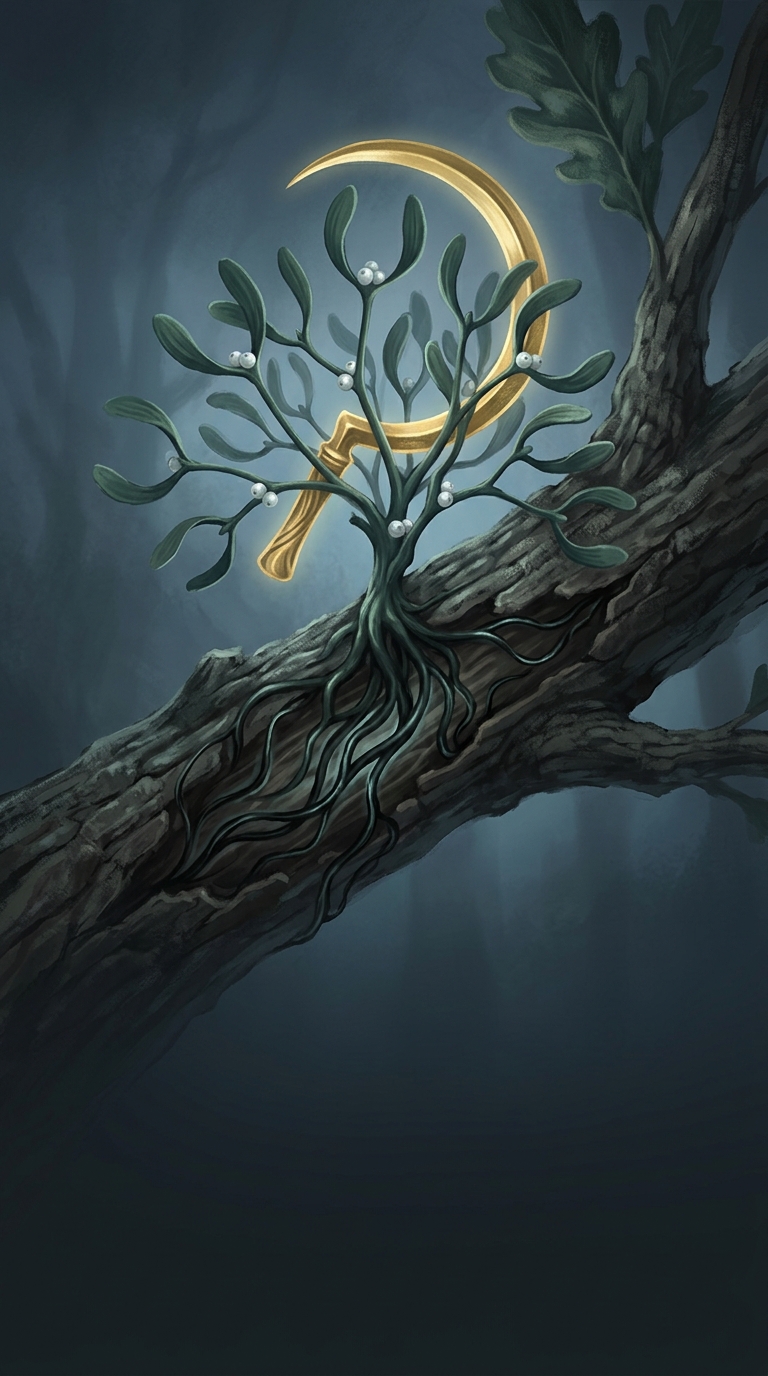
Mistletoe is a hemiparasite: it makes some of its own food through photosynthesis, but taps into a tree’s tissues to draw water and minerals. Its roots penetrate branches and connect to the tree’s supply system. A small patch may do little obvious harm; a heavy infestation can weaken a tree, especially when it is already under stress. Calling mistletoe a tree-killing parasite overstates the usual outcome.
The plant’s berries and leaves can also be harmful if eaten. Different kinds of mistletoe vary in toxicity, so the risk depends on the species and the amount swallowed. The decorative sprigs used in homes are best treated as plants to admire, not sample—particularly around children and pets.
Why It Became Sacred
Mistletoe’s unusual way of growing helped make it striking: it appears high in the branches, sometimes on a tree that has shed its own leaves, and bears pale berries in winter. Ancient writers describe Celtic religious figures gathering it from trees, including oak. Those accounts offer evidence for the practice, but they are not a complete record of Celtic belief, and the familiar ritual details should not be treated as certain in every particular.
The plant’s persistence and conspicuous growth could readily invite associations with vitality, healing, or fertility. Those are cultural meanings, not demonstrated medical effects. Mistletoe has also been used in modern complementary medicine, but that does not make raw household mistletoe safe to eat or a proven cure.
From Sacred Plant to Holiday Custom
The kissing custom belongs to a later European tradition, not a direct continuation of an ancient druidic ceremony. Its exact origin is uncertain; over time, mistletoe became a seasonal decoration linked with romance and sociability. Hanging it indoors also puts a woodland plant in an unexpected setting: a parasite normally attached to a living branch becomes a symbol of welcome at the doorway.
That contrast is the memorable part. Mistletoe can draw resources from a tree without usually destroying it—and a plant once surrounded by sacred associations now serves as a holiday prop whose berries are still better left untouched.