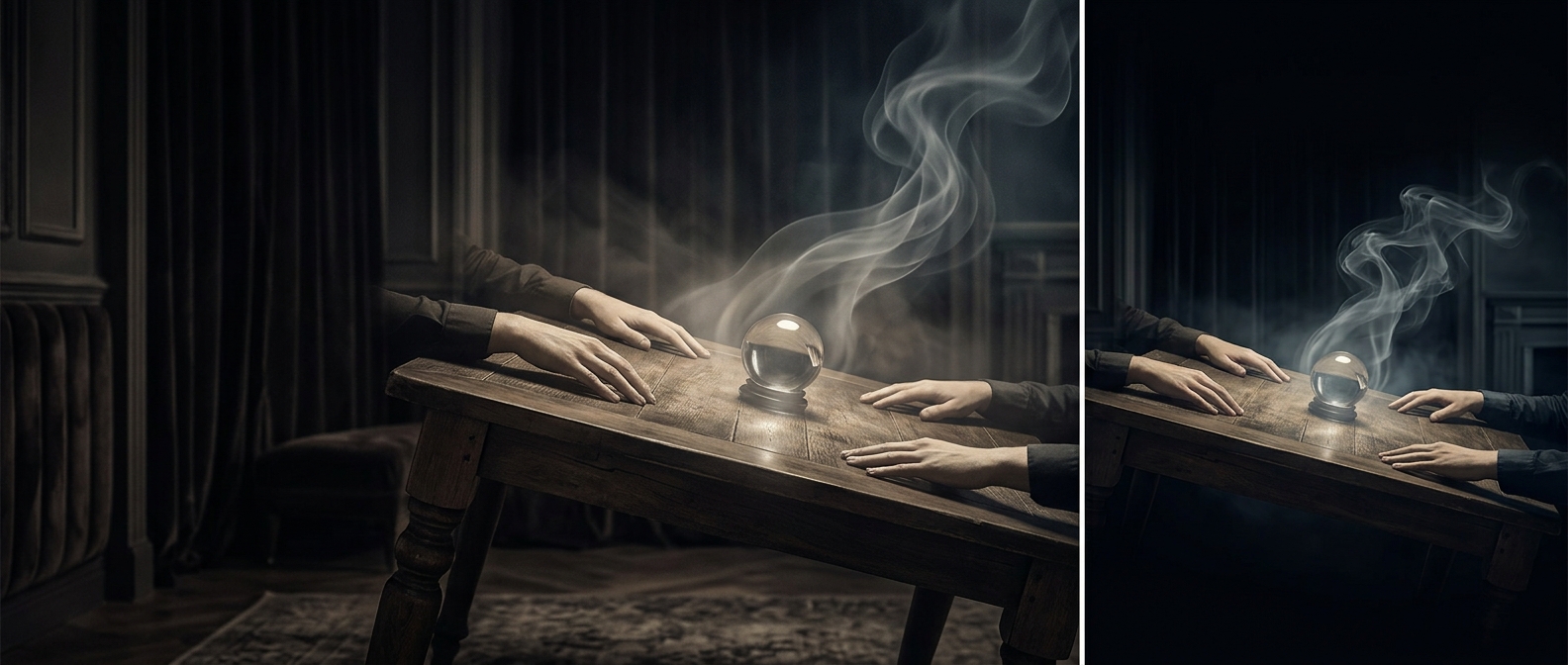
How Table Tipping Turned a Table Into a Séance Instrument
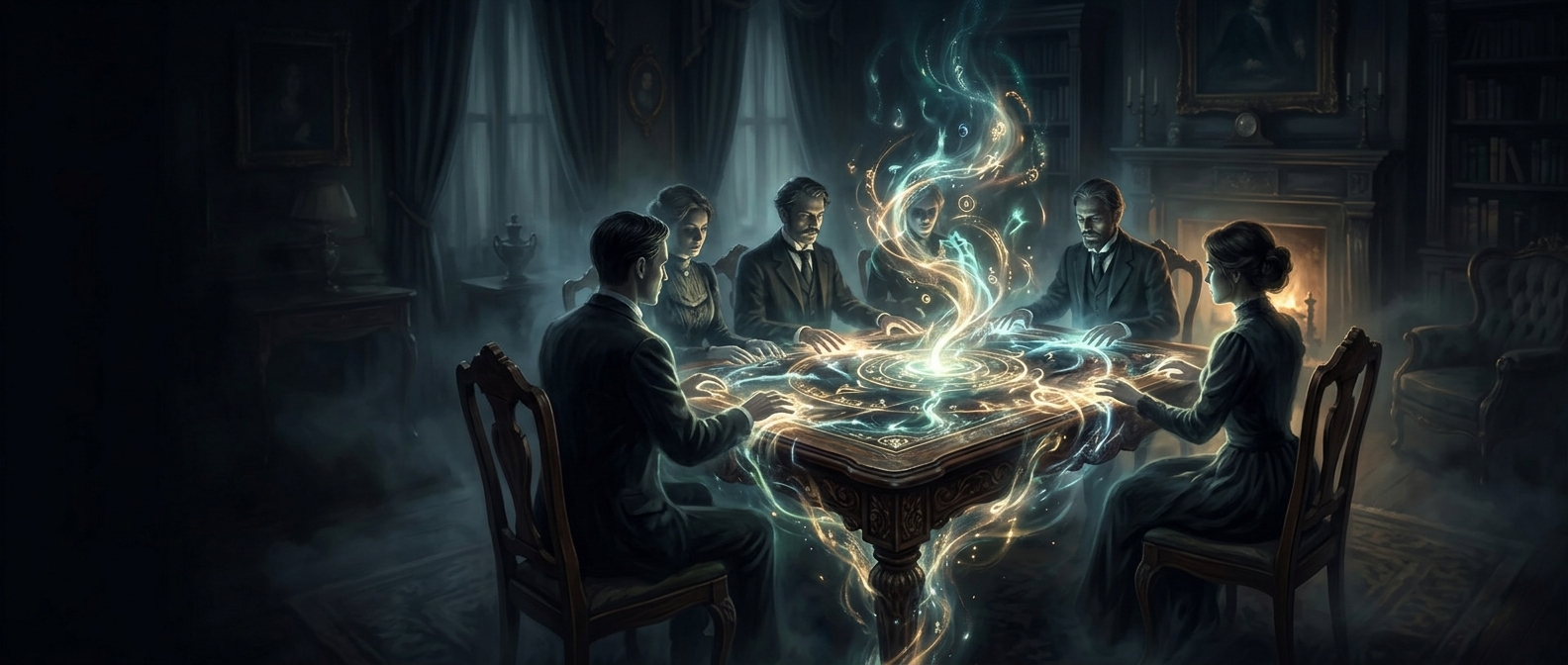
Table tipping makes an ordinary piece of furniture part of a séance: participants gather around it, rest their hands lightly on its surface, and wait for it to tilt or move. In spiritualist settings, a lift, knock, or rocking motion could be interpreted as a spirit’s attempt to answer questions. The table’s weight made the movement feel especially striking—and made the practice less forgiving of misplaced feet.
Shared Touch Can Make Small Movements Add Up
A table does not need to leap into the air to seem responsive. If several people press or shift their hands at once, their small movements can combine, rocking the table or lifting one edge. Participants may not notice each contribution, especially when attention is fixed on the table and the group is waiting for a sign. This unconscious, involuntary movement is often called the ideomotor effect: an expectation can guide tiny muscle motions without a person deliberately deciding to move.
That account describes a physical way the motion can happen; it does not settle what the experience means to someone who believes a spirit is present. In a séance, the movement could serve as more than a trick of motion. It offered a shared event that participants could treat as a reply, interpret together, and use to sustain the ritual.
The Cost of Making the Message Visible
Table tipping’s drama came from putting an unseen claim into visible motion: the furniture itself appeared to answer. But a heavy wooden table is an awkward messenger. A sudden shift can catch fingers or toes, so the same movement that made the séance feel convincing could also make the game hazardous. The spirit’s “message” might be subtle; the table delivering it was not.