How a whale turns squid remains into ambergris
Sperm whales swallow squid whole, but some of the prey’s hard, keratinous beaks resist digestion. The leading explanation is that these fragments become embedded in a mass of material in the whale’s digestive tract. Ambergris is thought to form around them, potentially helping shield the gut from their sharp edges. Exactly how the mass develops—and how often it forms—remains uncertain.
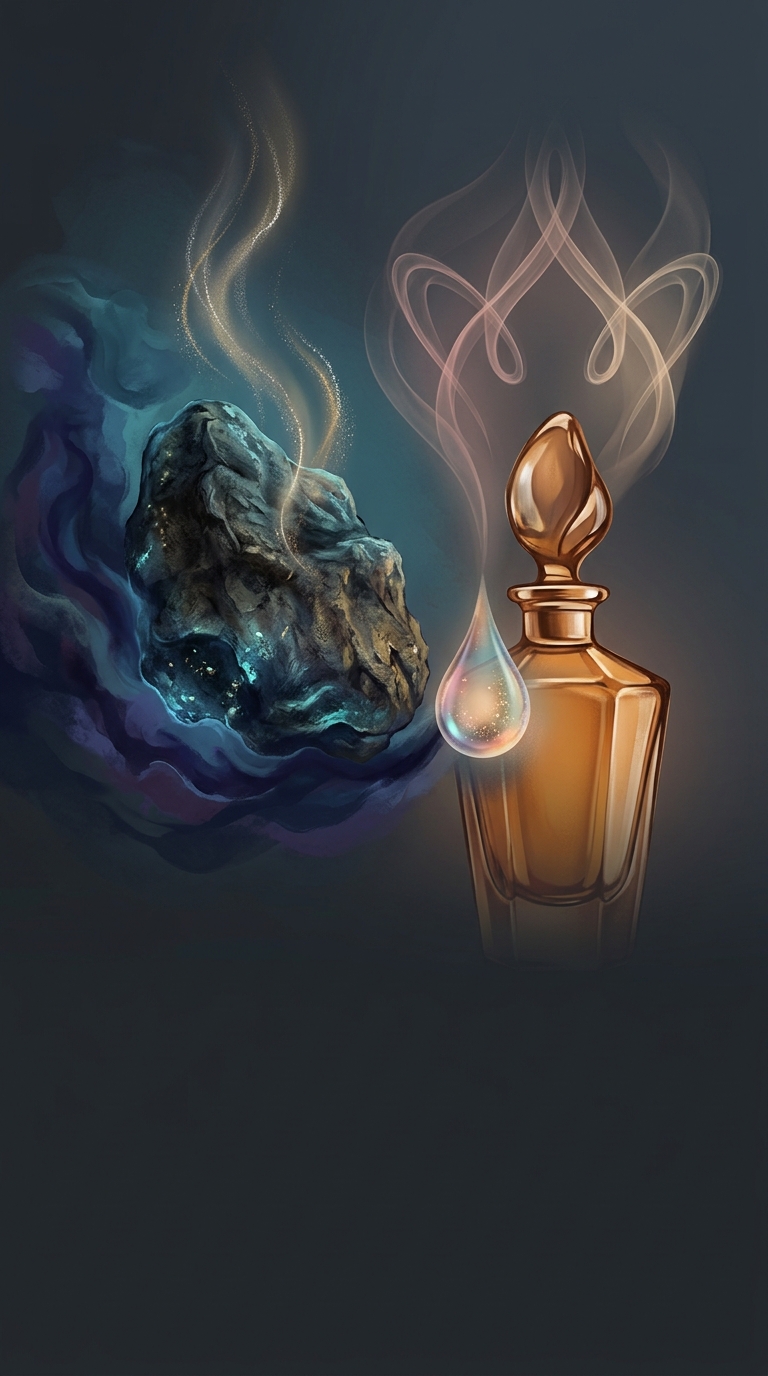
Fresh ambergris is not the prized perfume ingredient people imagine: it is dark and strongly unpleasant in odor. Once expelled, it may drift in the ocean or wash ashore. Sunlight, air, and seawater gradually alter its chemistry, softening its smell and producing the complex, lingering scent that made aged ambergris valuable to perfumers.
Why perfumers prized the aged material
Ambergris does more than contribute its own scent. In a perfume, it can act as a fixative: a material that helps a fragrance evaporate more slowly, so other notes remain noticeable for longer. That practical effect, combined with its distinctive odor, made the whale-derived substance unusually valuable.
Today, perfumers can use synthetic materials to recreate some of ambergris’s effects without relying on a substance from sperm whales. The transformation remains striking: a stubborn squid beak, enclosed in a whale’s gut and then weathered by the sea, can become both a protective biological oddity and a fragrance ingredient.