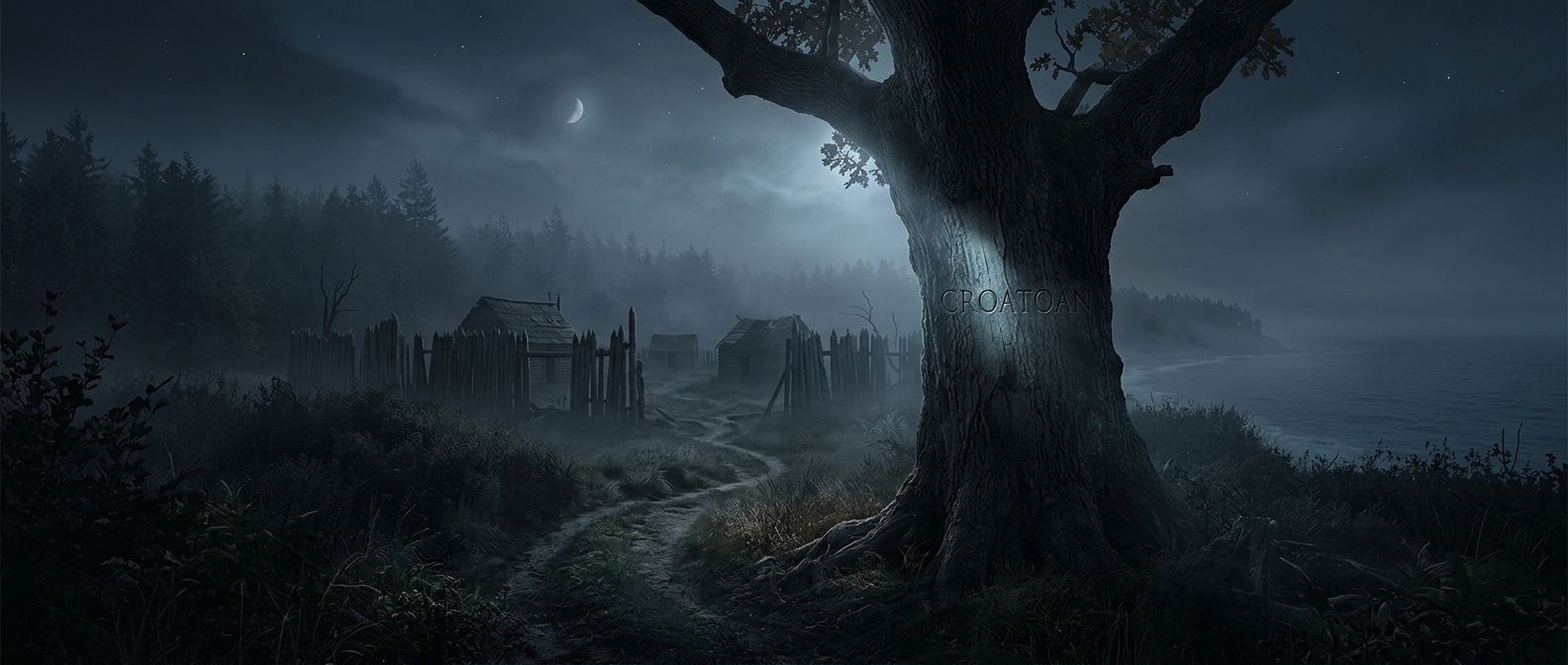
A place name, not an explanation
When English governor John White returned to Roanoke in 1590, the settlement his group had founded was empty. The only clear clue was “CROATOAN,” carved into a post. It named a nearby island—now called Hatteras Island—and the Indigenous people associated with it. The word pointed toward a possible destination, but it did not say who had gone there, why they left, or what happened afterward.
Why the clue mattered
White had left the colony in 1587 to seek supplies in England. His return was delayed by war and other obstacles, and he reached Roanoke three years later. The colonists were gone; their houses had been taken apart, and White found no sign of a violent attack. Before departing, the settlers had agreed to mark their destination if they moved. “CROATOAN” fit that plan, making relocation a plausible explanation—not proof of one.
White wanted to sail to Croatoan to search, but bad weather prevented the attempt. With no surviving account from the settlers and no confirmed trace that resolved their fate, the carved name could not settle the mystery. It remains a fragment of evidence: a clue that narrows the possibilities while leaving the most important questions unanswered.