Tskaltubo’s springs drew visitors for more than warmth
In the Georgian spa town of Tskaltubo, the water itself was the attraction. Its mineral springs contain radon, a naturally occurring radioactive gas that can dissolve in water as it rises through underground rock. In Soviet-era treatment routines, visitors bathed in the spring water as part of prescribed spa courses. The radon was treated as a therapeutic ingredient, not simply an oddity of the local geology.
That made the bathhouses working medical spaces as well as grand public buildings. A visitor’s experience moved from the town’s landscaped setting into treatment rooms where mineral water was put to use. The architecture gave the health regimen a civic scale: this was a destination built to receive people for care, not just a place to stop for a soak.
When the spa emptied, the buildings remained
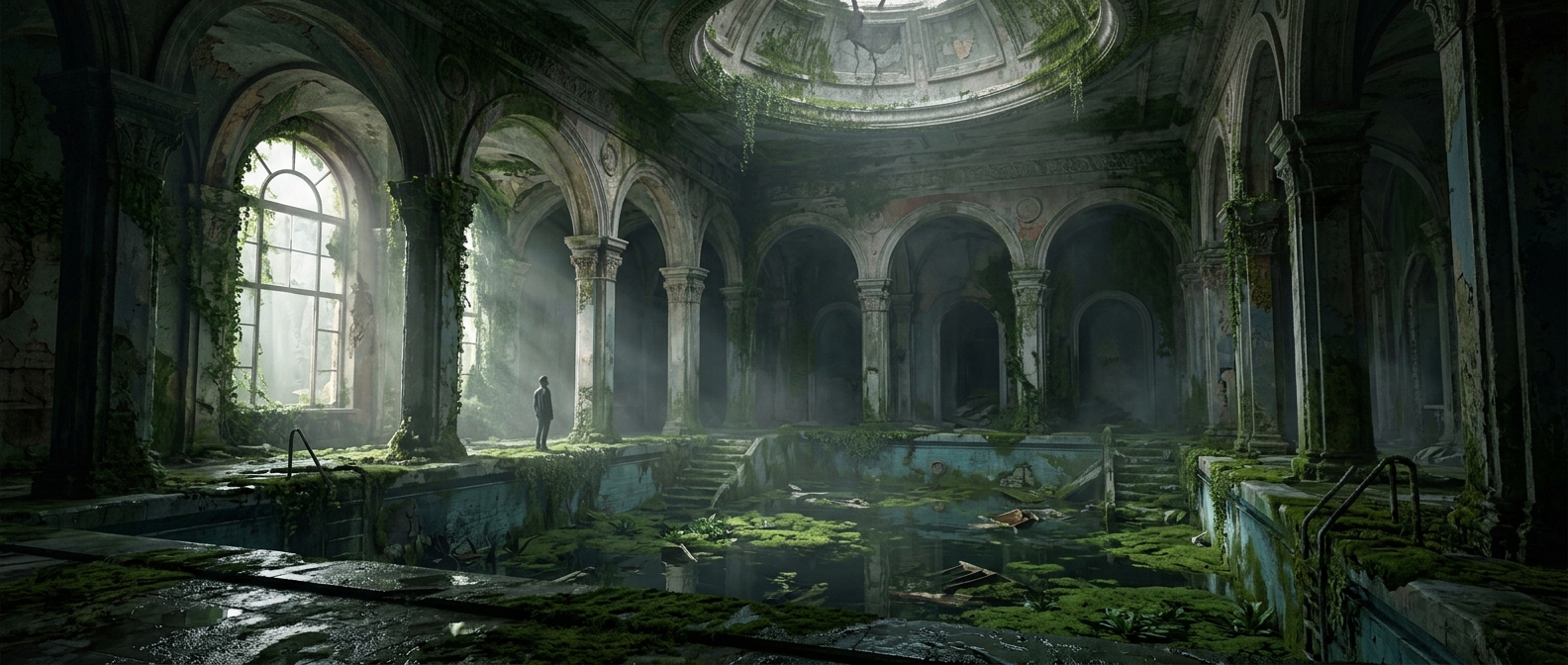
The contrast visible today—roofless rooms and empty foyers—comes from the loss of that steady stream of visitors and upkeep. Once the bathhouses no longer served their former role, their large interiors became difficult to maintain. Weather entered through broken roofs; dampness helped moss take hold in the stone and abandoned rooms.
That greenery is not merely decoration. It makes the change legible: water that once arrived as a managed treatment now reaches the buildings unchecked. In Tskaltubo, the landscape is slowly reclaiming the very spaces designed to bring people to its springs.