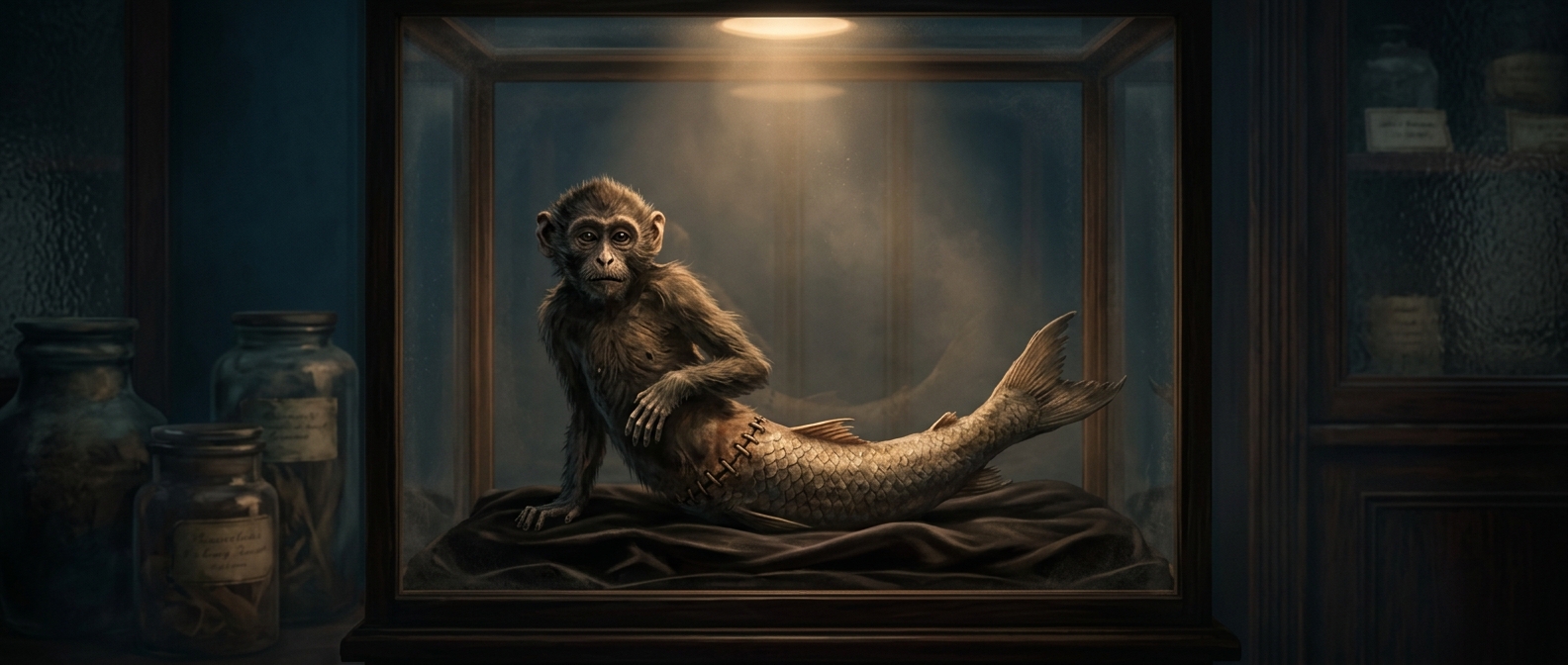
How the Fiji Mermaid Was Made
The sideshow creature later known as the Fiji mermaid was not a single animal. Its makers joined the dried upper body of a small primate to a fish tail, then presented the result as a preserved sea creature. The seam was part of the construction: stitching held the mismatched pieces together, while drying made the composite look old and strange rather than freshly assembled.
Why the Hoax Could Work
A sideshow display did not need to withstand close scientific examination. It needed to catch a visitor’s eye and invite a story. In the 19th-century world of traveling exhibitions, audiences encountered unusual specimens, curiosities, and claims about distant places in the same rooms. A creature said to come from far away could be difficult for visitors to check, and its small, dried form rewarded a quick glance more than careful inspection.
The name “Fiji mermaid” helped give the object a place and a legend. The label made the stitched body seem like evidence from an unfamiliar ocean, turning an obvious mismatch into a puzzle for spectators to debate. The deception depended less on convincing anatomy than on controlling how people encountered it: as a rare object, presented with an enticing explanation.
The Exhibit Outlasted the Claim
The mermaid became famous not because the hoax produced a plausible new species, but because the construction was so jarring once understood. It exposed the sideshow’s central trick: the object could be real while the story attached to it was invented. A monkey’s remains and a fish tail were genuine materials; their supposed identity as a mermaid was the performance.