From Leg Garment to Nightwear
The word pajama comes from a South Asian term for a leg garment: loose trousers tied at the waist. European travelers encountered this style in regions where lightweight, roomy clothing suited warm weather, and the garment eventually entered Western wardrobes as leisurewear and sleepwear.
That change in use mattered as much as the change in audience. In the West, pajamas became clothing for relaxing indoors and going to bed, rather than something reserved for daytime wear in hot climates.
Why Two Legs Made a Difference
A nightgown hangs as one piece, so it can twist or ride up as a sleeper turns. Separate trouser legs move more independently with the body. The loose cut also leaves room to bend and stretch, while light fabric avoids the heaviness of more structured clothing.
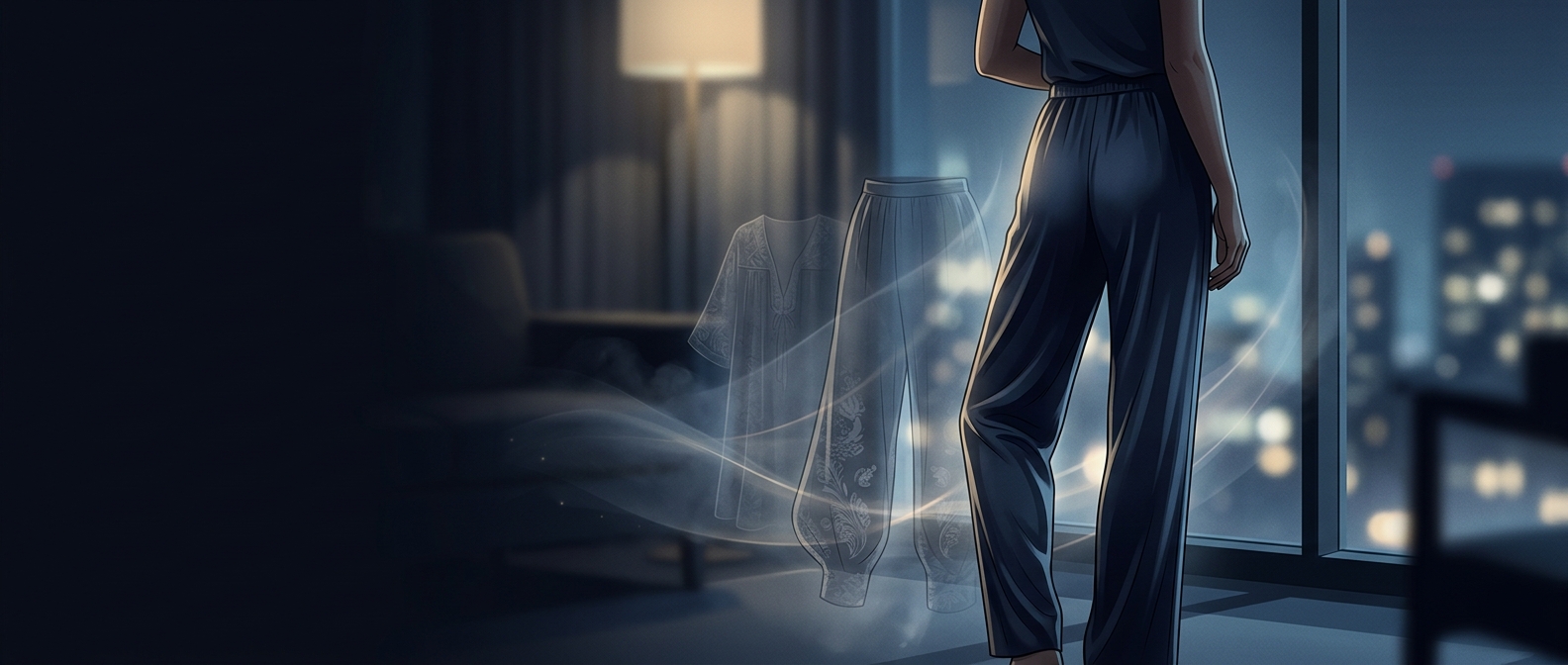
The familiar pajama set carried that practical shape into the bedroom: a top paired with trousers. Its defining idea was freedom of movement—not a special fabric or a single fixed style. Pajamas could change in length, material, or formality while keeping the basic advantage of divided legs.
That design is why a garment associated with warm-weather dress could become a standard form of sleepwear elsewhere: it offered a comfortable alternative to a long, single-piece nightgown without restricting movement.