When Two Voices Become One Scene
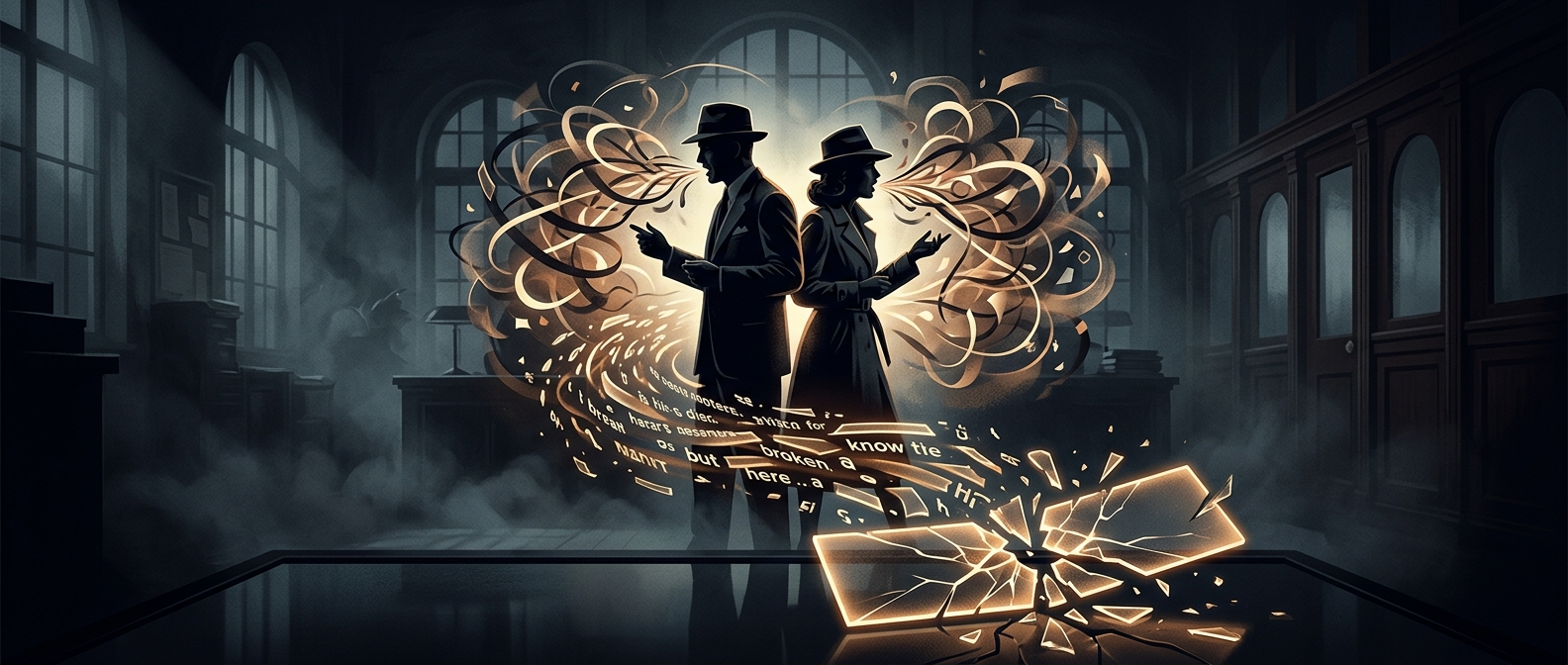
In ordinary film dialogue, one speaker usually finishes before the next begins. Howard Hawks’s actors often started the next line early, interrupting or answering while another voice was still sounding. The result was not simply faster speech: the audience had to track several conversational threads at once, as people do in a lively room. That overlap made exchanges feel spontaneous and kept comic momentum from pausing between punch lines.
Why Subtitles Struggle to Keep Up
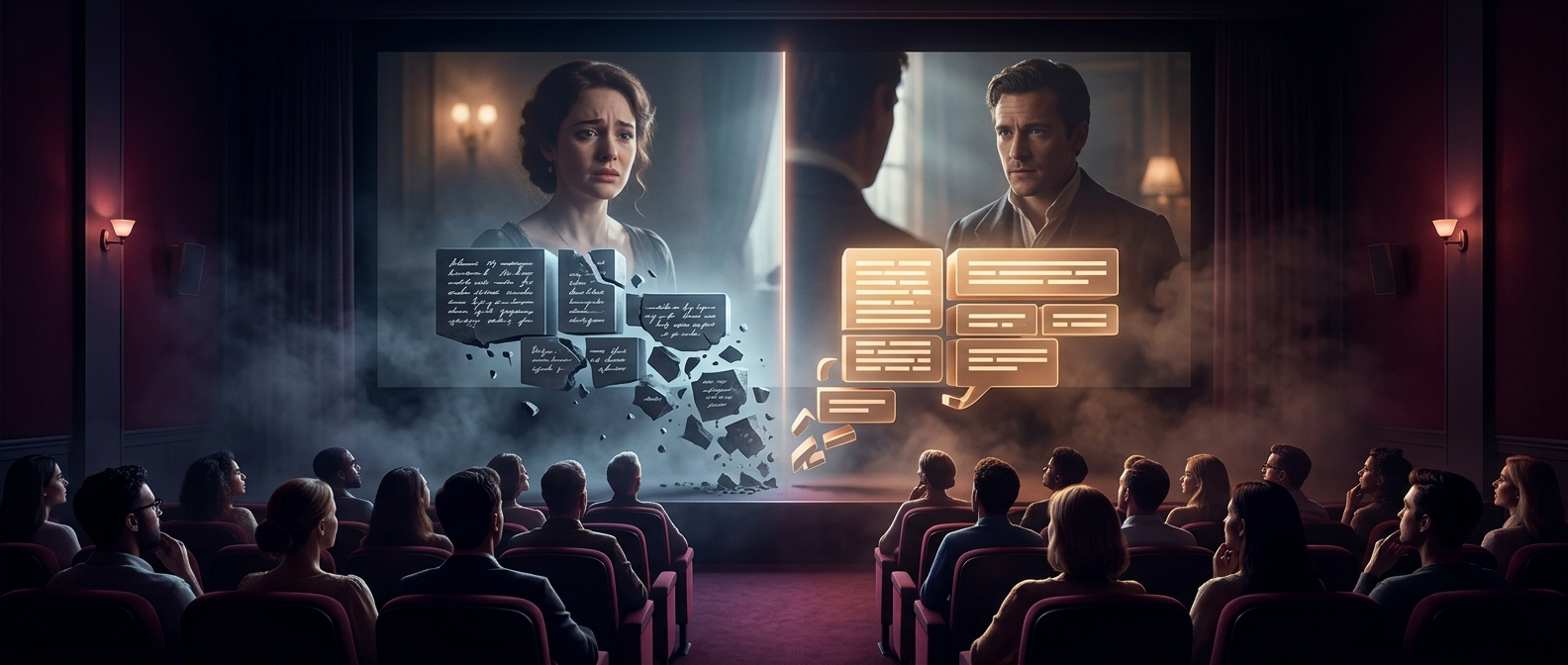
A subtitle has to do more than translate speech. It must appear long enough to read, change at the right moment, and occupy a part of the picture where it will not obscure important action. With overlapping lines, a translator may need to represent two speakers at once, even as the actors move or react in different parts of the frame. Putting both lines on screen can crowd the image; showing them one after another can make the written exchange seem more orderly—and slower—than the performance.
That is a genuine tradeoff, not a flaw in the film. Subtitles can preserve the words, but they cannot always reproduce the timing and visual interplay together. In Hawks’s comedies, the audience’s attention is part of the rhythm: a viewer may catch one voice, then notice the other actor’s reaction, just as the next interruption arrives.