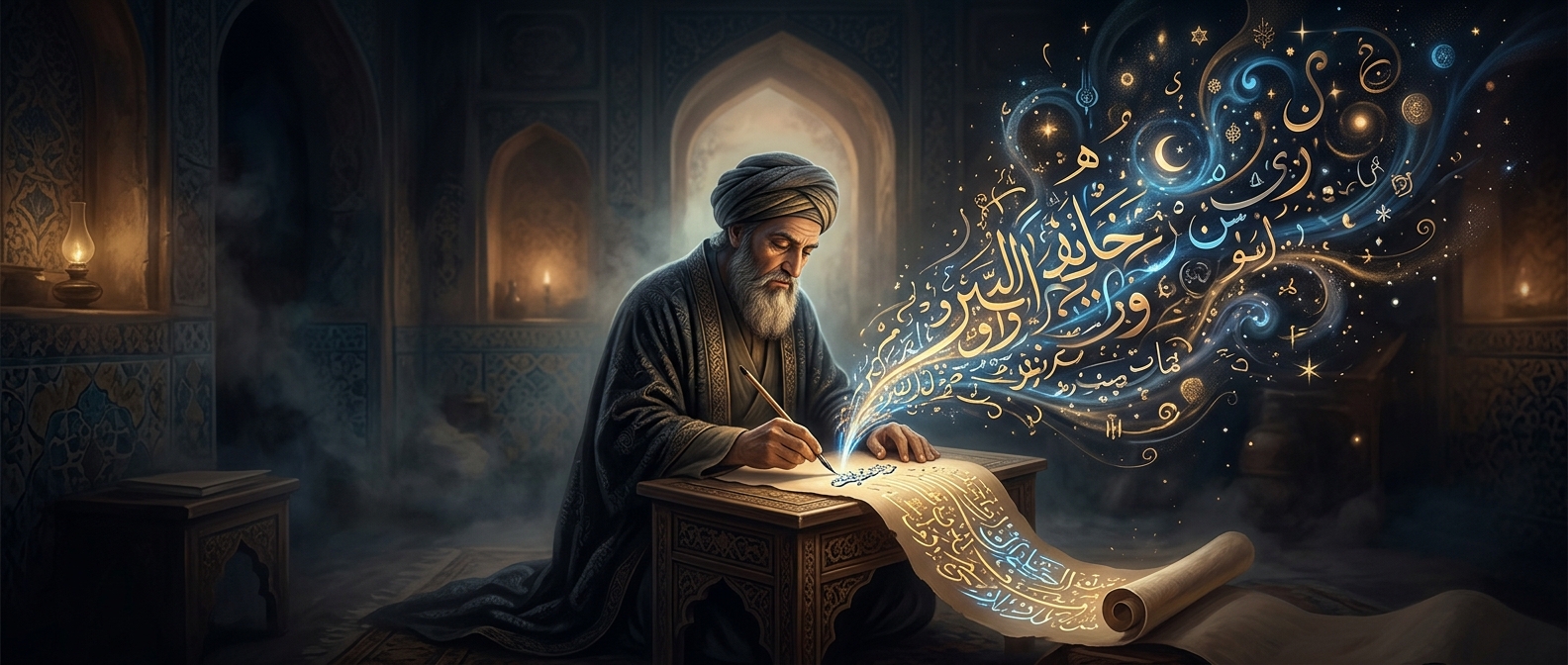
A Weaver’s Answer to Religious Formality
Kabir is remembered as a poet and spiritual teacher who challenged the idea that religious status or ceremony could, by itself, bring a person close to God. In the religiously mixed world of his time, he criticized empty ritual among both Hindus and Muslims. His target was not simply one faith or another, but the assumption that outward observance mattered more than inward devotion.
Kabir earned his living as a weaver. That work gave his spiritual message a concrete setting: instead of presenting holiness as something reserved for temples, formal learning, or religious authorities, he made the loom part of an ordinary working life. The claim that he “wove garments for God” captures this fusion of labor and devotion, though it is best understood as a spiritual image, not a report that he literally made divine clothing.
What the Loom Made Visible
Weaving turns separate threads into a single cloth through patient, repeated work. That offered a vivid way to speak about spiritual life: devotion could be practiced in the midst of daily labor, rather than proved by elaborate display. Kabir’s poems and sayings often use familiar, material images to press readers toward a more direct relationship with the divine.
His challenge crossed religious boundaries because he questioned the same kind of outward show wherever he saw it. In that sense, the loom was more than a symbol of his trade. It embodied his alternative to grand religious performance: a humble, continuous practice in which the work of making cloth—and the life of the maker—could become an offering.