How letter movements can become memory cues
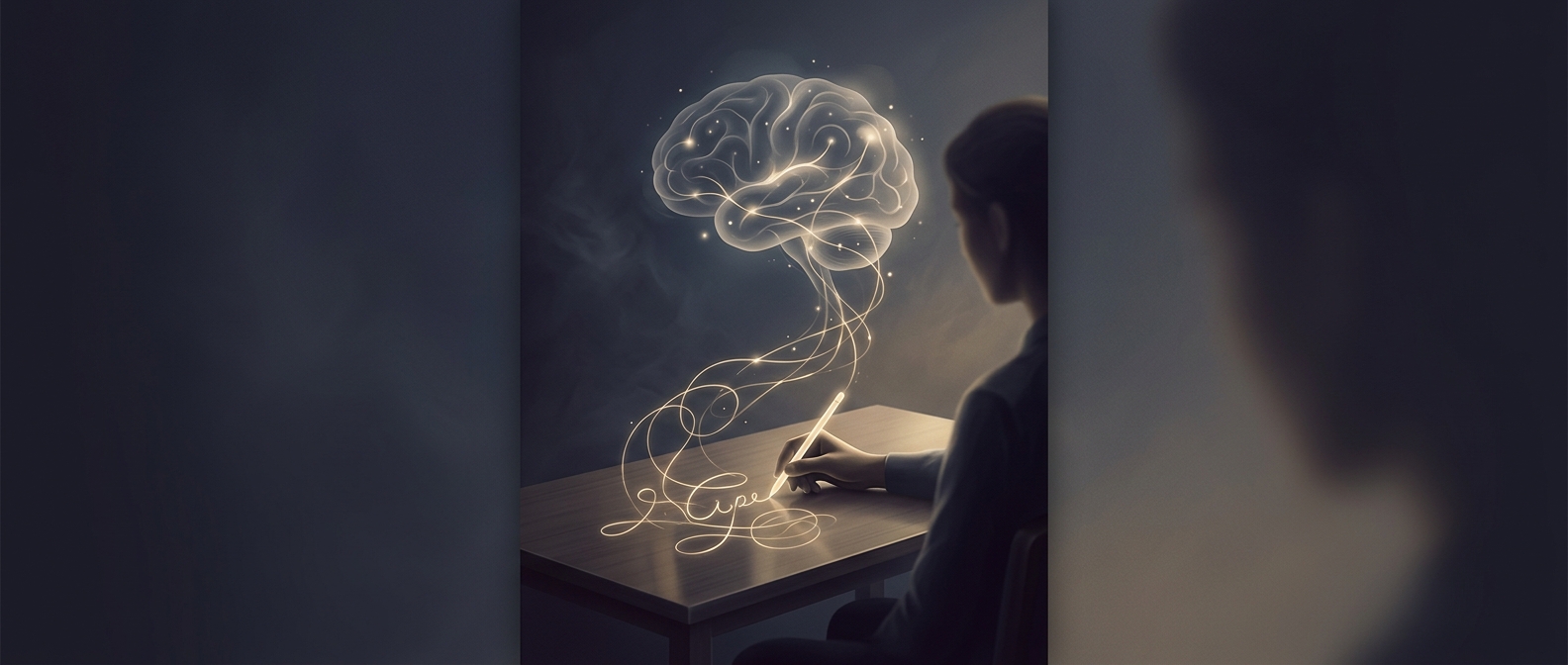
When you write a word by hand, your brain does more than recognize its letters. It also plans and carries out a sequence of small movements: forming one letter, connecting it to the next, and adjusting the hand as the word unfolds. Repeating that sequence can create a motor memory—a memory for how an action feels and proceeds.
That movement may support spelling because a word is stored and recalled through more than one kind of cue. If you hesitate over a letter, the familiar rhythm or shape of writing the word can help bring its spelling to mind. The movement does not replace knowledge of the letters; it gives that knowledge another route to retrieval.
Why cursive may make the sequence more noticeable
In cursive, letters are usually linked into a continuous stroke. That can make the order of letters feel like one connected action rather than a row of separate marks. The hand’s path may help reinforce which letter comes next, especially when a learner repeatedly writes a word while studying it.
The benefit depends on practice and familiarity. If forming cursive letters takes so much attention that a writer is concentrating mainly on pen control, the movement may be less useful for remembering the word. And a physical cue is only one support: seeing the word, saying its parts, and understanding how it is built also matter.
A second route to the spelling
Typing can record a correctly spelled word, but it generally does not rehearse the same letter-by-letter hand movements. Handwriting adds that physical sequence, potentially leaving a learner with another cue to use later. Cursive’s value, then, is not that connected writing magically prevents mistakes; it is that practicing a word’s movement can make its spelling easier to call back.