A shape designed around the people inside
A minivan’s upright sides and high roof solve a basic packaging problem: how to fit passengers, bags, and useful storage into the length of an ordinary road vehicle. A sharply sloping roof may look sleeker, but it cuts into headroom and makes the rear of the cabin less usable. The minivan’s boxy outline keeps that space available instead.
That choice also shifts the vehicle’s priorities. Rather than organizing the cabin around a dramatic hood or sporty profile, designers could give more of its footprint to seats and room to move between them. In many models, seats can be rearranged or removed, letting the same vehicle carry children one day and bulky cargo the next.
Small design choices, repeated all day
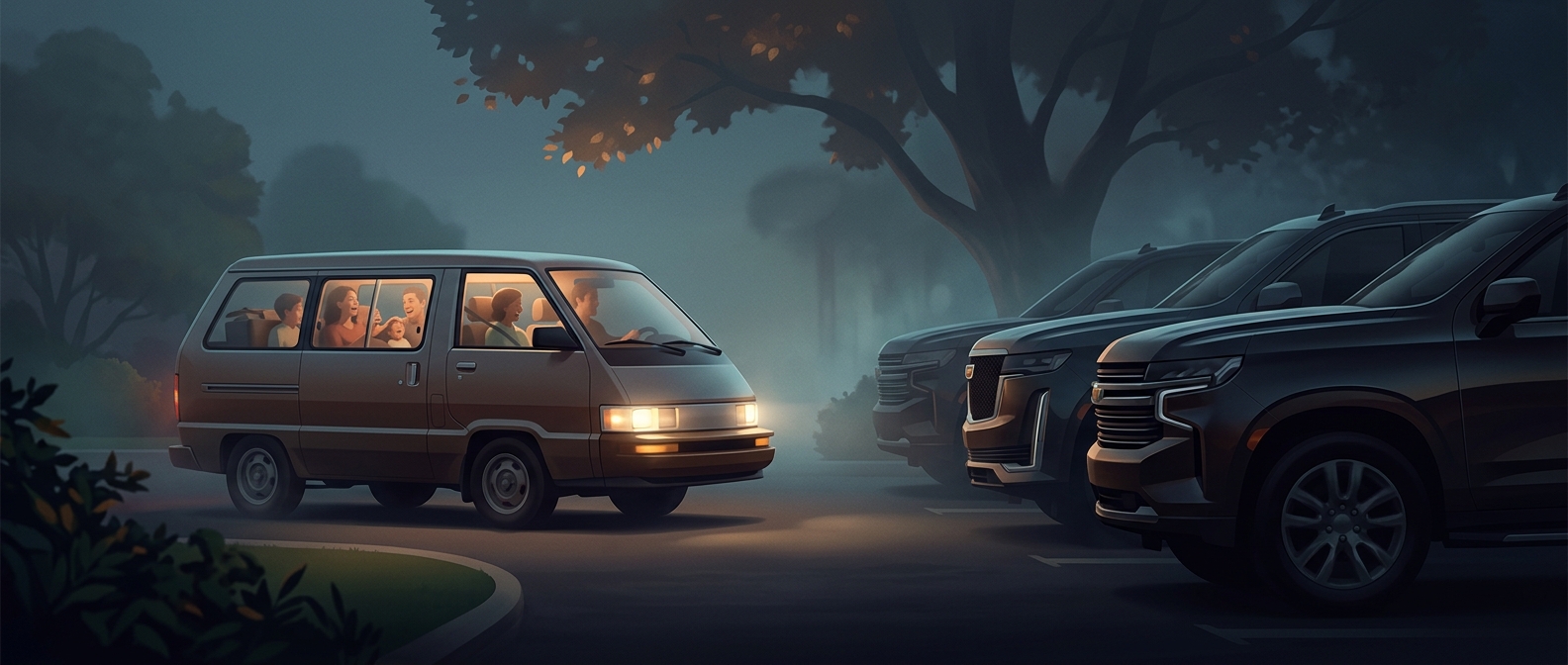
Sliding side doors make sense in the same people-first layout. A conventional door swings outward; a sliding door travels alongside the body, which is useful when a vehicle is parked close to another car or when someone is trying to get a child into a seat in a crowded lot. The doors also create a broad opening for passengers and bags.
Inside, practical details such as cup holders and accessible storage matter because family travel is made up of many small tasks: passing a drink back, gathering belongings, or keeping essentials within reach. These features are not glamorous, but they reduce friction during routines that happen again and again.
Practicality won the daily argument
The minivan’s styling could invite jokes precisely because it made its purpose so visible. It looked less like an escape from family obligations than a vehicle organized around them. SUVs later drew more attention with a tougher image, but the minivan’s appeal rested on a different bargain: spend less effort squeezing people and things into the cabin, and more time getting everyone where they need to go.
That is why its legacy is less about a single look than a recognizable design idea: make the vehicle serve the family’s logistics, even if the result is not the coolest thing in the driveway.