A barrier changes what a passenger can reach
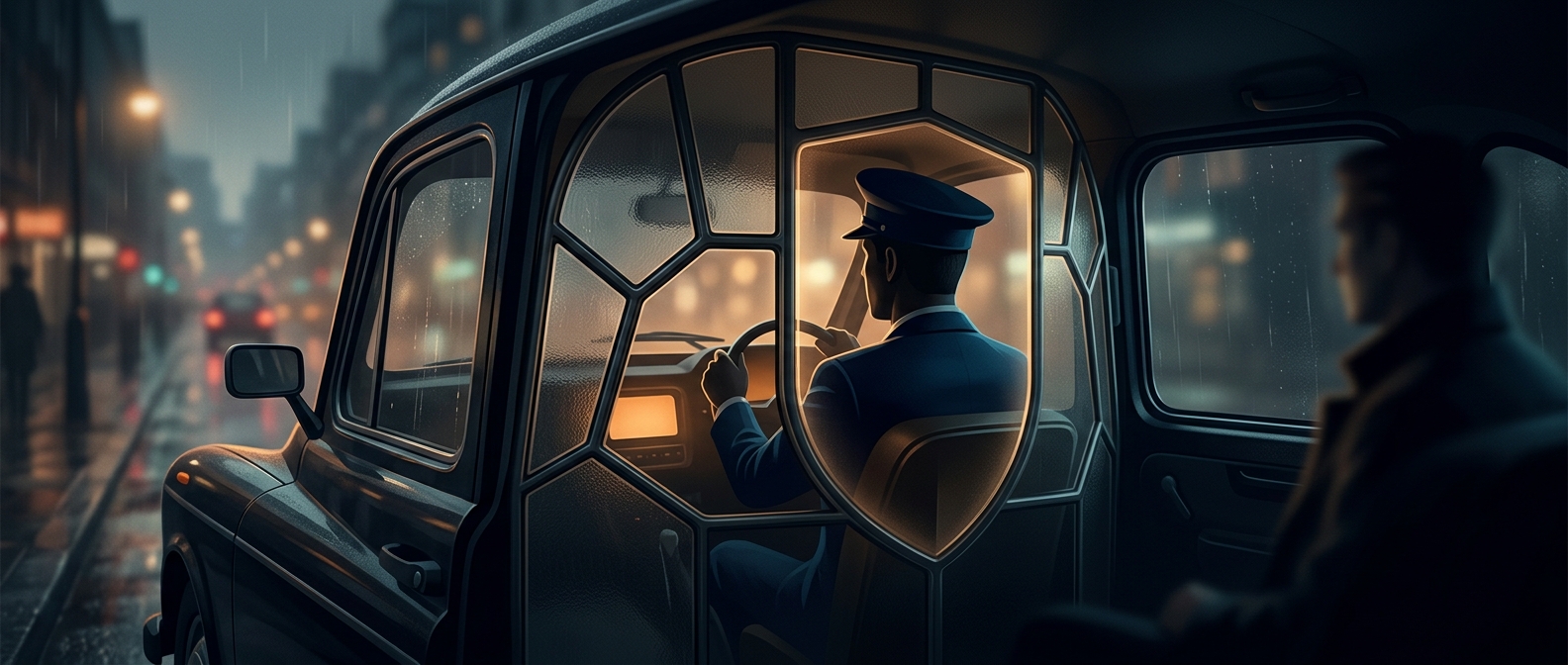
A taxi partition creates physical distance between the front seat and the passenger compartment. Its main safety function is to make it harder for someone in the back to grab, strike, or quickly reach the driver—especially while the driver is focused on traffic and cannot easily turn around.
The barrier also changes the timing of an incident. Instead of an attack moving directly across the cabin, the partition stands in the way, giving the driver more protection and potentially more time to react. It is a layer of defense, not a guarantee against every assault or robbery.
The wall has to work in a moving cab
A partition cannot simply seal the driver away. The driver still needs to see clearly, hear passengers, and communicate about the ride. Designs therefore balance separation with visibility and conversation; the exact arrangement varies by vehicle and service.
That tradeoff makes the partition more than a piece of cabin trim. It reshapes the driver’s workspace: the front becomes a protected area, while passengers remain close enough to speak and be transported. In a small vehicle, one solid divider can change how much control a passenger has over the person at the wheel.