When the dining room becomes the stage
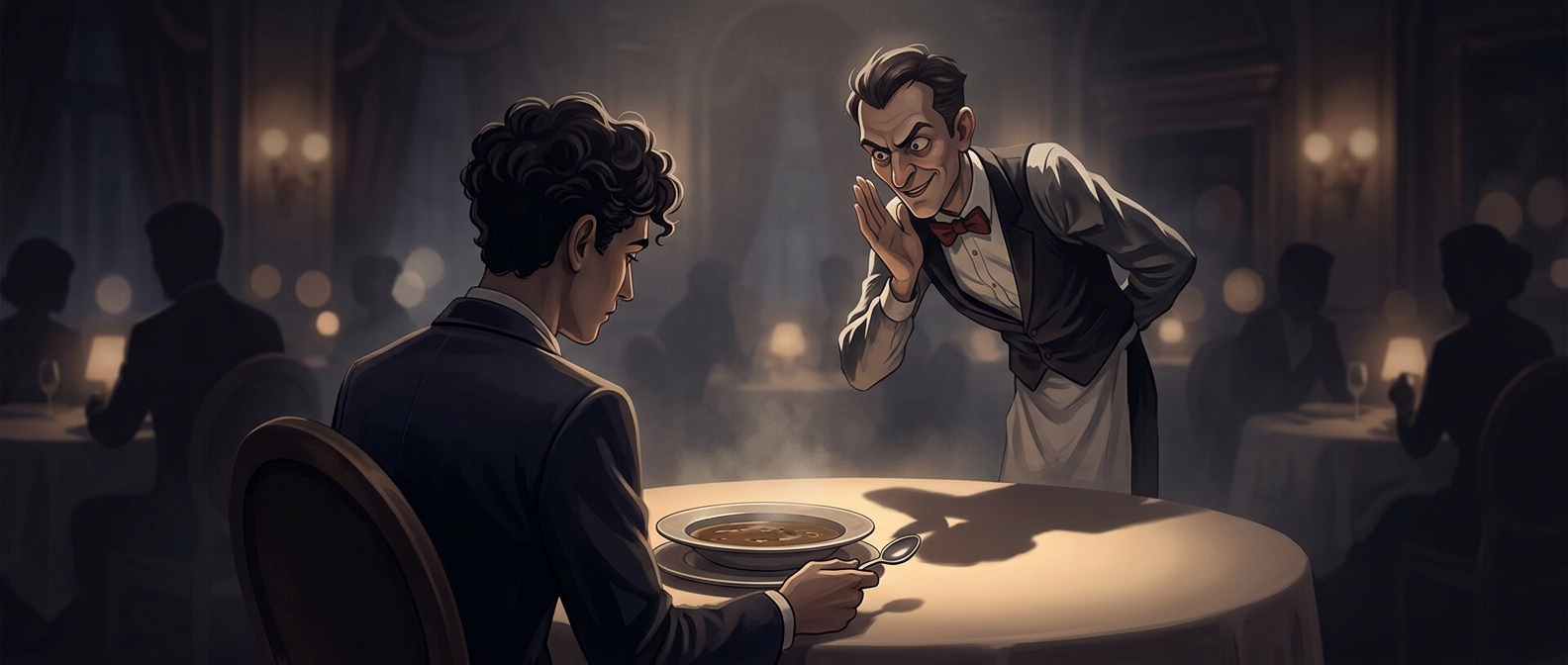
The premise draws on Fawlty Towers, the British sitcom set in a badly run hotel: guests are not simply watching a scene but sitting inside its setting. The tables, meal service and audience all become part of the comedy. A waiter’s insult lands differently when delivered across your own dinner table, and a piece of flying cutlery turns ordinary restaurant space into a slapstick stage.
That setup also explains why the guests function as unscripted extras. The performers can provoke reactions and play off the room, while diners supply the unpredictable part: a startled look, a retort or an awkward attempt to keep eating. The comedy comes from the clash between the formality of a paid dinner and the characters’ inability to behave professionally.
The meal is part of the joke
There is a deliberate mismatch between the premium price and the standard chicken dinner. The meal is not meant to compete with the performance as fine dining; it helps create the illusion that this is a real restaurant service going badly wrong. The food gives the guests something ordinary to do while the show makes the room anything but ordinary.
For the performers, that means the evening has two jobs at once: keep the comic chaos moving and let the meal proceed around it. The result is a sitcom scene with no clean boundary between audience and set—one where the guests’ actual dinner is also the prop that makes the disorder feel immediate.