What the impact is meant to reveal
A bird strike is not like a stone hitting a window. A bird’s soft body deforms and spreads across the surface, delivering a sudden load that can crack a windshield, push it inward, or break its layers apart. Testing with a real carcass gives engineers a more realistic impact than a rigid metal projectile would.
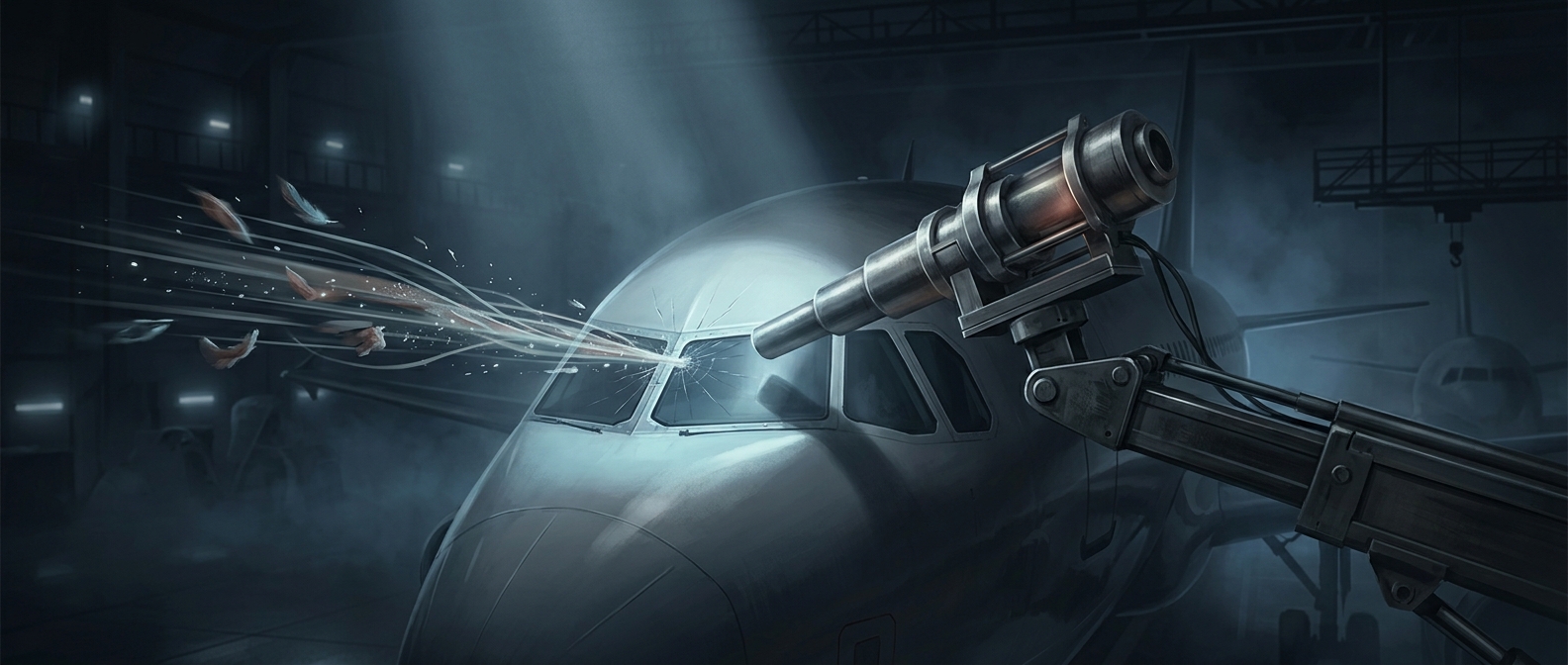
The test is controlled: a launcher sends the chicken into the windshield at a selected speed and angle. Engineers can then inspect whether the glass was penetrated, how far it fractured, and whether it stayed attached to its frame. The point is not simply to see if the pane breaks; it is to learn how the entire windshield responds to a violent, brief impact.
Why the windshield has layers
Aircraft windshields are built from bonded layers rather than a single sheet of glass. The layers can crack or deform while still helping keep the opening covered and the windshield in place. That matters because the cockpit must remain protected even when the outer surface is damaged.
A test impact lets engineers examine how those layers share the load and where damage concentrates. Results can guide changes to the materials, thickness, or bonding—tradeoffs that must be balanced against weight and visibility.
A repeatable stand-in for a messy event
Real bird strikes vary: birds differ in size, and an impact can happen at different speeds and angles. A prepared chicken provides a practical biological test object, while the launcher makes the impact conditions repeatable enough to compare designs. It cannot reproduce every encounter, but it exposes a specific failure that a clean sheet of glass or a computer model alone might miss: whether the windshield can take a sudden, deforming hit and remain a barrier.