Why a Face Can Look Wrong Even When Every Feature Is Realistic
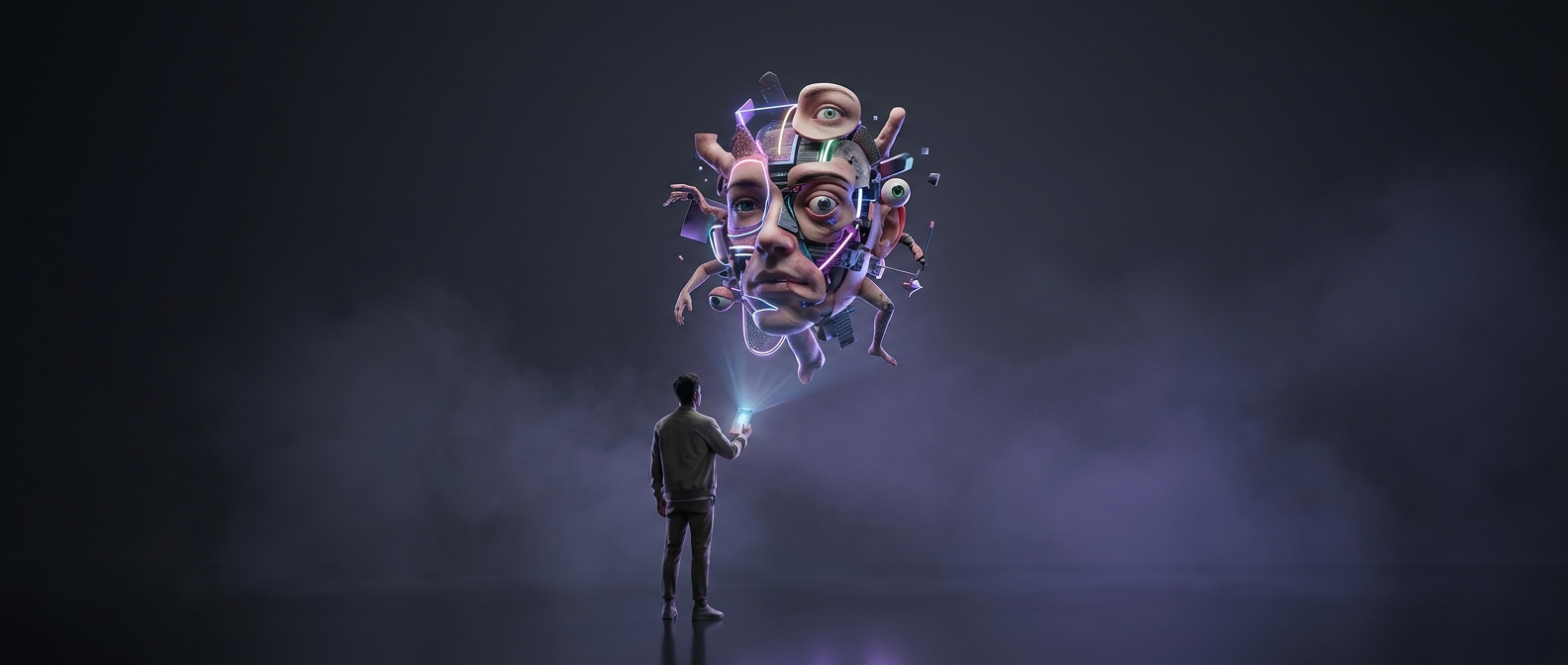
A face editor turns a complex shape into a set of separate controls: widen the jaw, move the eyes apart, lengthen the nose. That makes the face easy to customize, but it can also make features easy to combine in ways that are rare or physically awkward. A very broad jaw, widely spaced eyes, and a narrow midface may each be plausible on their own; pushed together, they can produce a face that feels strangely assembled.
Real faces are not simply collections of independent measurements. Their proportions develop together, shaped by shared anatomy. Slider interfaces often let users adjust one dimension without automatically changing the others to preserve those relationships. The result can drift away from the patterns people are accustomed to seeing.
Realistic Detail Can Make the Mismatch More Noticeable
Human perception is highly sensitive to facial proportions. We recognize a face not just by its eyes or jaw, but by how those features relate to one another. When the geometry is unusual, realistic skin, shading, and hair do not necessarily make it feel more convincing. Instead, those lifelike details can sharpen the contrast between the believable surface and the unfamiliar arrangement beneath it.
There is also a simple interface effect: sliders make extremes tempting. A small movement may barely register, while dragging a control far to one side creates an immediate, visible change. Users exploring the tool can push several controls at once, discovering combinations that are dramatic but not coherent. The “monster” is often less a single impossible feature than a face whose individually adjustable parts no longer seem to belong to the same person.