Turning awkward scraps into a second product
French-fry production leaves behind potato pieces that are too small or irregular to become the long, even strips customers expect. For Ore-Ida, those cuttings posed an economic problem: potatoes had already been bought and processed, but the scraps had little value if they were simply discarded.
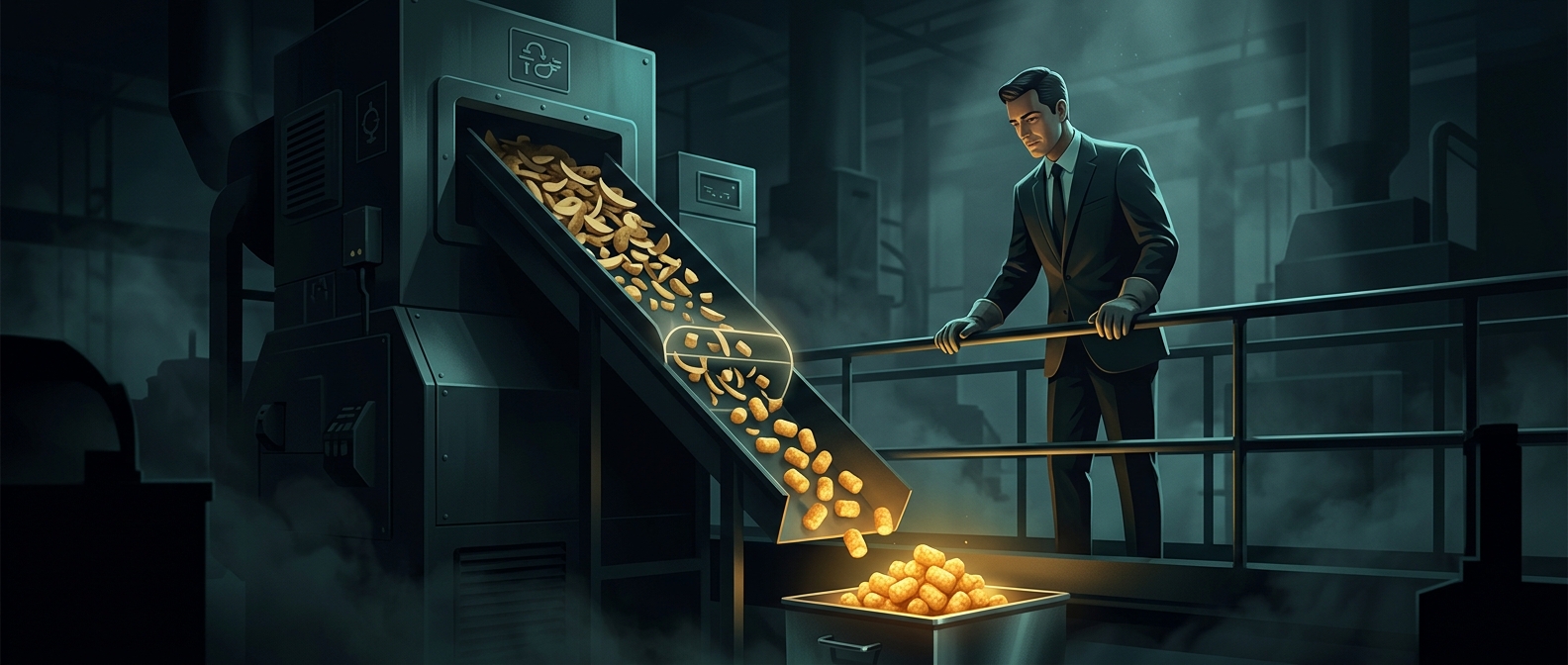
The founders’ solution was to change what counted as a usable shape. Instead of trying to make every piece resemble a fry, they mashed the scraps together, shaped them into compact bites, and fried them. The new form made irregular pieces useful: once combined, they could be sold as a consistent product rather than as a jumble of leftovers.
Why the leftovers could earn more
This was more than a way to reduce waste. A finished food can be worth more than its raw ingredients because processing turns them into something convenient and recognizable. Tater tots offered a new use for potato cuttings, while shaping and frying gave shoppers a product distinct from french fries.
That shift illustrates a basic business advantage: the value of a food depends not only on what goes into it, but on what a producer can make from it. Scraps that had limited appeal on their own became a sellable item—and a premium product—once Ore-Ida found a form people would buy.