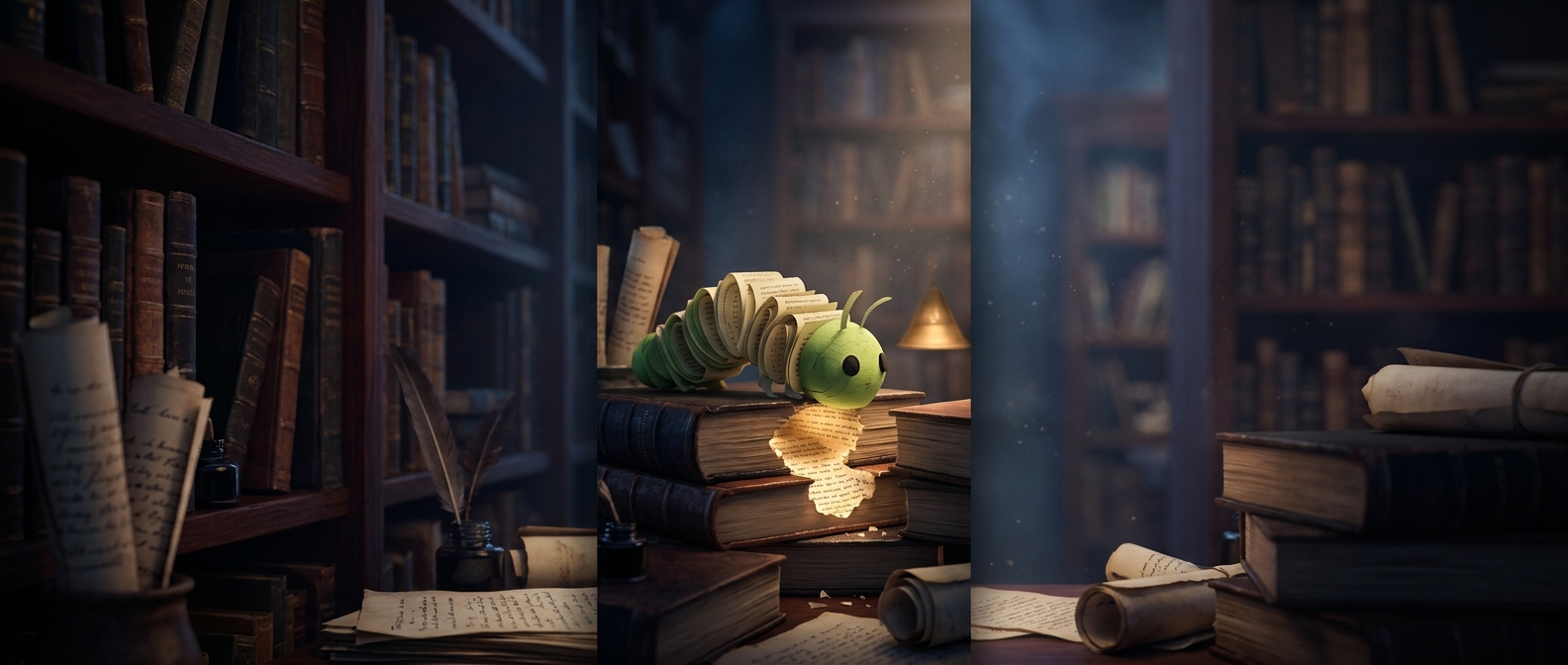
Why a Worm Became a Caterpillar
Eric Carle’s early idea for his picture book centered on a worm named Willi. His editor urged him to use a caterpillar instead, judging worms too gross for young readers. The change did more than soften the subject: a caterpillar offered a story with a built-in destination. It could eat its way through the week and eventually become a butterfly.
A Character With a Visible Journey
That life cycle gives the book’s simple sequence an ending that feels like a transformation, not just a stopping point. Readers can follow the caterpillar as it grows, then understand why the final change matters. A worm could have crawled through the same foods, but it would not lead naturally to the same dramatic reveal.
The caterpillar also makes the book’s central action easy to picture: it bites through food. The holes in the pages turn that action into something children can see and touch, connecting the character’s appetite to the book’s physical design.
The Swap Changed the Story’s Shape
The editor’s suggestion helped align character, structure, and ending. The result moves from repeated eating to growth and then to metamorphosis—the process by which a caterpillar changes into a butterfly. That arc gives a child-friendly counting-and-food story an extra layer: the small creature that keeps making its way through the pages is also on its way to becoming something entirely different.