How a Disc Reader Separates Two Data Layers
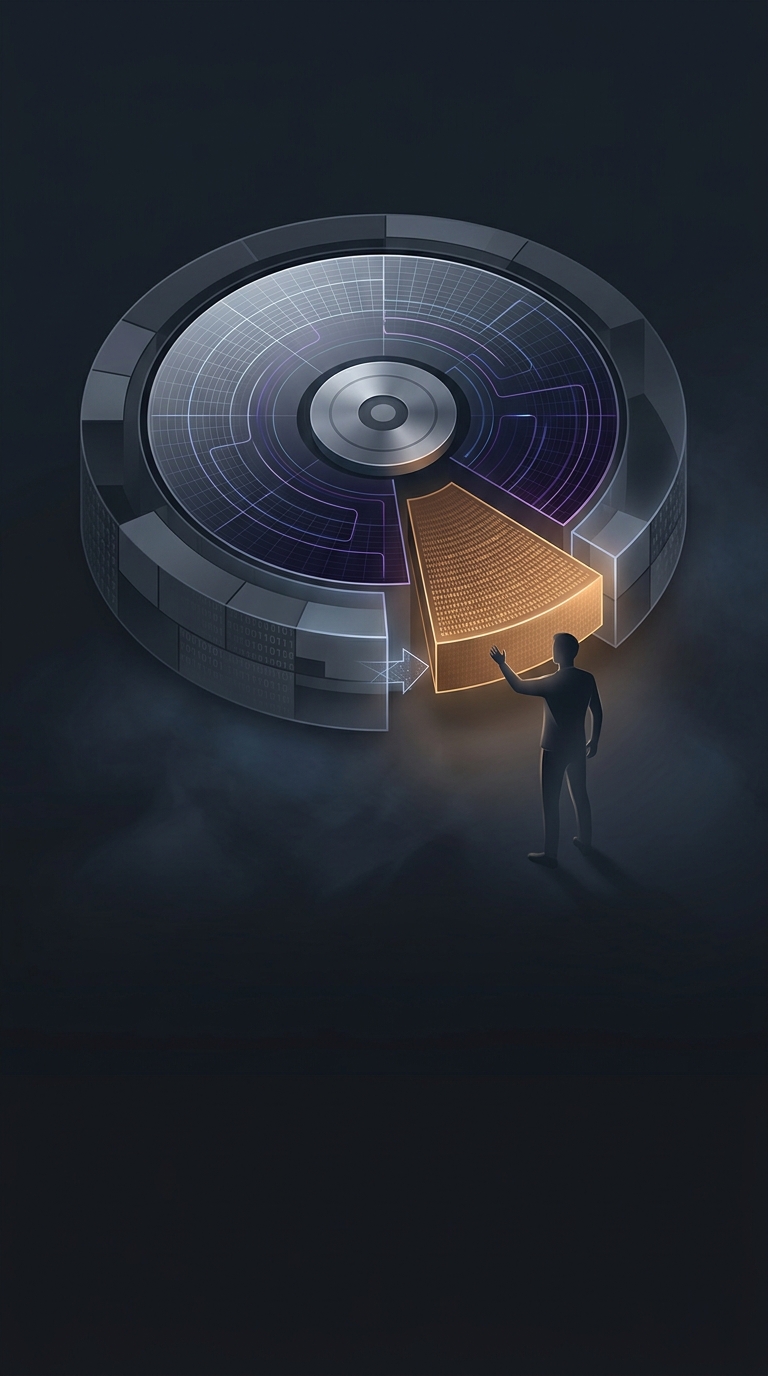
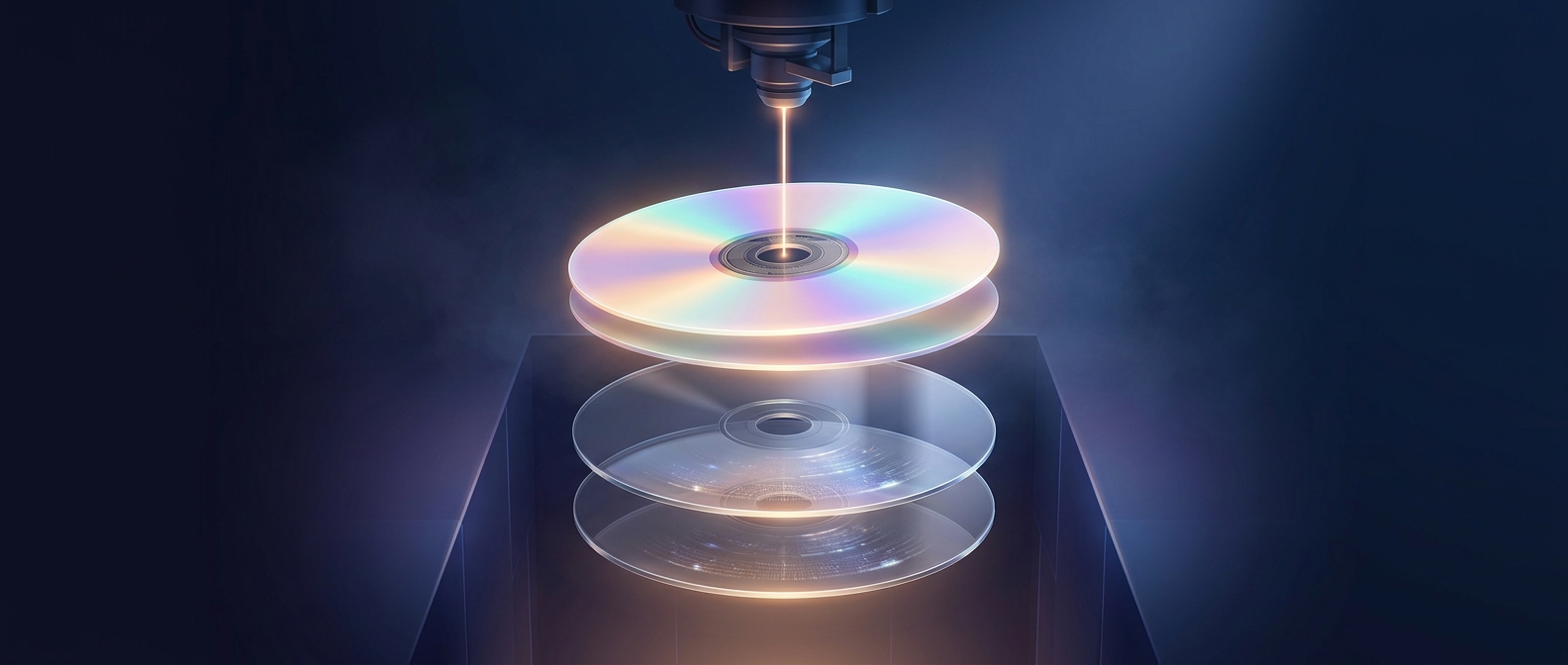
A dual-layer optical disc gives the drive two recording surfaces at different depths. The laser does not need to touch either one: it sends light through the disc’s clear plastic and reads the pattern in the returning reflection. The drive’s sensor turns changes in that light into digital data.
The upper layer is designed to reflect enough light to be read while still letting some pass through. To reach the lower layer, the drive shifts the laser’s focus farther into the disc. That change in focal depth is crucial: it lets the reader distinguish the deeper layer’s signal from light reflected by the one above it.
More Storage, With a Reading Tradeoff
The two layers are read separately, not as one combined surface. When playback or file access moves from one layer to the other, the drive refocuses; on some discs, that transition can cause a brief pause. The layers also need carefully controlled spacing and reflectivity: make the top layer too reflective, and too little light reaches the lower one; make it too transparent, and its own data becomes harder to read reliably.
That engineering balance lets a disc hold close to twice as much information without doubling its thickness. The extra capacity comes from placing another readable data surface inside the same disc—and making the laser selective enough to find it.