Why a warm tent changes the bake
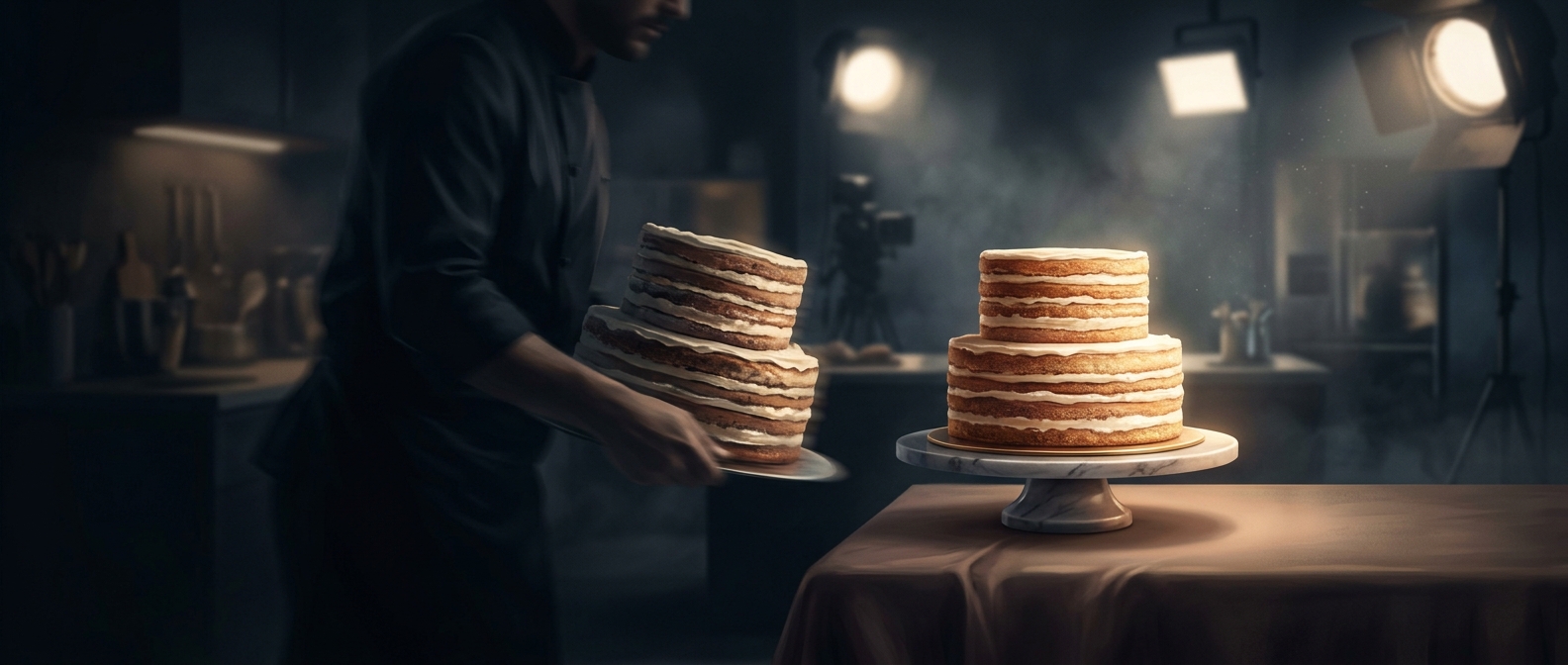
In a baking tent, room conditions become part of the recipe. Heat softens fats in many frostings, making a piped edge or tall layer lose its shape. Buttercream can slump before it ever reaches the judges’ table—not because the baker changed the formula, but because the decoration is sitting in warmer air.
Humidity creates a second problem. Sugar attracts water from the air. As moisture settles on a sugar sculpture, its surface can turn sticky, then soften; delicate pieces may bend or collapse under their own weight. The effect is especially unforgiving when a design depends on crisp edges, thin supports, or parts balanced on one another.
The tent is part of the challenge
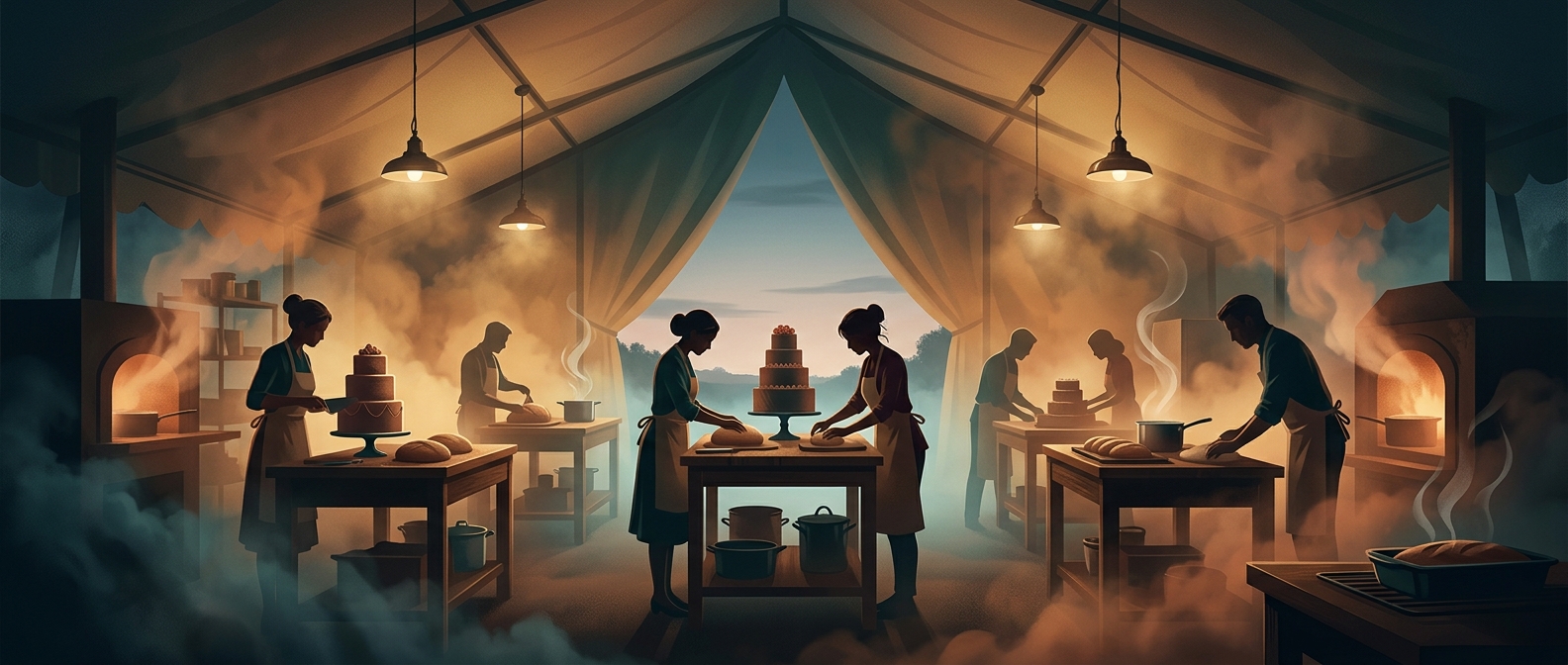
A studio kitchen can be adjusted for comfort, but a tent does not behave like a sealed, controlled room. Outdoor conditions can shift, and cooling the space with ordinary air conditioning is not simply a matter of keeping bakers comfortable: temperature and airflow also affect the work in progress. Bakers have to manage the finished structure as well as the recipe, timing assembly and choosing designs that can withstand the conditions.
That makes a beautiful centerpiece a short-lived piece of engineering. A sugar tower may hold perfectly while it is assembled, then begin to sag as moisture reaches it. On camera, the difference between a stable finish and a collapse can come down to the air surrounding the bake.