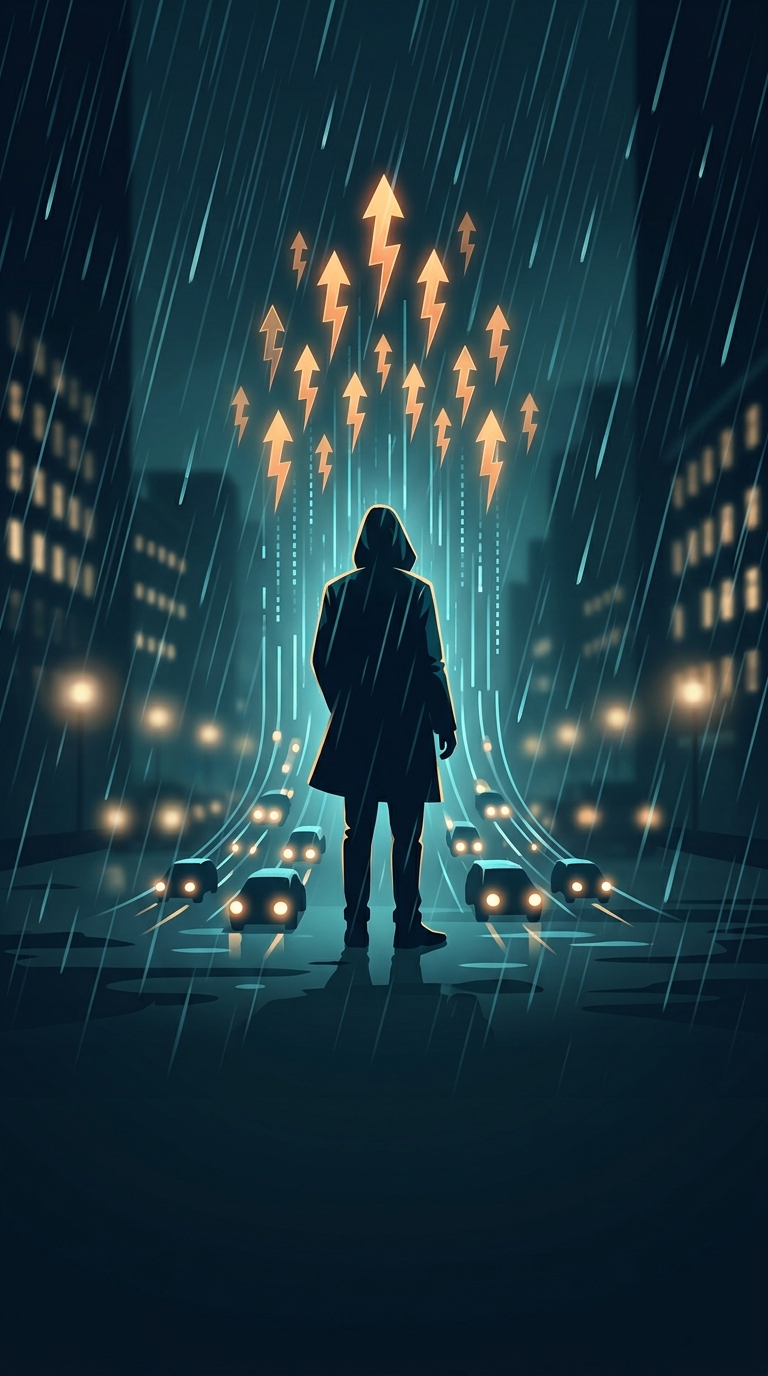
Why Rain Can Make a Ride Cost More
A downpour changes both sides of the ride market at once. More people want a car rather than walk, bike, or wait outside, while traffic slows and some drivers may avoid the conditions. The result is a shortage: more ride requests than available drivers can serve promptly.
A higher fare is a way to respond to that imbalance. In economics, a price that rises when demand outstrips supply can help ration what is scarce. Some riders may decide to wait, walk to a less-busy pickup point, or choose another option, leaving more rides available for people who value an immediate pickup more.
The Price Is Also a Signal to Drivers
The increased fare can make trips more attractive to drivers. It may encourage drivers nearby to accept requests, stay online, or head toward an area with many waiting riders. That response can add capacity, though not instantly: rain, congestion, and the time it takes to reach a pickup still limit how quickly more cars can arrive.
So surge pricing has two connected aims: reduce excess requests and draw more available drivers toward them. It cannot make a flooded street move faster or guarantee that a driver will appear, but it can help distribute limited rides when conditions make them unusually scarce.
The Tradeoff Riders Feel
The same mechanism that can shorten waits or improve driver availability also makes a ride less affordable precisely when people may feel they need one. The surge is not just a penalty for bad weather; its economic function is to make a crowded market adjust through price. Whether that tradeoff feels fair is a separate question from what the higher fare is designed to do.