Why a Winning Tile Can Make Such a Statement
In mahjong, a player usually completes a hand by drawing or claiming the tile that makes the required combination. The winning tile is therefore more than the last piece of a puzzle: it is the moment the table learns who has finished, and sometimes who has beaten whom to the point. Rules vary by version, but the reveal often arrives after several turns of watching, waiting, and trying to infer what opponents are collecting.
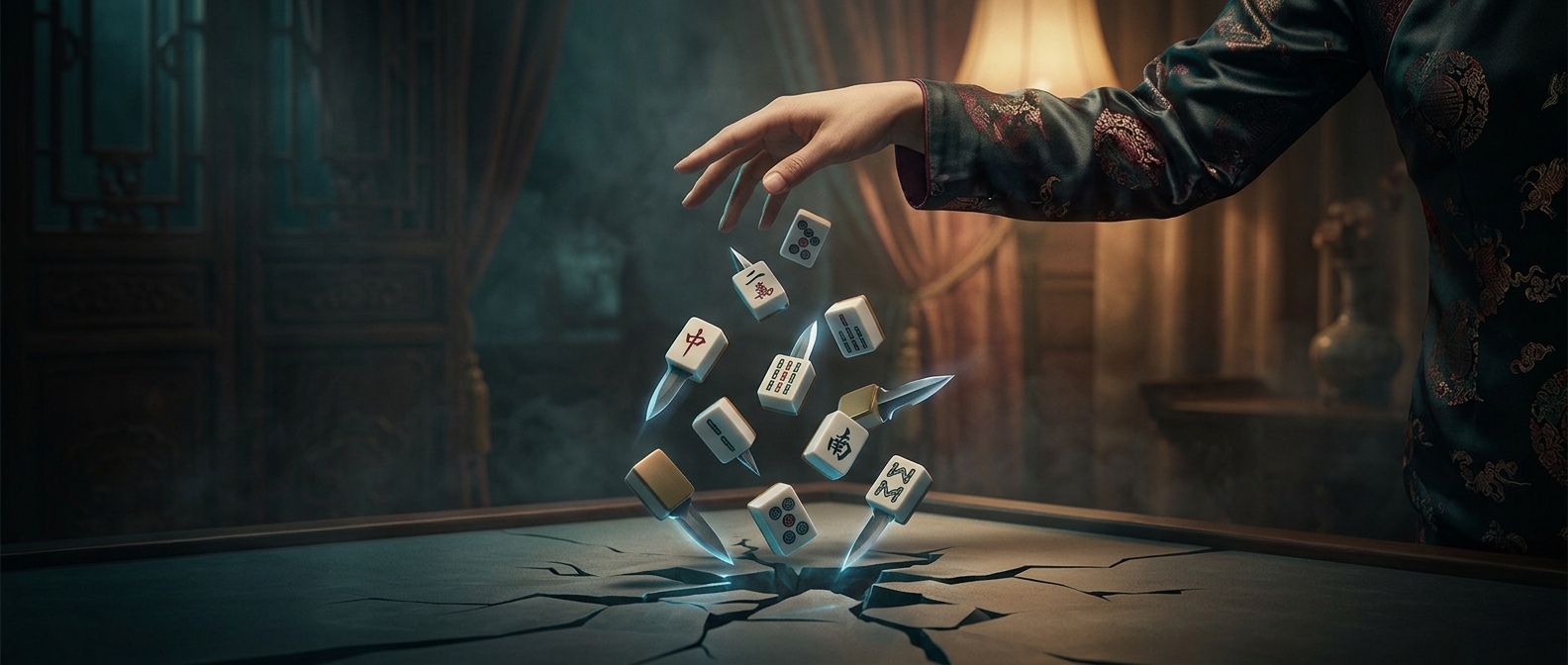
That buildup gives the tile its theatrical force. A player who places it down with a sharp slap makes the win impossible to miss—and can turn a quiet declaration into a bit of performance. The gesture may signal delight, confidence, or playful defiance. In a family game, where everyone knows one another’s habits and old rivalries, even a small victory can carry extra meaning.
The Table Is Part of the Contest
Mahjong already asks players to manage two contests at once: build a winning hand while judging what others might be building. A dramatic tile reveal punctuates both. It ends the suspense for that hand and invites everyone else to react, whether with laughter, groans, or a promise to win the next round.
The tile itself is a sturdy piece meant to be handled repeatedly, so a decisive placement can make an audible and visible flourish. But the point is social, not strategic: the slam turns a result into a message. That is how a few points can briefly feel like a family feud—and why the next deal may start with everyone determined to answer back.