How Lane Oil Shapes a Bowling Ball’s Path
A bowling ball does not begin to curve simply because it is spinning. It hooks when friction between the ball and lane lets its rotation change the ball’s direction. Oil reduces that friction, so a ball travels more smoothly through oiled areas; when it reaches a drier part of the lane, it grips more strongly and can turn toward the pins.
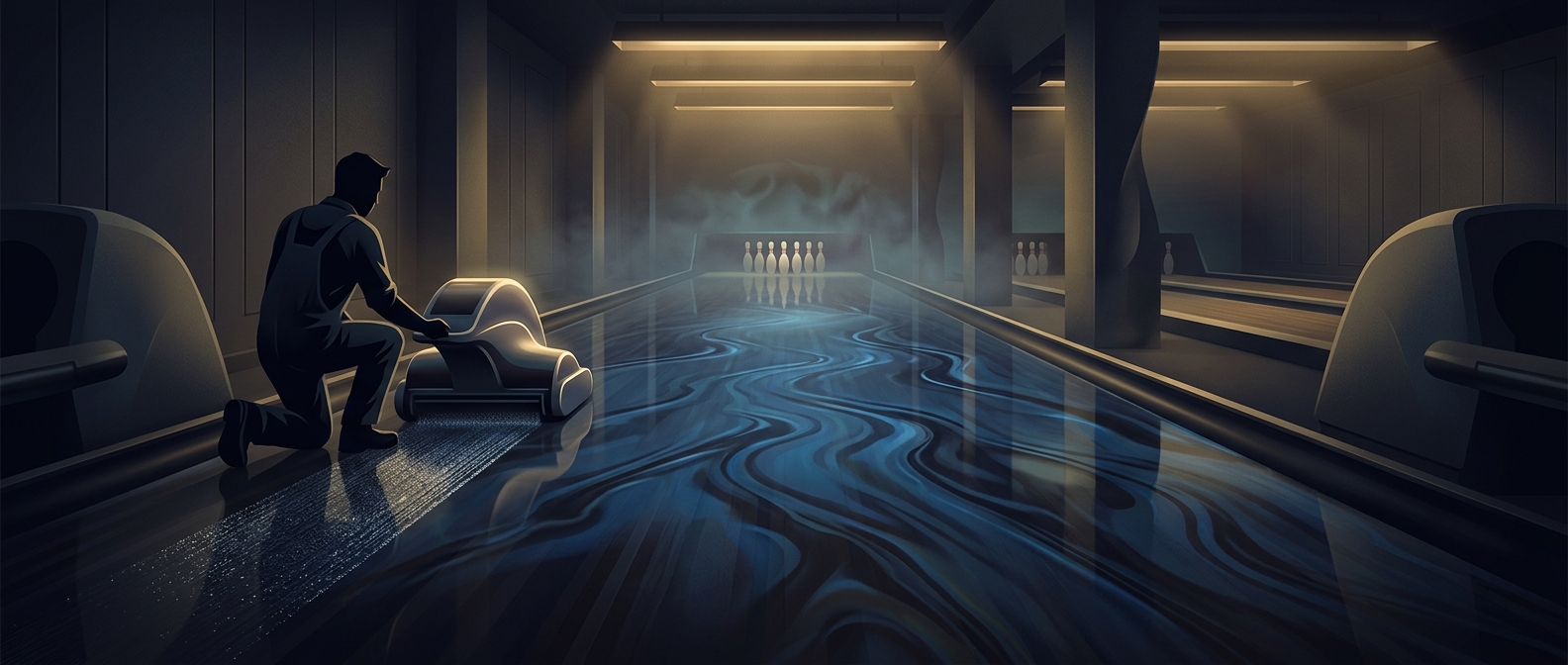
That change gives lane oil a job beyond making the surface slick: it helps determine where and how sharply the ball hooks. Lane machines apply oil in patterns that vary in length and amount. A longer or heavier oiled area generally delays the ball’s response, while a shorter or lighter one can let it encounter friction sooner. Bowlers choose their starting position, aim, and equipment to match those conditions.
Why the Pattern Changes During Play
Oil does not stay perfectly in place. As balls roll over the lane, some oil is picked up and carried farther down; some also transfers to the ball’s surface. This movement changes the friction along the ball’s path, so a line that worked earlier may begin to hook differently as more shots are thrown. Bowlers call this changing condition lane transition.
Wiping a ball between shots removes oil and dirt from its surface. That helps the ball respond more consistently to the lane rather than carrying residue from one shot into the next. The oil’s path is therefore part of the game: it shapes the initial conditions, and every ball helps reshape them. A bowler is not only reading the lane but adapting as the lane changes.