Why a Stage Illusion Becomes a Custom Engineering Project
A large illusion is not just a prop with a secret compartment. Its mechanism has to function while performers, scenery and sometimes heavy equipment move around it—and remain invisible from seats spread across a theater. That makes the audience’s view part of the engineering problem: a solution that works from the center aisle may fail from a side balcony.
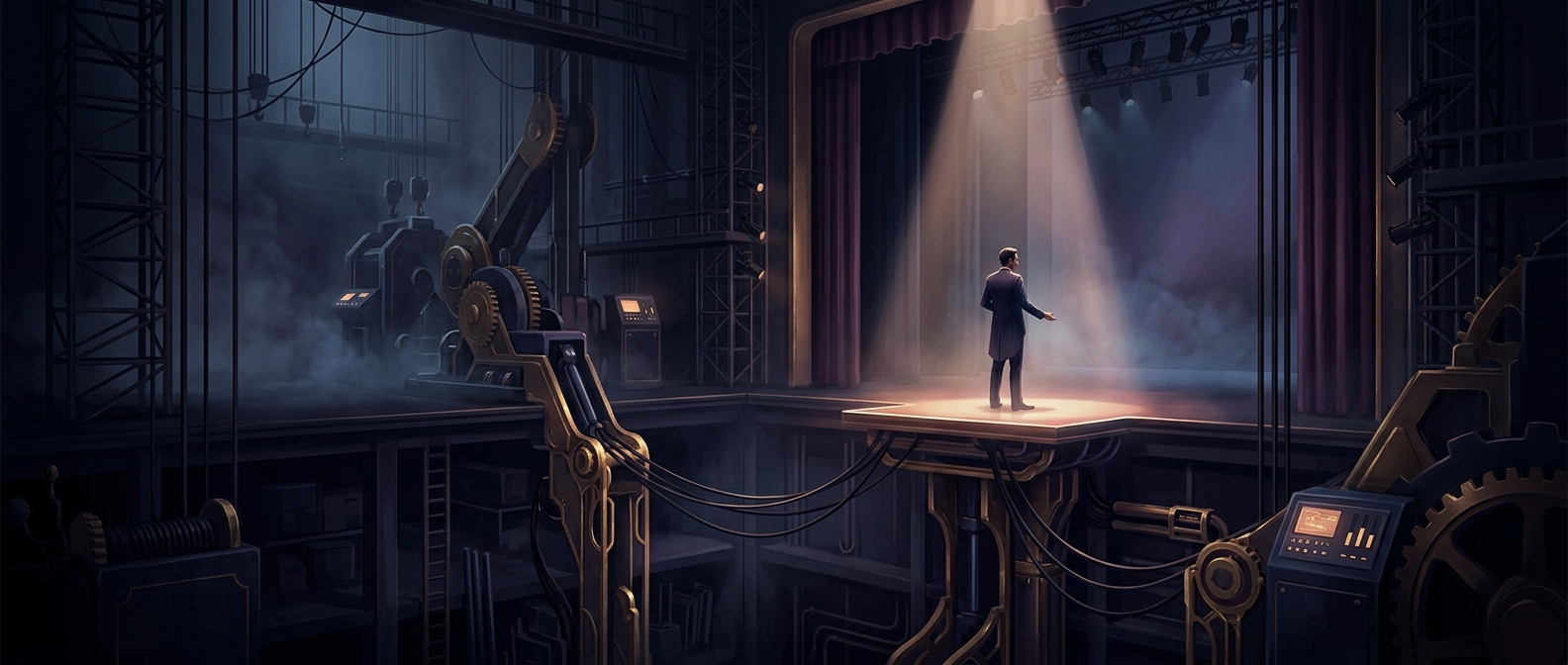
Designers and fabricators often have to build the effect around the venue’s dimensions, stage layout and lighting system. A mirror, moving platform or concealed opening must fit the available space without creating a visible seam or an unsafe path for the performer. Small changes in angle, timing or brightness can expose the method, so the mechanism and the stage environment have to be designed together.
The Cost of Making It Repeatable
The apparatus also has to work reliably, not just once during a demonstration. A show repeats the same movements night after night, often under tight timing. That can require precise components, careful testing, performer training and adjustments when the production moves to a different theater. If a mechanism jams or a hidden transition becomes visible, the effect can fail in front of an audience.
These are often one-off builds rather than products made in large batches, so the design and fabrication costs are concentrated in a single production. The result is an unusual kind of stage investment: much of the expense goes into machinery the audience is specifically not meant to notice. Its success is measured by a clean, ordinary-looking moment onstage—and by the hidden system making that moment happen safely, every performance.