Why coaster maintenance starts before anything looks wrong
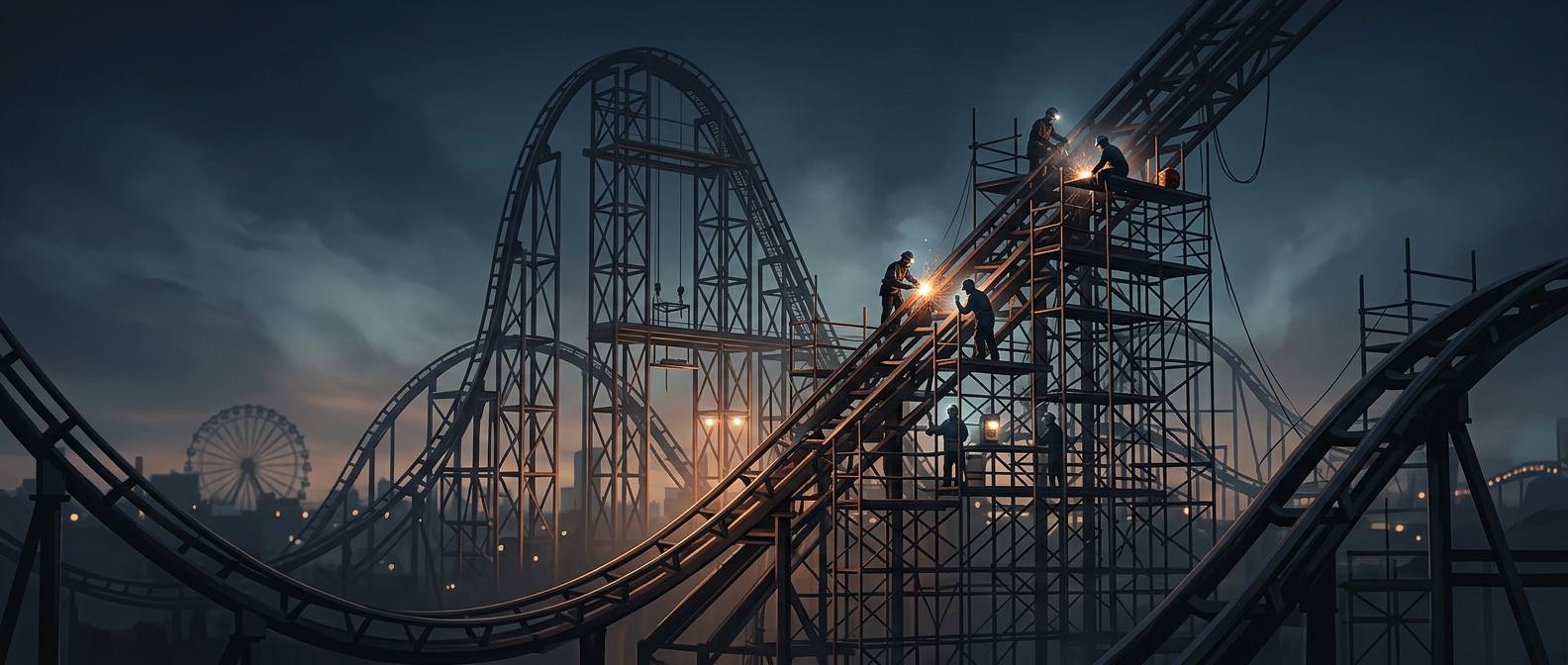
A roller coaster’s wheels and track work together under fast-changing loads: cars accelerate, climb, bank, and rattle over joints. The track guides the train, while bearings let its wheels turn with limited friction. Each pass adds stress, even when the ride appears to run smoothly. Maintenance crews therefore look for wear before it becomes visible to riders—or serious enough to interrupt operation.
Small defects can change the forces on a ride
A tiny crack in a rail can grow as the steel repeatedly flexes under passing trains. A bearing can also wear internally while its outer surface still looks intact. As the bearing degrades, friction and heat may rise, and the wheel assembly may no longer run as intended. Daily inspections help crews spot early signs and decide whether a component needs closer examination or repair.
Replacing a heavily stressed bearing on a schedule is a form of preventive maintenance: the part is removed based on its use and condition, rather than left in service until it fails. That approach is especially useful for components whose failure could affect how a train moves or is supported.
The economic tradeoff behind routine checks
Inspection and replacement cost time, labor, and parts, and taking a ride out of service can mean lost operating hours. But waiting for a failure can bring a longer shutdown, more extensive repairs, and disruption that is harder to plan around. Routine work turns some unpredictable costs into scheduled ones.
The key is not to replace every part at the first sign of wear. Crews balance inspection findings, operating experience, and maintenance schedules to keep equipment within safe operating condition. A few minutes spent checking a rail—or replacing a bearing before it gives out—can prevent a small, manageable job from becoming a much larger interruption.