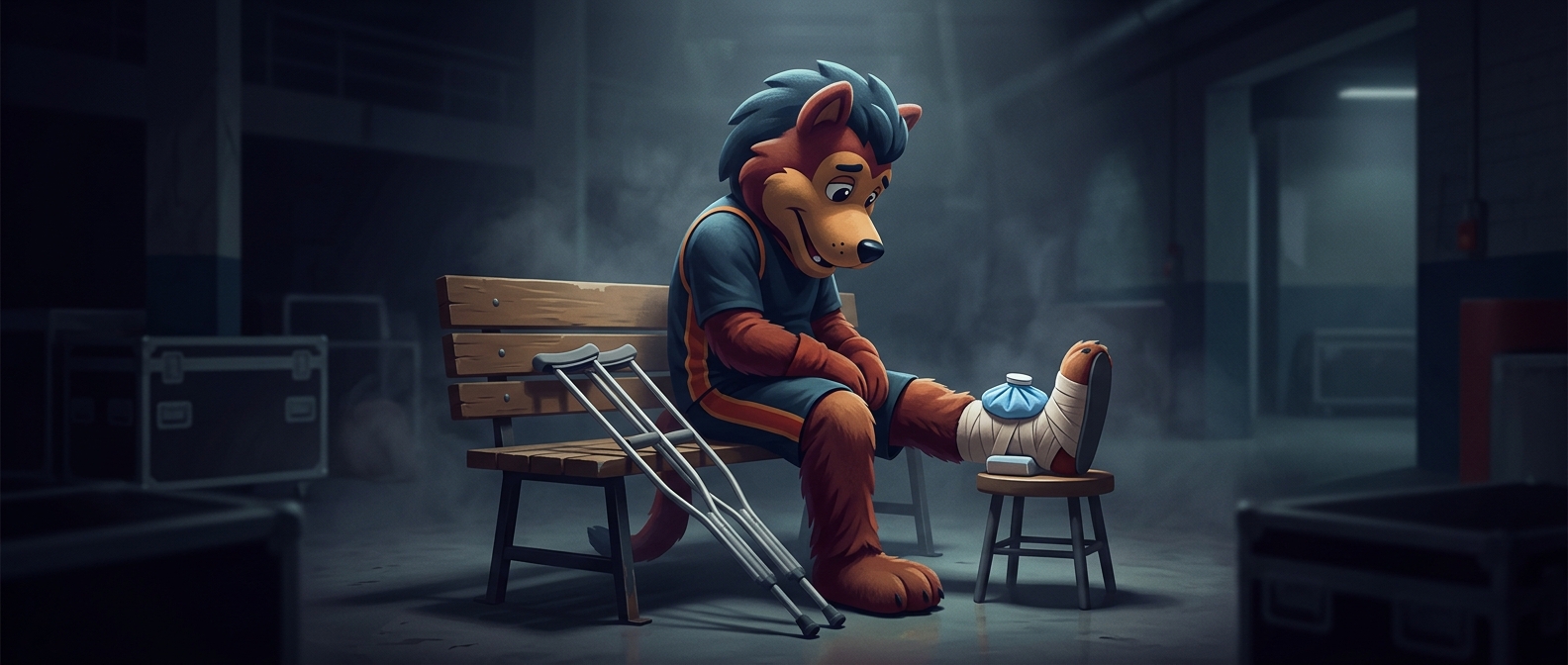
The Costume Turns a Performer Into a Moving Blind Spot
A mascot suit is built to look oversized and expressive from the stands, not to give its wearer an ordinary field of view. A large head can block the sides or lower part of the wearer’s vision; mesh openings may help, but they do not make it easy to judge distance or spot someone approaching from behind. That matters when the performer is expected to dance, wave, or move through a crowd while maintaining the illusion of effortless fun.
Heat and Movement Compound the Risk
The same design that hides the person also covers much of the body. During vigorous movement, that can make it harder to shed heat. The performer may become overheated while still needing to follow choreography and navigate safely. Awkward steps or sudden turns can also strain joints and ligaments, especially when restricted sight makes it harder to anticipate a collision or uneven footing.
Crowd behavior adds another unpredictable factor. A fan may rush up for a hug, grab the costume, or otherwise make contact without realizing how difficult it is for the performer to respond or move away. A playful encounter can become a fall or a more serious injury.
The Hidden Labor Behind the Character
A mascot appearance is not just a costume; it is a physical performance in a space shared with spectators. Safe work depends on practical choices such as limiting demanding movements, giving the performer a clear route, and having someone outside the suit help monitor nearby people. Those precautions take time and staffing, but they address a basic mismatch: the character is designed to look larger than life, while the person inside has limited sight, mobility, and ability to cool down.