How an adult jellyfish can begin again
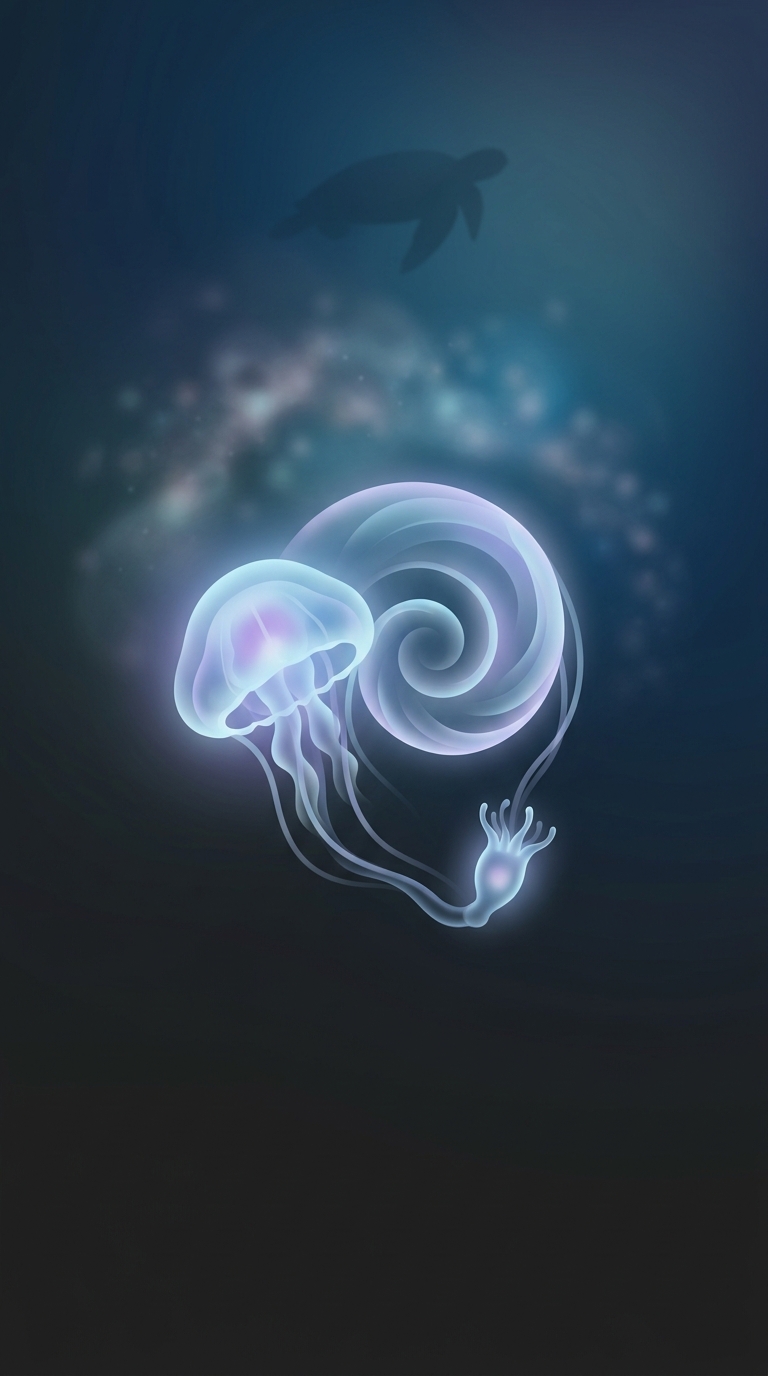
In most animals, development moves in one direction: an immature body becomes an adult, and aging does not normally return it to an earlier life stage. Turritopsis dohrnii can take a different route. When conditions are unfavorable, an adult medusa—the familiar swimming, bell-shaped form—can shrink, settle onto a surface, and reorganize into a polyp, a small attached form that resembles the earlier stage of its life cycle.
The change is not simply the adult body getting smaller. Its tissues are dismantled and rebuilt. Some specialized cells can change into other kinds of cells, a process called transdifferentiation. Rather than keeping every cell locked into the job it already performs, the animal can redirect some of them as its body reorganizes.
A life cycle that can loop
The polyp can grow and produce new medusae, so the transformation gives the jellyfish a way to return to an earlier stage and start the cycle again. It is a biological reset of the body plan, not a rewind of every event in the animal’s life. The adult does not simply become a young medusa; it passes through the polyp stage before producing swimming forms again.
That distinction explains both the wonder and the limit of the “immortal” label. The species can evade the usual one-way progression from adult to death under some circumstances, but the process does not protect it from being eaten, disease, injury, or other hazards. A jellyfish that can rebuild its life cycle can still die before it gets the chance. Its remarkable trick is not invulnerability, but the ability to turn a biological dead end into another beginning.