How the immortal jellyfish can rewind its life cycle
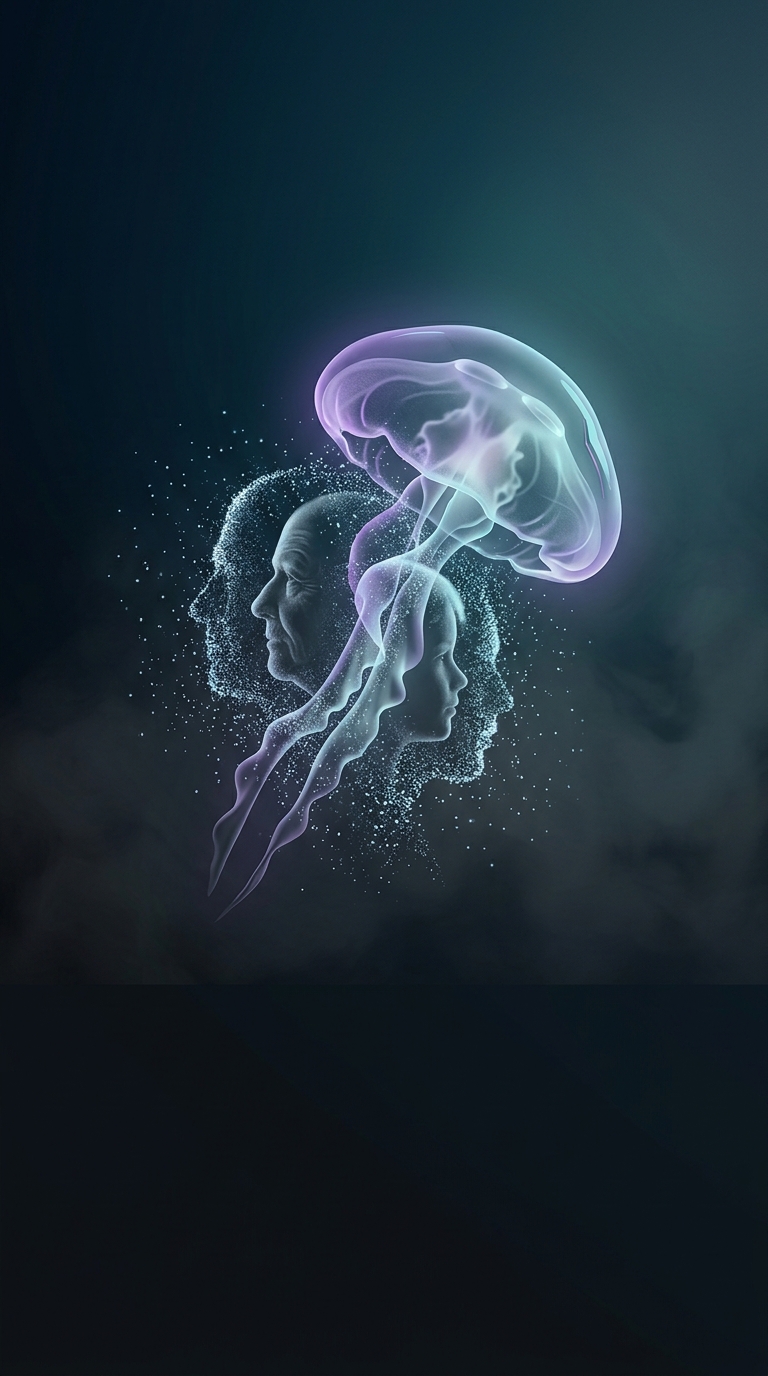
When conditions turn harsh, the tiny jellyfish Turritopsis dohrnii can do something unusual: instead of continuing as an adult, it can revert to an earlier stage of life. Its bell and other adult structures break down, and the animal settles onto a surface as a small cluster of tissue. From there, it can form a polyp—the attached, branching stage that normally grows into young jellyfish.
The change depends on cellular reprogramming. Some mature cells can shift into different kinds of cells, a process called transdifferentiation. In effect, the animal reorganizes existing tissue rather than simply repairing the adult body. The polyp can then produce new jellyfish, beginning the life cycle again.
A reset, not a guarantee of immortality
This reversal is not the same as an adult living forever without aging. The jellyfish returns to an earlier life stage, and scientists do not know that every individual can repeat the process indefinitely. The transformation has been observed in particular circumstances, especially when the animal is stressed or injured; it is not a shield against every hazard.
A jellyfish can still be eaten, succumb to disease, or fail to survive changes in its surroundings. Its remarkable trick changes what can happen to its life cycle, not the dangers it faces in the ocean. The striking implication is that, for this small animal, adulthood is not necessarily a one-way journey: under the right conditions, the body can dismantle its adult form and start development over.