How a worm can live without a mouth
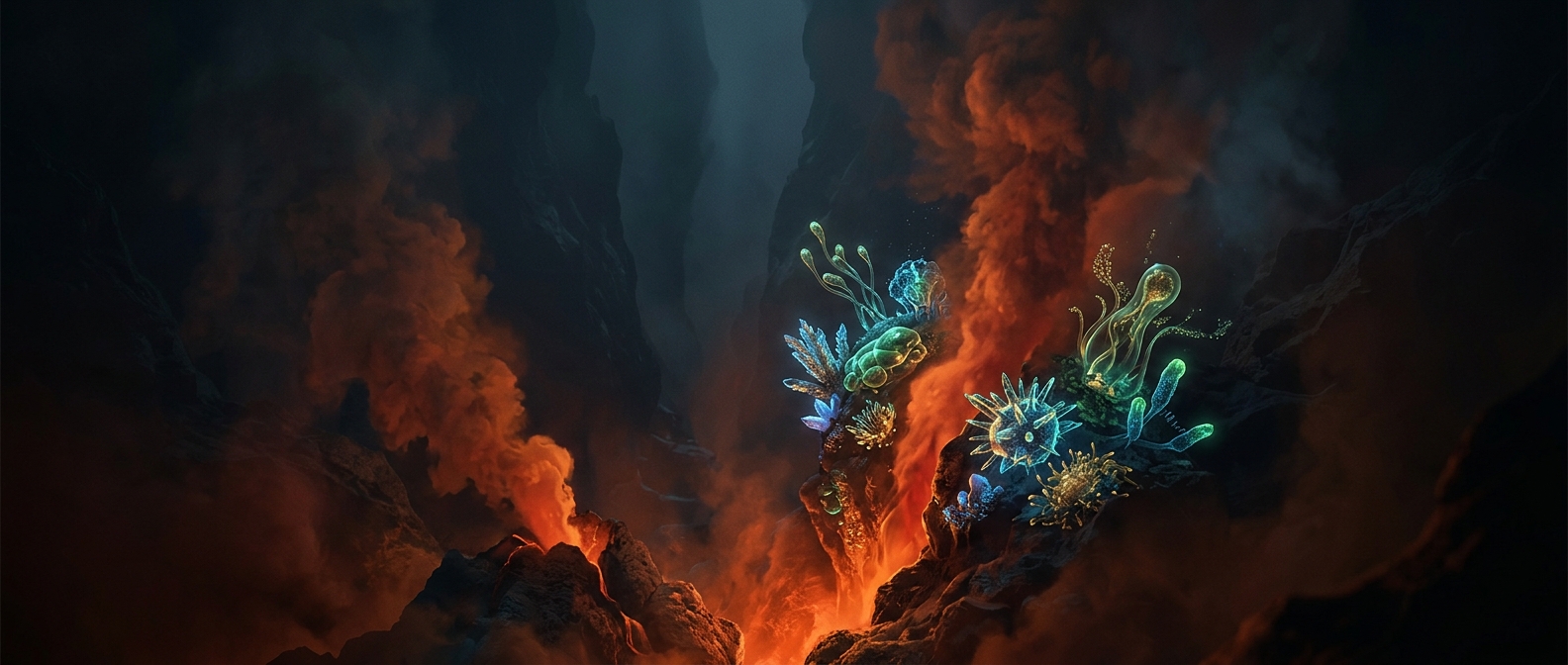
In 1977, researchers using the submersible Alvin found dense communities of giant tube worms near hydrothermal vents in the Galápagos Rift. The discovery overturned the expectation that the deep seafloor was largely barren: these animals thrived where sunlight never reaches, using a food source ultimately supplied by Earth’s interior rather than by photosynthesis.
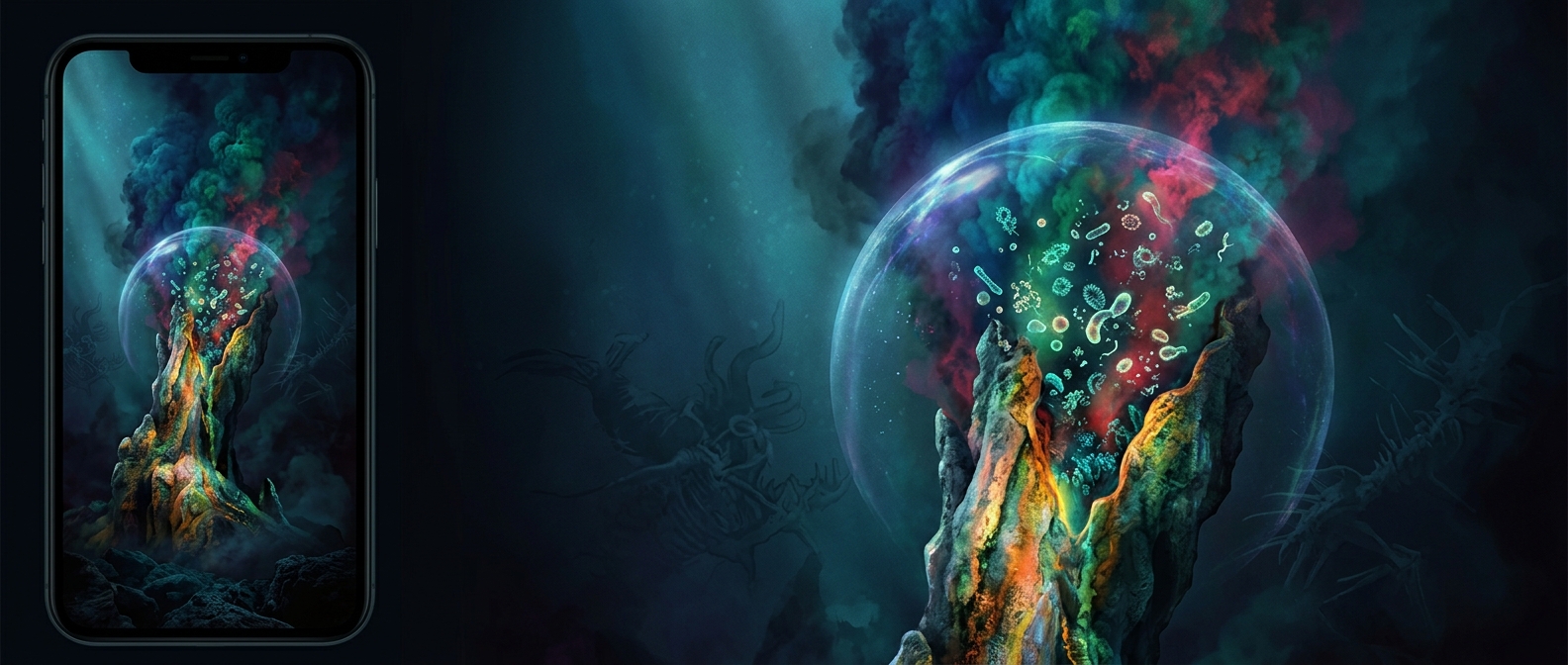
Adult Riftia have no mouth or digestive tract. Instead, they rely on bacteria housed in a specialized internal organ called the trophosome. The bacteria use chemical energy to build organic matter from carbon dioxide—much as plants build it using light, but with a different energy source. The worm then uses nutrients produced by its bacterial partners to grow.
The chemistry at a vent
Hydrothermal vents release hot, mineral-rich fluid into cold seawater. The surrounding water can contain hydrogen sulfide, a compound that is poisonous to many animals. At the same time, it carries oxygen and carbon dioxide—ingredients the bacteria need for their chemistry.
A worm’s red plume, which extends into the water, absorbs these substances. Hemoglobin in the worm’s blood binds hydrogen sulfide and oxygen and transports them toward the trophosome. This arrangement helps deliver the chemicals to the bacteria while limiting the sulfide’s harmful effects on the worm. The microbes use the sulfide’s chemical energy to make food molecules that nourish their host.
An ecosystem built on chemical energy
The partnership changes what can support life on the deep seafloor. At the surface, sunlight powers most food webs through photosynthesis; at vents, microbes can turn chemical energy into the organic matter that feeds larger animals. Tube worms, in turn, provide habitat and support for other vent-dwelling creatures.
The worms are not simply eating poison: their bacteria use a hazardous chemical as fuel, and the host supplies a protected place and access to the ingredients. That exchange helps explain how a crowded community can flourish in a dark environment far removed from sunlight.