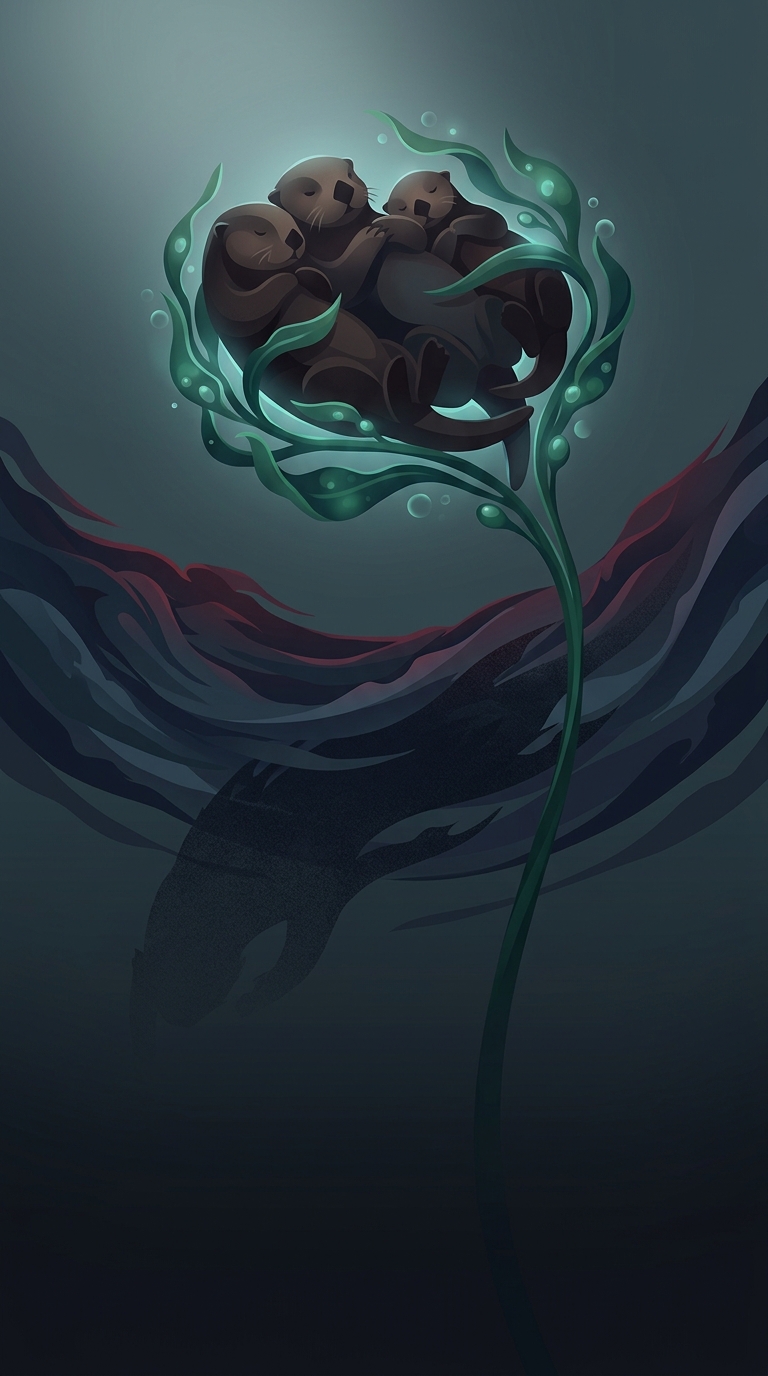
A raft is a way to rest without losing the group
For a sea otter resting at the surface, even a gentle current can carry it away from nearby animals. Otters sometimes gather in floating groups called rafts, and touching paws helps neighboring animals stay together as the water moves beneath them. The contact is a simple solution to a problem that would otherwise require each otter to keep swimming or repeatedly reposition itself.
Kelp can provide another kind of restraint. An otter may wind strands around its body or use the kelp bed to limit drifting, turning a patch of floating seaweed into a loose mooring. It is not a rigid anchor: the kelp moves with the water, but can help keep a resting otter near the same spot.
The coat has to do the work of insulation
Unlike seals and many other marine mammals, sea otters lack a thick layer of blubber beneath the skin. Their protection from cold depends heavily on exceptionally dense fur. When the coat is in good condition, it holds a layer of air close to the body; that trapped air slows heat loss to the surrounding water.
Keeping that insulation effective takes attention. Otters groom by working their fur with their paws and mouths, separating and arranging the hairs so air can remain trapped. The result is that resting together is not just a charming pose: it lets otters pause at the surface while relying on group contact, kelp, and a carefully maintained coat to manage life in cold, moving water.