How a tenrec turns quills into a signal
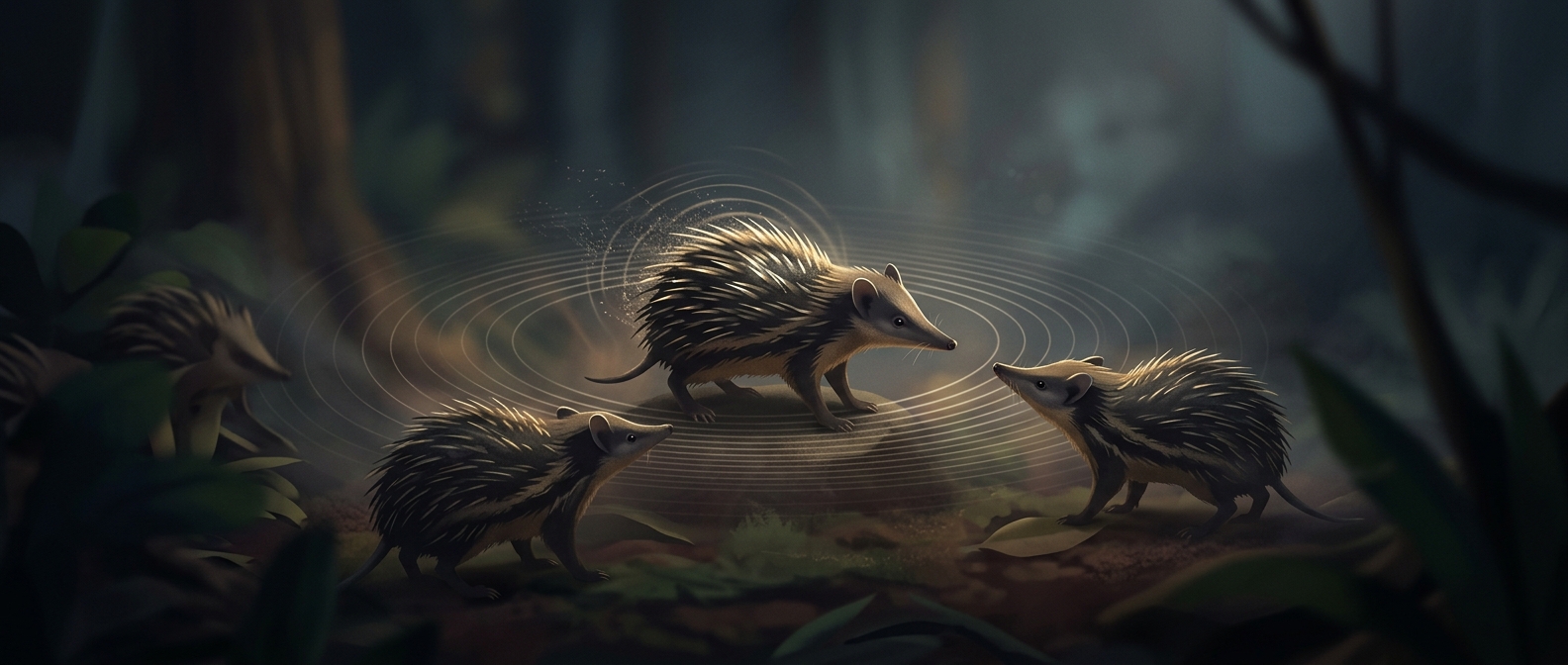
Some tenrecs, small mammals native to Madagascar, have stiff, specialized quills on their backs. When an animal is separated from its family, it can rub these quills together. The contact makes tiny vibrations that produce chirps above the range of human hearing—ultrasound.
The quills are not simply rattling as the animal moves. Their deliberate rubbing creates a sound that can carry information to other tenrecs nearby, even when leaves and brush block a clear view.
A hidden channel through the undergrowth
Sound offers a practical way to stay in contact when family members cannot see one another. High-frequency chirps are difficult for people to hear, so the exchange can go unnoticed while still giving another tenrec a cue to listen for. The signal’s usefulness depends on the animal’s surroundings: dense vegetation can obstruct sight, but it does not necessarily prevent sound from reaching a nearby listener.
That makes the quills more than armor. In this setting, they also serve as a communication tool—one that turns a brief rubbing motion into a message traveling through the brush.