A bill turned into a percussion instrument
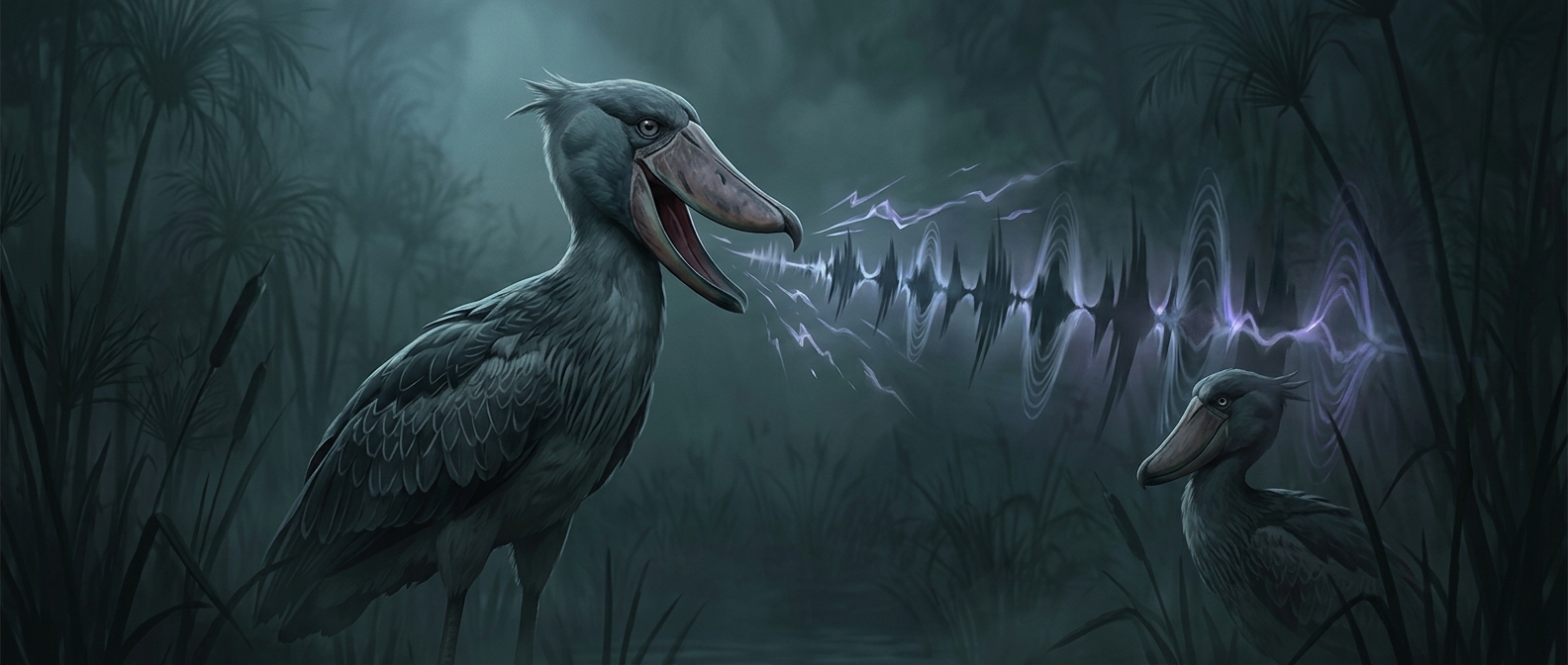
A shoebill’s rattling display is made by the bill itself, not by a hidden vocal sound. The bird rapidly brings its upper and lower bill together, producing a series of hard, hollow knocks. Repeated in quick succession, those separate impacts blend into the startling burst that can sound like automatic gunfire.
The bill is built for more than noise: its enormous, broad shape is a defining tool of the shoebill’s life. But in this display, it also becomes a sound-making surface. The effect is percussive—closer to a rapid clatter than to a bird’s patterned song.
A greeting with volume
Shoebills use bill-clattering in social displays, including greetings between mates. That makes the sound part of an exchange: a conspicuous signal delivered through movement and noise, rather than a vocal solo. The same bill that makes the bird so distinctive in appearance becomes a way to address another shoebill.
The surprising part is how ordinary the mechanism is: two parts of the bill striking together, again and again. What sounds like a machine firing is, at close range, a loud handshake made of hollow knocks.