A tree carries two kinds of evidence
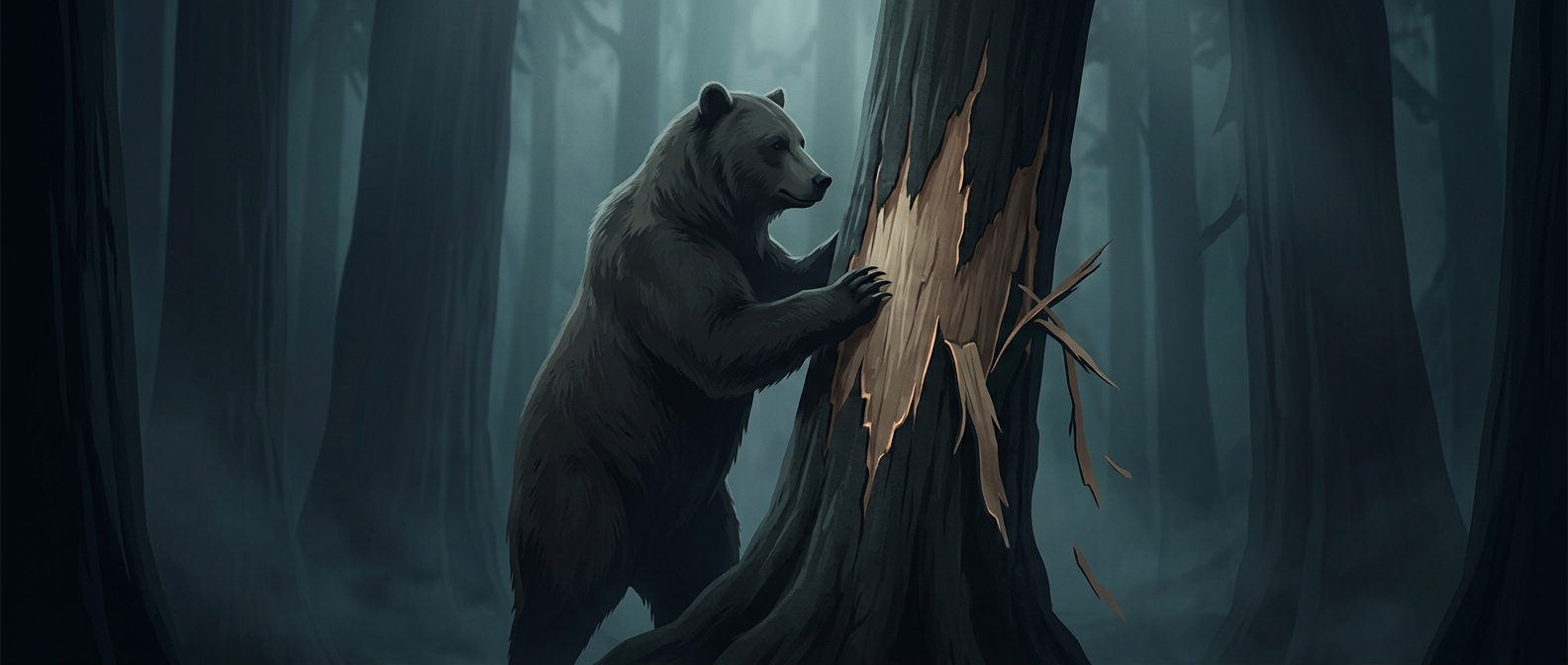
A marked tree can catch a passing grizzly’s attention before the bear ever touches it. Deep claw marks and rubbed, worn patches make the trunk a visible sign that another bear has been there. Up close, scent adds a second layer: rubbing can leave odor on the bark, and a bear’s sensitive nose can investigate it.
The two signals work at different distances. A scarred trunk is easy to notice along a familiar route; scent is more like a close-range message, available when another bear stops to sniff. The tree stays in place, so bears passing at different times can encounter the same evidence.
Information without a fence
These marks are better understood as signs of bear traffic than as a precise property line. Grizzly ranges can overlap, and a marked tree does not necessarily mean that other bears are barred from the area. Instead, signs and scents may help bears detect one another’s presence and decide how to move through shared ground. During the breeding season, scent can also carry information relevant to finding or assessing potential mates.
That makes the tree useful even when no bear is there to deliver a message in person. A later passerby can read the visible traces from a distance, then investigate the scent at close range—turning one trunk into a record of visits rather than a simple boundary marker.