A pouch shaped by digging
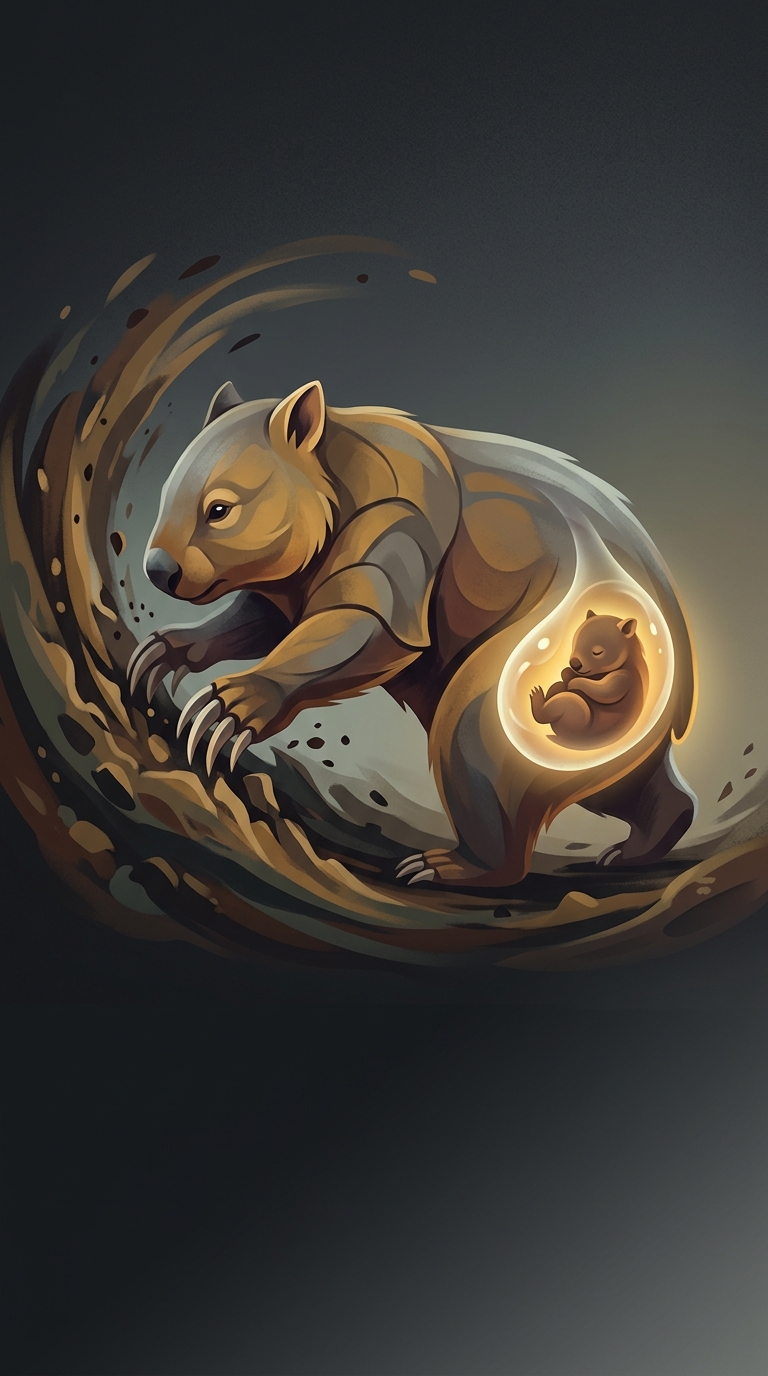
A wombat’s backward-opening pouch is a practical adaptation to life underground. As the animal excavates with its powerful forelegs, loosened soil is swept behind it. With the pouch opening toward the hind legs rather than the head, the joey is less exposed to the stream of dirt that would otherwise be pushed toward the mother’s belly.
The pouch is not simply an open pocket. Its muscles help keep the young animal enclosed as the mother moves and digs, while the rear-facing entrance reduces the chance that soil will be shoveled inside. That arrangement matters because a wombat’s burrow is not a brief refuge: mothers maintain underground spaces where young can remain sheltered as they grow.
Protection changes as the joey grows
A newborn wombat is extremely undeveloped and must continue growing in the pouch, attached to a teat. After it becomes too large to stay there, it can still rely on the mother’s burrow for cover while nursing and gradually spending more time outside.
The pouch and burrow therefore work as successive layers of protection. The first keeps a tiny joey close to its mother during her digging; the second gives the growing youngster a safer place to rest and hide. The same digging habit that creates a wombat’s home also explains why its nursery opens backward.