The pigment behind the color
A giraffe’s tongue gets its dark color from melanin, the same family of pigments that gives color to skin, hair, and eyes. Melanin absorbs and scatters some ultraviolet radiation before it can reach vulnerable cells. That protection matters on tissue that is repeatedly exposed to sunlight while the animal feeds.
The protection is helpful, not absolute: pigmentation does not make tissue immune to sun damage. But it can reduce the amount of ultraviolet exposure reaching the tongue’s cells.
Why the tongue faces the sun
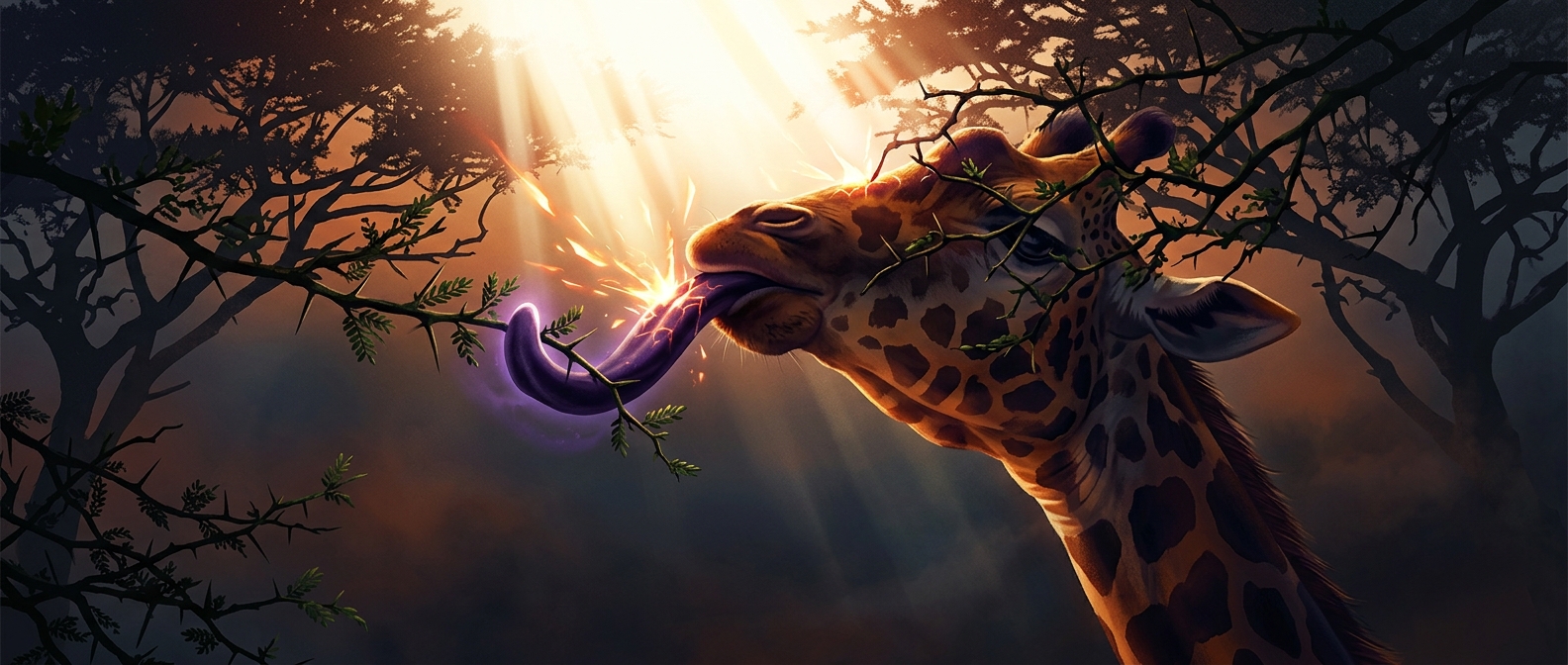
Giraffes use their long, muscular tongues to grasp leaves, often from thorny branches. The tongue can curl around foliage and pull it toward the mouth, letting the giraffe feed among spines that would make a less dexterous approach difficult. Reaching high branches also means the tongue is extended into open air rather than kept behind the shade of the lips.
That creates a practical tradeoff: the tongue’s reach helps the giraffe gather food, but repeated exposure brings more sunlight to its surface. Dark pigment offers protection without getting in the way of that feeding motion.
A working surface, not just a striking color
The purple appearance is therefore connected to how giraffes eat: a flexible tool that reaches into foliage must also cope with the conditions outside the mouth. The next time a giraffe curls its tongue around a branch, its unusual color is a reminder that even a specialized feeding tool has to withstand the environment in which it works.