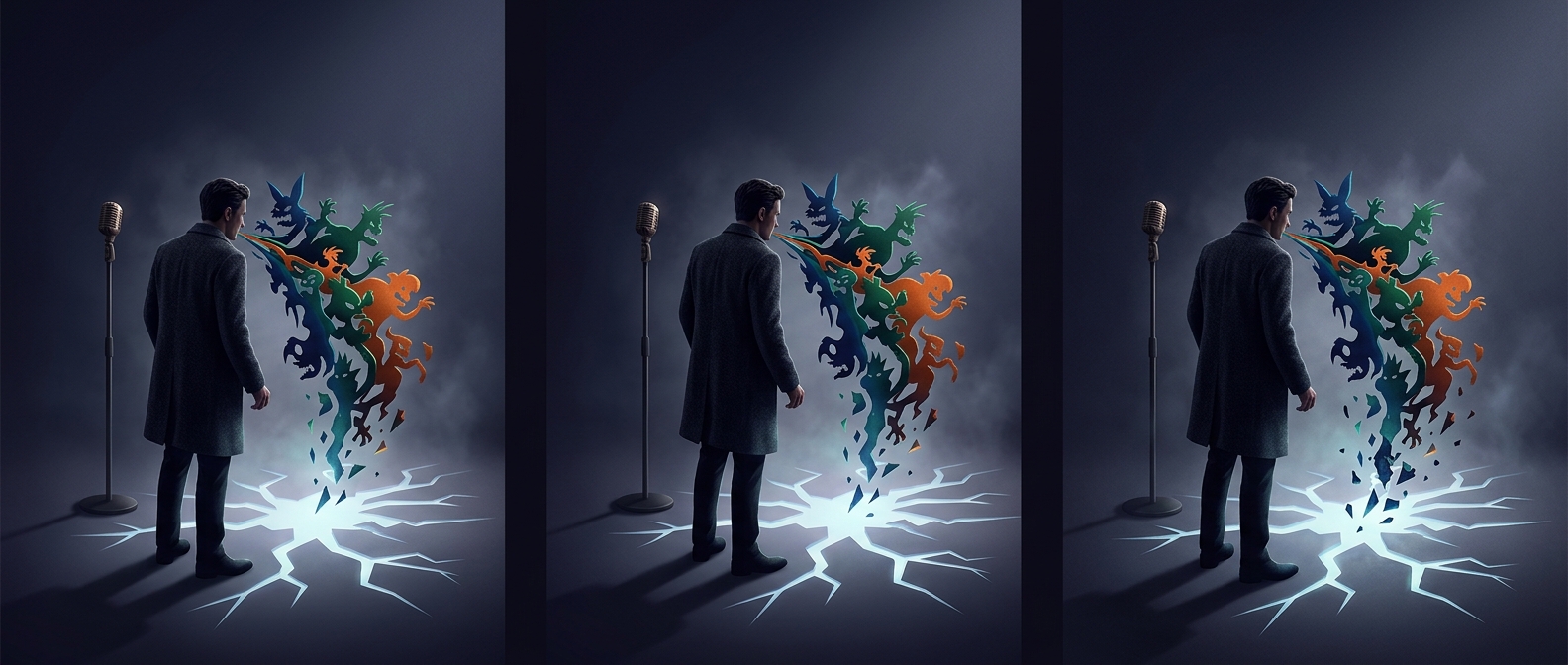
Why a cartoon voice can hurt a real voice
A character’s gravelly yell may last only seconds on screen, but producing it repeatedly can place intense demands on a performer’s voice. The sound comes from the larynx, or voice box, where two flexible bands of tissue called vocal folds vibrate as air passes between them. A raspy shout often involves pushing more air and bringing those folds together forcefully—especially if the performer tries to sustain the sound across multiple takes.
The strain is not simply a matter of being loud. An unfamiliar pitch, a deliberately rough texture, or repeated bursts without enough recovery can also overload the tissue. The result may be temporary hoarseness, but in some cases a small blood vessel on a vocal fold can break, causing a hemorrhage, or bleed, within the tissue.
The sound effect has a physical cost
Cartoon performances can demand exaggerated screams, growls, and cries that ordinary conversation does not. A recording session may require a performer to repeat a line until its timing and emotional shape fit the animation. Even when each take is brief, the voice may be asked to make the same extreme effort again and again.
That creates a practical challenge: the voice must sound forceful while the performer limits the force used to make it. Actors can adjust technique, take breaks, or rely on other production choices rather than pushing every sound to its harshest extreme. If hoarseness appears suddenly after vocal exertion, continuing to shout can worsen an injury; a vocal-fold bleed needs medical assessment and rest, not just a quieter performance.
The striking part is that an animated character can scream endlessly, but the person behind the microphone still has living tissue that needs time to recover.