A small cap with a separate job
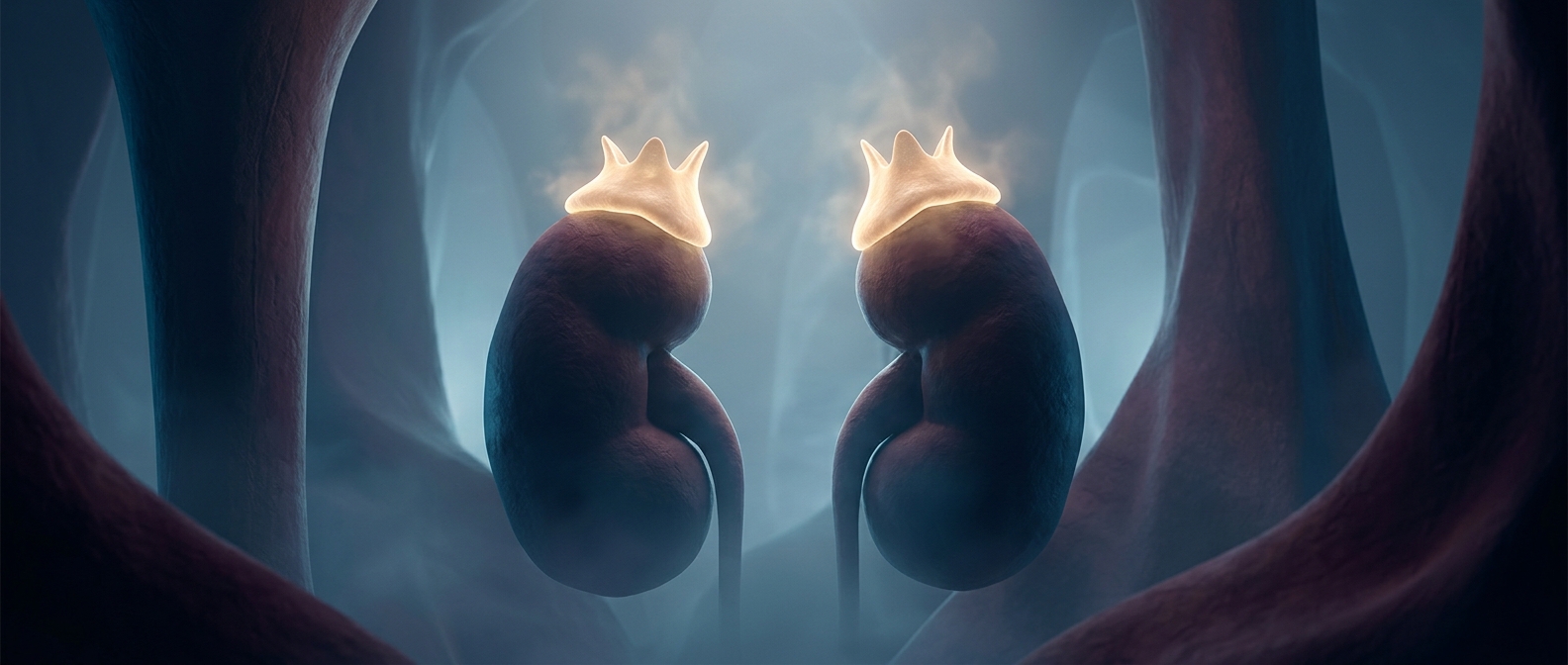
An adrenal gland is a compact, hormone-producing organ perched above each kidney. The two organs sit close together, but they are not parts of one another: each adrenal gland has its own blood supply and makes its own hormones. Its position is a convenient anatomical landmark, not evidence that it filters or otherwise works as part of the kidney.
Two layers, different signals
Each gland has an outer layer, the cortex, and an inner core, the medulla. The cortex makes hormones including cortisol, which helps regulate how the body uses energy and responds to prolonged demands, and aldosterone, which helps control the balance of salt and water. The medulla releases adrenaline and related hormones that help prepare the body for rapid action, such as by increasing heart rate.
These signals enter the bloodstream and can affect many organs at once. That is why the adrenal glands are described as part of the endocrine system—the network of glands that send hormones through the blood—rather than as part of the urinary system.
Nearby, but not interchangeable
The kidneys filter blood and help manage fluid and waste; the adrenal glands send chemical instructions that influence processes such as blood pressure, metabolism, and the response to stress. Their close placement makes them easy to picture as a kidney’s cap, but their roles are distinct: the kidney filters, while the adrenal gland signals.