A low-oxygen signal starts in the kidney
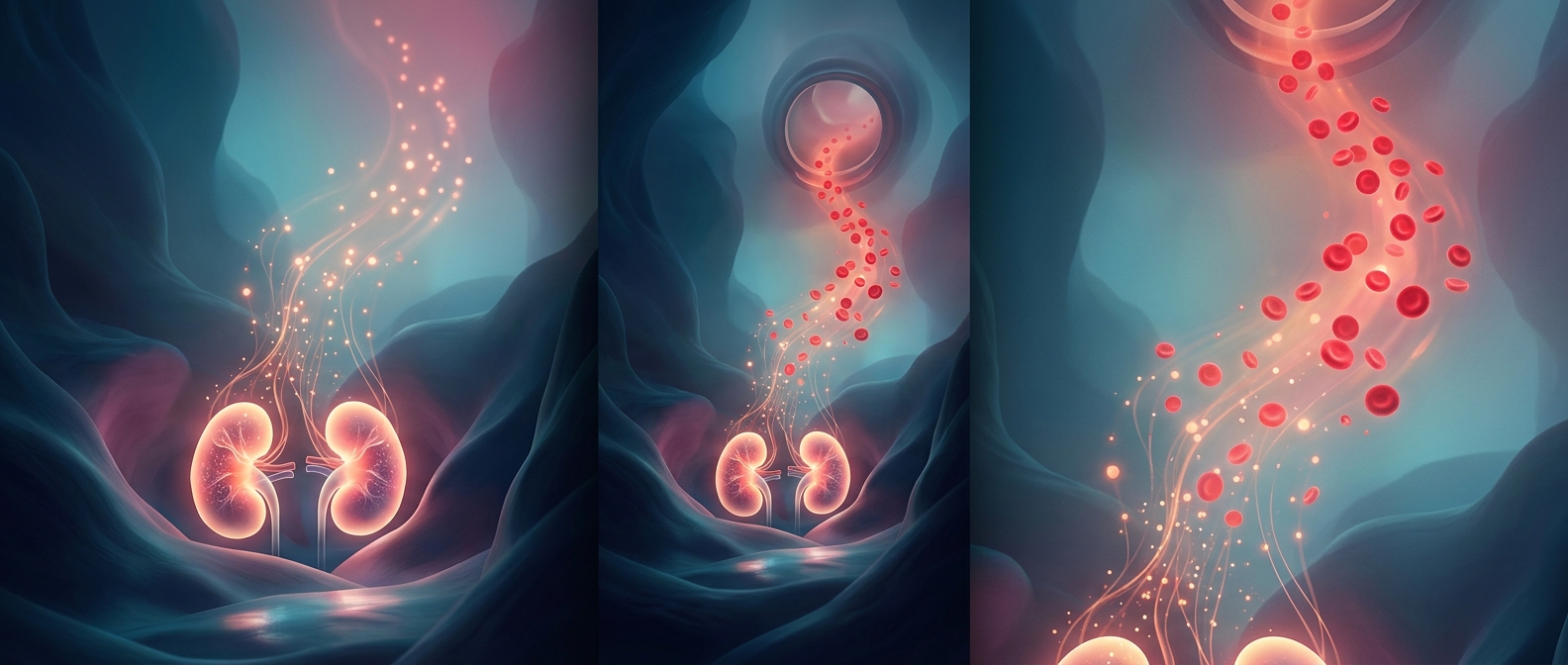
The kidney does more than filter waste: specialized cells in its tissue monitor how much oxygen is available locally. When oxygen supply falls, these cells increase production of erythropoietin, or EPO, a hormone carried through the bloodstream to the bone marrow.
Low oxygen can result from blood loss, reduced oxygen in the air, or conditions that limit oxygen delivery. The kidney’s response is not an instant fix; it is a signal to start making more of the cells that transport oxygen.
EPO helps young blood cells survive
Inside bone marrow, EPO acts on developing red blood cells. It encourages certain early cells to survive and continue maturing, eventually releasing oxygen-carrying cells into circulation. The process takes days, and it depends on supplies such as iron, which red blood cells need to build hemoglobin—the protein that binds oxygen.
As the added cells improve oxygen delivery, the kidney’s oxygen-sensing cells receive a stronger supply and reduce EPO production. This feedback loop helps match red blood cell production to the body’s needs rather than keeping the marrow permanently switched on.
Why kidney function matters
Because the kidneys provide this signal, damaged kidneys may produce too little EPO. The marrow can then make fewer red blood cells, contributing to anemia—a shortage of red cells or hemoglobin that can leave tissues with less oxygen. The connection is a reminder that the kidneys influence not only what the blood loses during filtration, but also how the body replenishes one of its essential delivery systems.