Unamuno’s paper frogs had a literary life
Miguel de Unamuno, the Spanish philosopher and writer, did more than fold small paper animals for amusement. He turned the pastime into a subject for mock scholarship. In his 1902 novel Amor y pedagogía, he included a playful appendix called “Apuntes para un tratado de cocotología”—notes toward a treatise on paper folding.
The invented-sounding word cocotología refers to the making and study of folded-paper figures. By presenting a simple craft in the formal language of a scholarly treatise, Unamuno blurred the line between serious intellectual work and comic play. The joke works because the folds are real, even if the “discipline” around them is deliberately whimsical.
A small figure that could travel
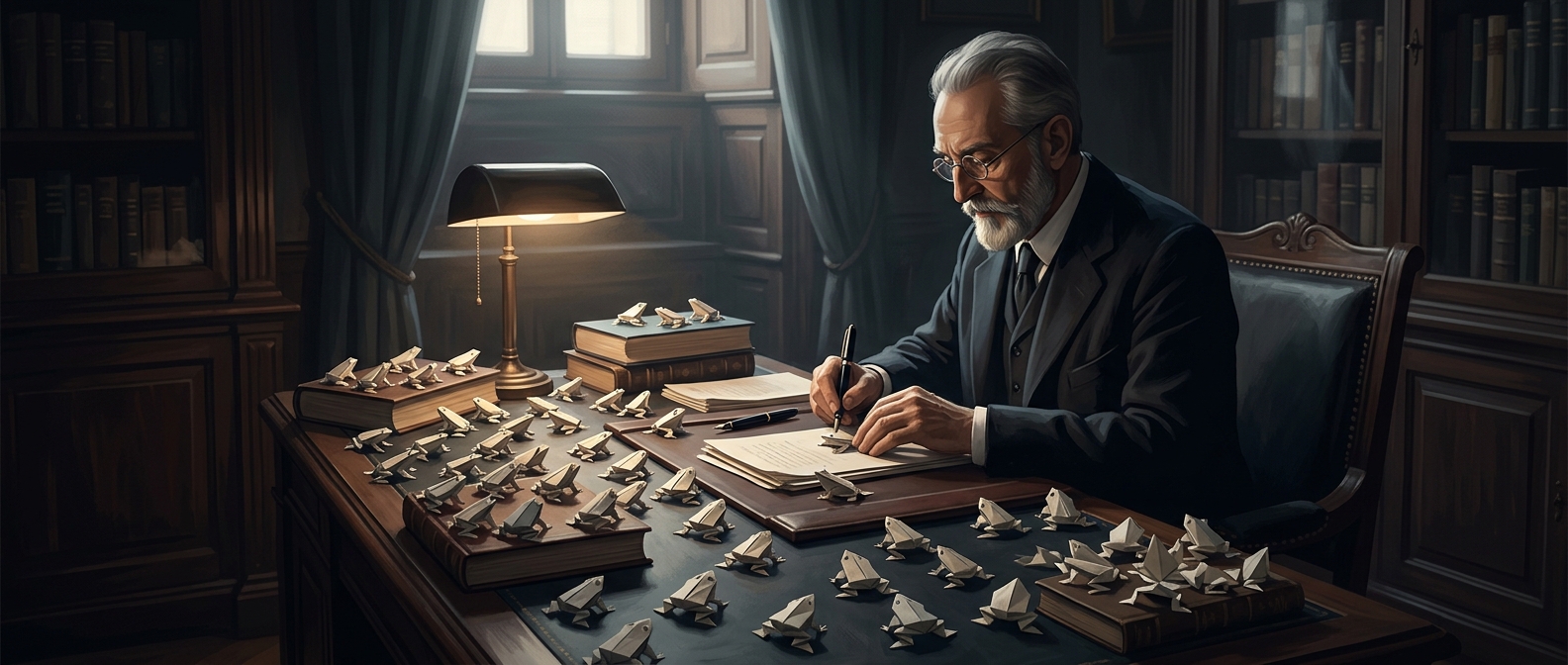
A paper frog is easy to make from an ordinary sheet and small enough to leave behind. Unamuno’s habit of placing the figures in cafés, on desks, and in other people’s homes gave the private amusement a social afterlife: someone else would find the object without necessarily knowing who had made it.
That contrast helps explain why the anecdote sticks. The thinker associated with weighty questions also left behind something lightweight, handmade, and a little puzzling. His frogs carried the same mixture of earnestness and mischief found in his paper-folding “treatise”—a reminder that intellectual seriousness need not exclude play.