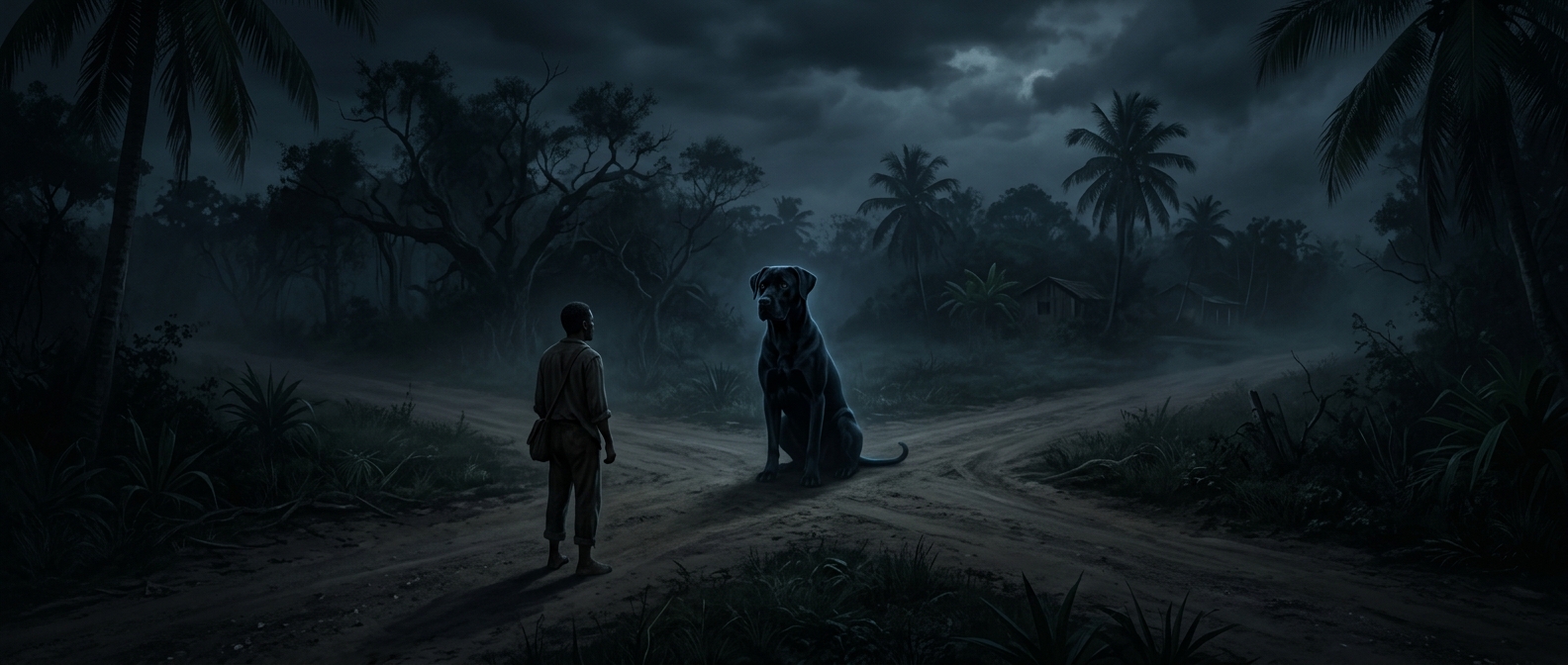
Why the Crossroads Belong to the Story
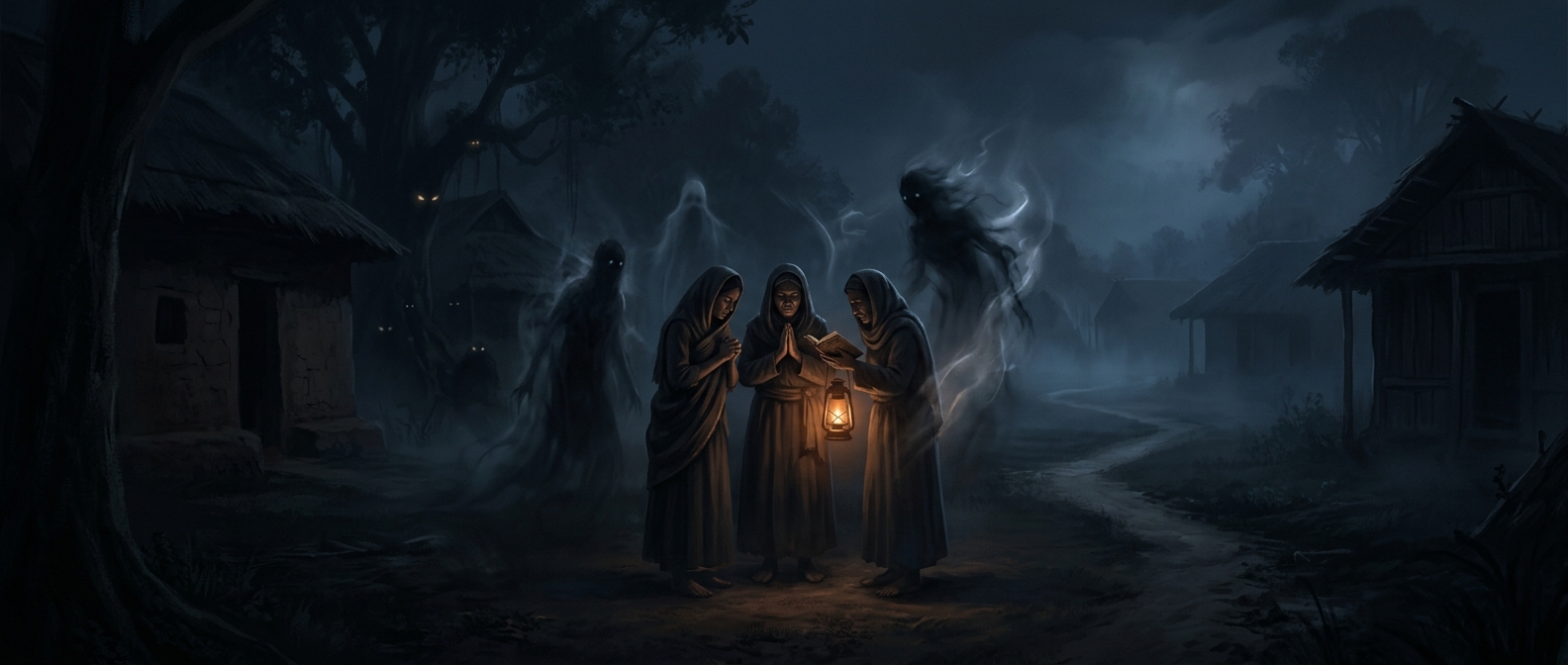
In some Caribbean folklore, a black dog at a crossroads is more than a frightening animal: it marks a place where the ordinary route seems to meet something uncanny. Crossroads already carry a practical uncertainty—choosing which way to go—so placing a supernatural guardian there turns a familiar decision into a test of nerve and attention.
The warning about the dog’s gaze sharpens that danger. The traveler is not simply chased away; the encounter threatens the very sense of self needed to find a way home. Forgetting one’s name makes the peril intimate: even if the road remains visible, the person who was traveling it may feel lost.
A Warning Built Around Attention
The tale makes looking itself risky. A traveler who meets the dog’s stare is said to lose their name, turning a brief moment of curiosity or fear into a lasting consequence within the story. That gives the warning a clear shape: at a place associated with choosing a direction, do not let the strange figure command your attention.
Caribbean folklore is diverse, and this motif should not be treated as a belief shared by every island or community. Its memorable force lies in the image: a silent dog at a night crossing, where one glance could leave a traveler unable to say who they are.