Why the chant must be exact
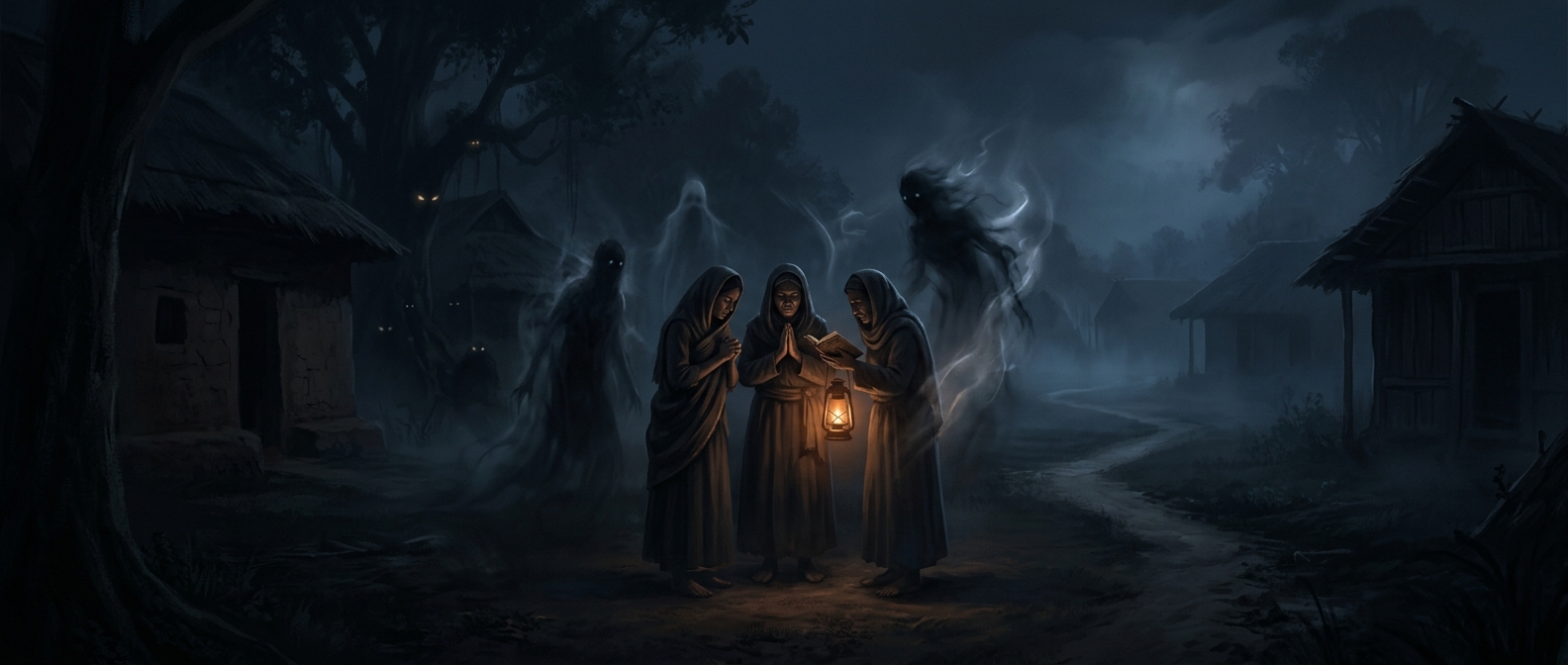
In this village’s ritual, the words are treated as more than a song: they are part of the act meant to keep restless souls from lingering. Repeating the chant three times makes accuracy feel consequential. A missing syllable is not merely a slip in performance; within the belief, it could leave the protective work unfinished.
That sense of precision can also make the ritual easier to remember. A fixed number of repetitions gives the chant a clear shape, while familiar wording lets participants anticipate what comes next. Singing as a group provides another safeguard: people hear one another and can fall back into the shared rhythm if someone falters.
A shared memory, carried aloud
The ritual’s force is social as well as spiritual. Each person contributes to a performance no one has to carry alone, and the group’s voices make the words audible and memorable. Repeating them together signals that the responsibility belongs to the community—not just to whoever leads the chant.
The fear of forgetting therefore gives the gathering a practical purpose: everyone pays attention, listens for the same sequence, and helps preserve it. By the final repetition, the words have been rehearsed collectively, turning a private worry about getting them wrong into a shared act of remembrance.