When an Offering Becomes a Message
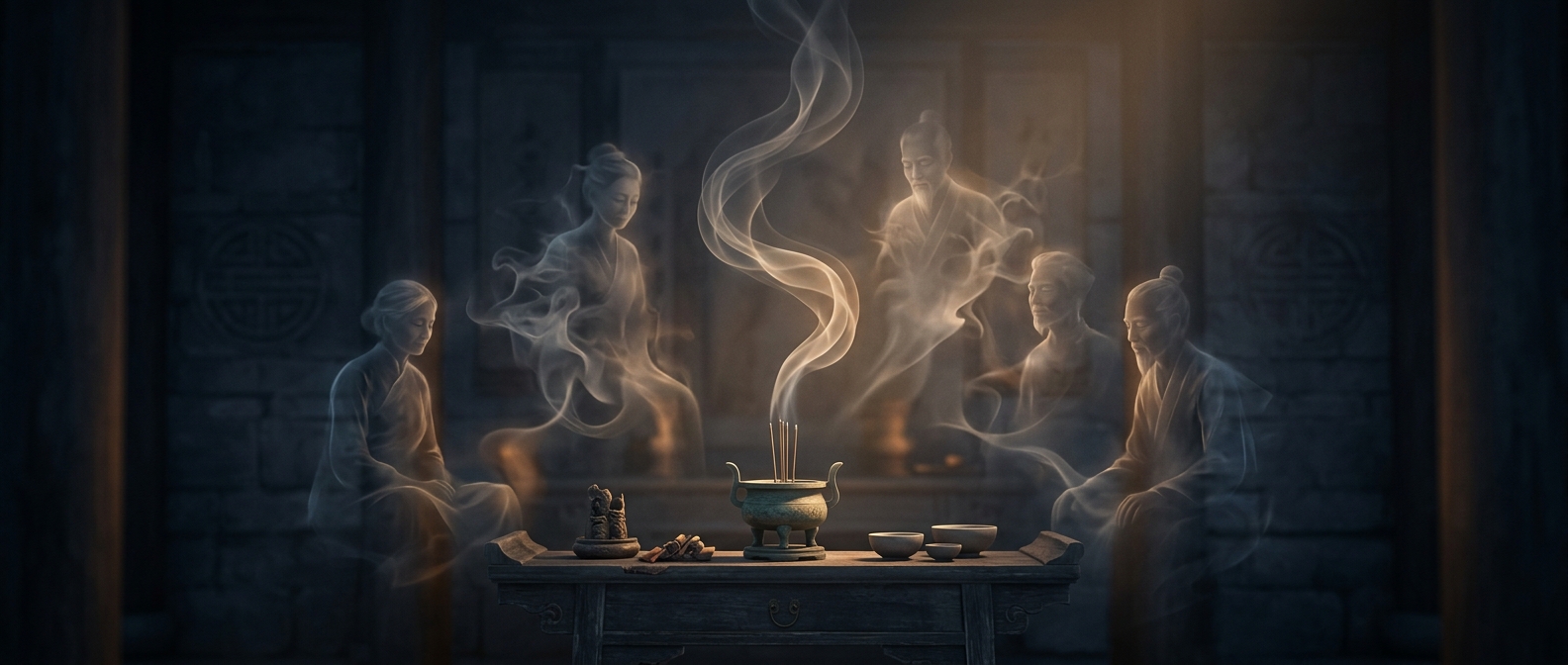
In this belief, food smoke is more than a sign that a meal has been prepared. Its scent is understood as a way care can reach the dead: the living make an offering, and its fragrance carries the gesture beyond the ordinary, physical meal. The spirit is not being fed in the bodily sense. Rather, the offering gives remembrance a form that can be sensed and shared.
That distinction helps explain why the smoke matters. A plate of food is tangible and temporary; its aroma drifts through a space, linking the act of giving to an unseen recipient. The ritual makes affection legible even where no spoken reply is expected. Calling smoke the spirits’ “only language” expresses that limit: contact is imagined through the offering’s presence, not through conversation.
A Quiet Act of Continuing Care
Midnight lends the scene a particular stillness. With fewer ordinary activities competing for attention, preparing or presenting food can become a deliberate moment set apart for the departed. The hour need not be treated as proof that spirits are physically present; within the belief, it marks a time for attentive remembrance.
The practical consequence is that care does not end with death. The living can continue a relationship through a repeated gesture—choosing food, letting its scent rise, and making room for memory. The offering nourishes that bond, not a body.