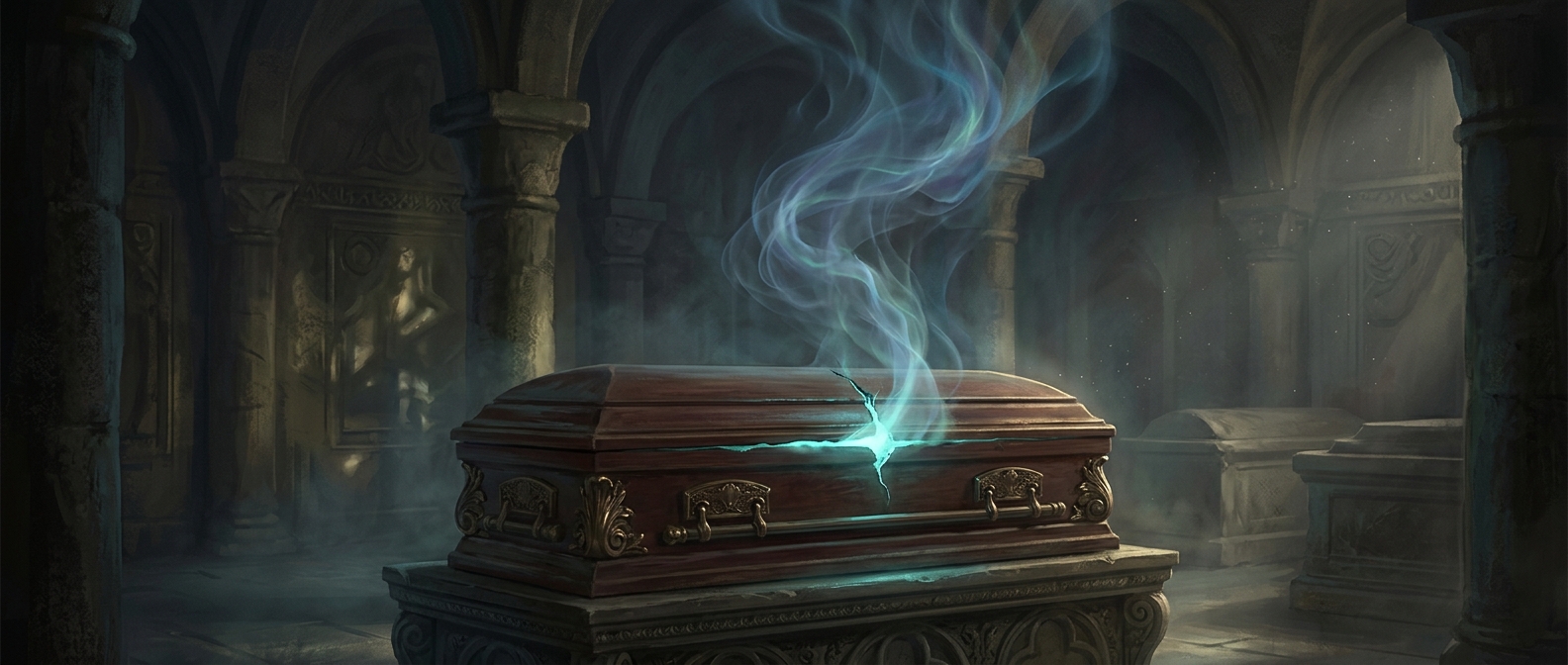
Why decomposition creates pressure inside a casket
After death, the body’s own enzymes and microbes begin breaking down tissues. Microbes consume material and release gases, including carbon dioxide and other byproducts. In an enclosed space, those gases can accumulate faster than they escape, raising the pressure inside.
Pressure pushes outward on every part of the enclosure. The lid and its joints are the vulnerable points: if gas builds up, it can flex the lid, stress the fasteners, or force its way through a seal. That is a gradual mechanical strain, not a predictable explosion.
A seal is not the same as an airtight vessel
A casket may be designed to close securely, but ordinary joints and materials are not necessarily gas-tight. Small gaps, seams, and changes in the fit can let pressure bleed away. How much builds up depends on several factors, including the casket’s construction and the conditions affecting decomposition; the process does not produce the same result in every burial.
This is why a dramatic burst is unusual. For one to occur, gas would have to accumulate faster than it could leak out, while the enclosure remained strong enough to hold pressure and then failed at a weak point. More commonly, any pressure escapes gradually or strains the closure without a sudden rupture. The vivid image of a casket popping open compresses a slow, conditional process into a split-second event.